
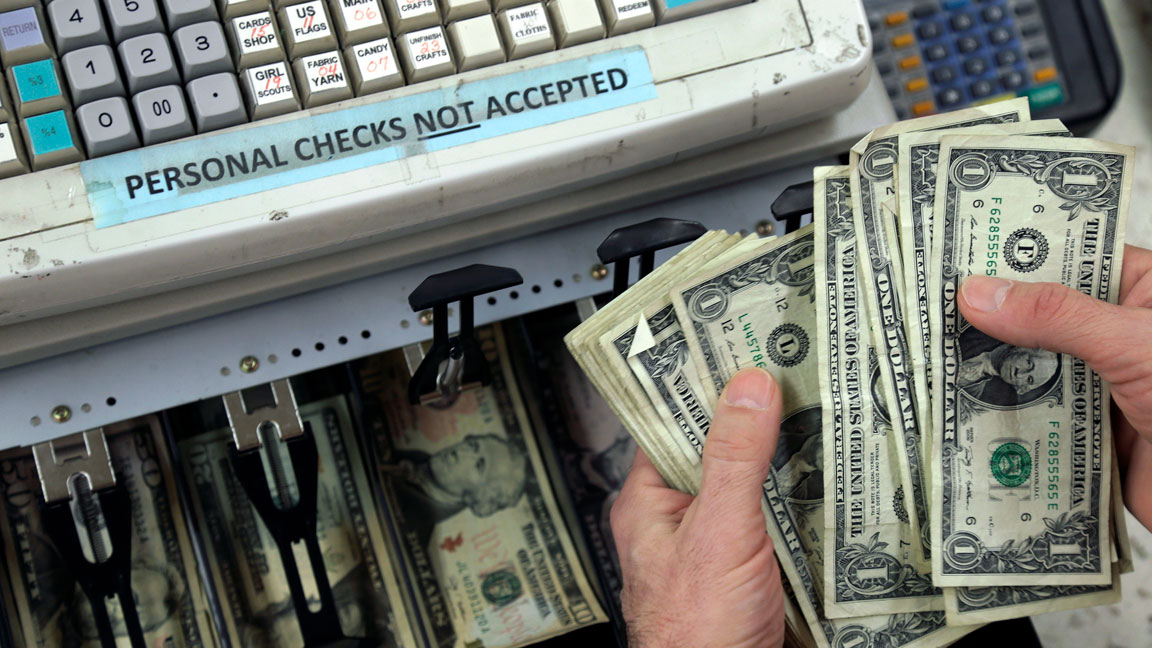
 Credit: (AP Photo/David Duprey)
A new survey of New Jersey business leaders indicates some gains were made over the past year in several key areas, such as managing inflation, yet many remain wary of the economic outlook for 2024.
The results of the latest annual poll of business owners and executives conducted by the New Jersey Business & Industry Association are also mixed when it comes to important indicators like sales, profits, wages and hiring.
For instance, just over 30% of those surveyed reported earning profits this year, compared to more than 40% who reported net losses, according to poll results released by the Trenton-based organization on Monday.
Meanwhile, a little more than 40% of survey respondents reported increased sales this year, only slightly ahead of the 38% who reported net losses in sales.
Wages climbing
Yet for workers, nearly 80% of survey respondents said they increased wages this year, and about the same amount indicated they are planning to do so again in 2024.

Treasury officials had projected a decline from what was seen last year
Just 31% of those responding to the survey rated the state’s current economic performance as ‘good’ or ‘excellent,’ compared with 45% who labeled it ‘fair’ and another 24% who said ‘poor.’
According to Michele Siekerka, the group’s president and chief executive officer, this year’s survey suggests some recovery from a “low-water mark” measured last year as businesses were being battered by things like high annual inflation and a tight labor market, amid the lingering COVD-19 pandemic.
“There are still many issues our job creators need to contend with … but if our policymakers can be more proactive in improving our business climate, we can move the needle even more in the right direction,” Siekerka said.
Looking for work
As of last month, New Jersey’s unemployment rate was slightly higher than the national jobless average, even as the state reported net job gains of nearly 86,000 over the past 12 months.
Overall, state revenue collections were also down year-over-year through the end of October, according to the Department of the Treasury. Collections from the income tax — which is the largest single source of revenue for the state budget — were down more than 9% over the first four months of the fiscal year compared with the same point last year, Treasury reported earlier this month.

In the latest NJBIA poll, just 31% of those responding to the survey rated the state’s current economic performance as “good” or “excellent,” compared with 45% who labeled it “fair” and another 24% who said “poor.” And only 14% of survey respondents said they expect a better economic outlook for the state over the first six months of 2024, compared with 45% who are expecting worsening conditions.
Still, fewer business leaders in New Jersey reported their operations were being substantially impacted by inflated costs for materials and supplies compared with this time last year. Indeed, that indicator dropped from 65% of those surveyed last year to 51% this year.
Moreover, substantial impacts from inflated fuel costs dropped from 63% last year to 43% this year, according to the latest survey results.
More than 70% said they either strongly oppose or somewhat oppose a new rule recently approved by the Murphy administration that calls for banning the sale of new gasoline-powered cars in New Jersey beginning in 2035.
And while 55% of those surveyed reported trouble maintaining appropriate staffing levels this year, that’s down from 70% last year.
Meanwhile, 23% of respondents said they increased hiring in 2023, compared with 18% who said they decreased employment. And nearly 30% of those surveyed said they are planning to do more hiring in 2024, compared with just 7% who are planning employment reductions.
The biggest concern
The biggest concern for state business leaders heading into a new year remains the overall cost of doing business in New Jersey, followed by the availability of skilled labor, health insurance costs and property taxes, according to the latest survey results.
The cost of doing business has been a perennial issue that business leaders have raised in NJBIA’s annual survey, and this year’s results were released about a month after New Jersey was once again ranked at the very bottom among U.S. states in the latest edition of the “State Business Tax Climate Index” compiled annually by the Washington, D.C.-based Tax Foundation.
Not surprisingly, only 4% of those who responded to the latest NJBIA survey said Gov. Phil Murphy and lawmakers had done enough to address business affordability concerns in New Jersey over the past year.
But NJBIA officials did note a special tax surcharge that has been levied for the last several years on the incomes of businesses earning more than $1 million in annual profits in New Jersey is set to expire, by law, at the end of the year.
As the state continues to deal with the effects of global climate change, just 2% of those surveyed who said they have company-use-only vehicles reported the use of only electric or hybrid-powered vehicles by their businesses. But nearly 40% said they would consider purchasing an electric or hybrid-powered vehicle for their businesses in the future.
Meanwhile, more than 70% said they either strongly oppose or somewhat oppose a new rule recently approved by the Murphy administration that calls for banning the sale of new gasoline-powered cars in New Jersey beginning in 2035.
“The lesson we can take here is EV usage will grow, as will its accompanying technologies,” Siekerka said. “But New Jersey should let the marketplace dictate that and avoid mandates that don’t allow for appropriate infrastructure or affordability in a too compressed timeframe.”
Whether state is heading for a soft landing or rocky road to recession has NJ’s top economic advisers trying to piece together the evidence
