
 Credit: (AP Photo/Matt Slocum, File)
 A policy enacted several years ago in New Jersey cleared the way for modest toll increases to go into effect automatically in 2022 and 2023 on the Garden State Parkway and New Jersey Turnpike.
And earlier this year, Gov. Phil Murphy’s transportation commissioner told lawmakers at the end of a lengthy budget hearing in Trenton that toll-road motorists would see a third consecutive increase of 3% come Jan. 1, 2024, all under a policy known as “indexing.”
However, Murphy has now decided to get directly involved. And, as governor, he has the authority to block actions taken by the New Jersey Turnpike Authority, the agency that operates both toll roads.
Late last week, Murphy said in a social-media post that he would be vetoing the authority’s recently approved annual budget over concerns about its assumption that tolls should go up again by 3%, in the new year to help maintain balanced spending.
“I am not satisfied with the justification provided for the toll increases reflected in the budget and need more information for why the board is taking this step,” Murphy said in the post.
In response to Murphy’s action, New Jersey Turnpike Authority spokesman Tom Feeney said there is still time to revise and adopt the 2024 budget before the end of the year.
“We respect the Governor’s veto and understand his desire for more information about the NJTA budget and revenue needs. The staff is putting that together,” Feeney said.
Key election looms
Murphy’s action comes nearly six months after Transportation Commissioner Diane Gutierrez-Scaccetti — who was recently elevated to serve as his chief of staff — first told lawmakers to expect another automatic toll hike. And it also comes just as voters are preparing to cast ballots in what have become closely watched legislative elections in New Jersey.
This year, Murphy, a term-limited Democrat, is not on the ballot, but his party is desperately trying to retain control of both the Assembly and Senate after losing ground to Republicans in both houses two years ago. That election also saw a virtually unknown Republican upset the sitting Senate president, a Democrat who had held the post for a decade and was seen as a potential leading candidate for governor in 2025.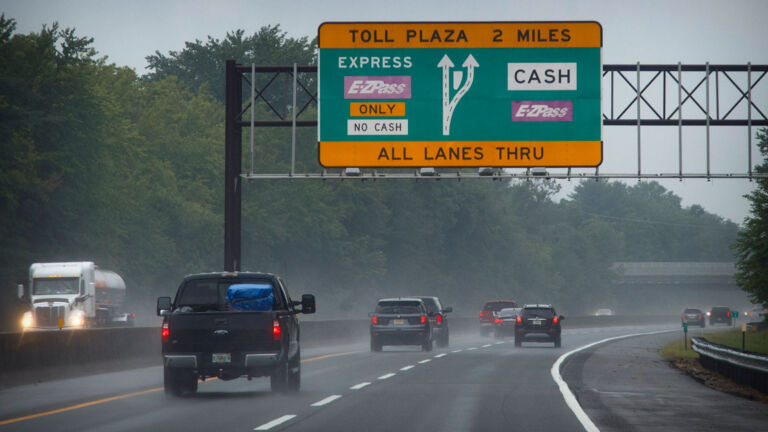
Democratic legislative leaders have taken pains to address concerns about affordability that are top of mind for many voters this year — including by beefing up property-tax relief for seniors in recent months. But they have also been on the defensive in many other policy debates, including issues related to the Murphy administration’s stance on clean energy and parental notification in schools.
Against that backdrop, top Democratic legislative leaders last week weighed in publicly on the tolling issue, pressing Murphy to block the automatic increase that was in the offing for Jan. 1.
“From cutting property taxes to lowering the costs of prescription drugs, affordability is our number one priority,” Assembly Speaker Craig Coughlin (D-Middlesex) and Senate President Nicholas Scutari (D-Union) said in a joint statement issued before Murphy took action.
GOP sees politics
For their part, Republicans had also been calling for Murphy to get involved. But in the wake of his intervention, many have also said they can’t help but see election-year politics playing a role since automatic toll increases were allowed to take effect with no pushback at all at the start of 2022 and 2023 under a policy first enacted in 2020 during the worst months of the COVID-19 pandemic.
“It does look and sound very political and, I would say, not terribly consumer-oriented,” said Regina Egea of Garden State Initiative, a right-leaning think tank that has closely scrutinized state-transportation funding policies in recent years.
However, Murphy denied in an interview with NJ Spotlight News on Friday that politics had anything to do with his decision to get involved. Instead, he cited a need to balance the latest revenue and traffic statistics with concerns about inflation and high interest rates faced by many consumers, among other factors.
“The last thing a commuter or consumer needs right now with inflation still in our midst, interest rates still high, is another tax or another toll increase,” Murphy said. “We want to take that very seriously, and … that’s what we’ve done.”
Rollbacks in the offing?
With the plans for another toll hike now on hold, it remains to be seen whether legislation backed by Republicans and some Democrats in recent years that has sought to limit the Turnpike Authority’s power to enact automatic toll hikes each year will get a new look in Trenton.
Up until now, legislation that has also called for rolling back a portion of a larger toll hike enacted in 2020 has not advanced in either the Assembly or Senate under its current Democratic leadership.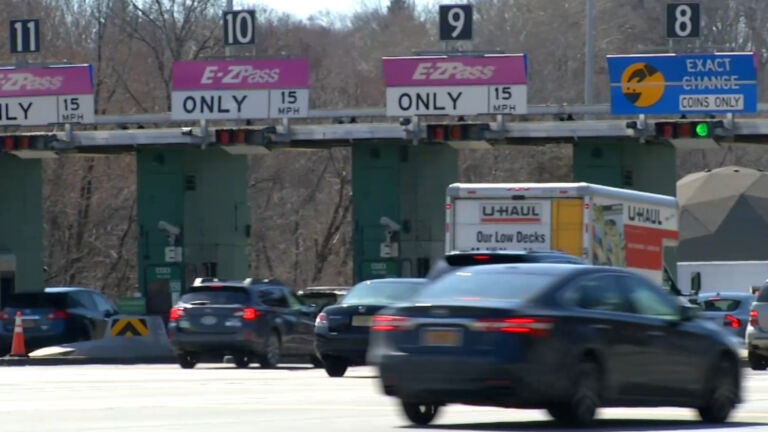
“New Jerseyans need certainty that this veto isn’t a ploy to delay toll increases until after the election when it is politically convenient for Democrats,” said Sen. Jim Hozapfel and assemblymen John Catalano and Greg McGuckin, all R-Ocean, in a joint statement issued on Friday.
Asked last week about the status of the legislation in question, the Assembly and Senate majority offices declined to comment.
‘It’s important, I think, that people reground themselves on where all the revenues are coming from, in terms of tolls and fees and taxes, and how it’s being spent.’ — Regina Egea of Garden State Initiative
No matter the outcome of the elections, Egea, the think-tank leader who served as a chief of staff to former Republican Gov. Chris Christie, suggested some good may come out of the “kerfuffle” over the automatic tolling policy since it is bringing attention to state transportation policies at a pivotal moment.
In just a few months, New Jersey’s Transportation Trust Fund, which is funded with revenue from the state gas tax, will be up for reauthorization, she noted.
Other budget pressures
Meanwhile, the Turnpike Authority is not just being used as a source of funding for the toll roads it administers, but also as a revenue source to subsidize New Jersey Transit’s strained operating budget, and for the state’s commitment to the Gateway Development Corporation, the agency spearheading the construction of a new trans-Hudson rail tunnel.
And that’s come even as budget documents indicate the Turnpike Authority itself is also facing budget pressure from inflation and rising contractual obligations, among other items.
“It’s important, I think, that people reground themselves on where all the revenues are coming from, in terms of tolls and fees and taxes, and how it’s being spent,” Egea said.
