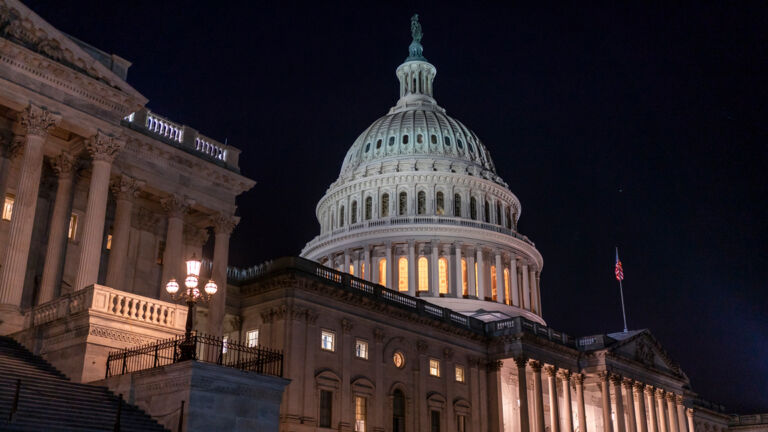
Credit: (AP Photo/Patrick Semansky)
The last-minute approval of a stopgap spending bill in Washington at the weekend temporarily averted a government shutdown that threatened to disrupt everything from paychecks for active-duty military to food assistance for needy families.
The compromise between the U.S. Senate controlled by Democrats and the GOP-led House of Representatives saved funding for disaster relief, but cast aside, at least for now, additional aid for Ukraine and border security.
Still, New Jersey representatives from both sides of the aisle praised the deal reached just hours before the Oct. 1 start of a new federal fiscal year.
John Reitmeyer on the stopgap spending bill: Ready for déjà vu all over again?
Where NJ lawmakers stand
“This temporary funding resolution will keep the government open and ensure that federal employees, our troops, and law enforcement don’t miss their paychecks,” said U.S. Rep. Mikie Sherrill (D-11th).
“From the beginning of this debate I did not support shutting down the government, and I am encouraged that Republicans and Democrats worked together to get this done,” said U.S. Rep. Tom Kean Jr. (R-7th).
But what happens next remains an open question. The stopgap spending bill only funds the federal government through the middle of November, and it’s unclear if that additional time will allow for a broader compromise to be reached, or just start the countdown to another potential shutdown.
A 35-day, partial government shutdown in 2019 forced thousands of federal workers based in New Jersey to go without pay, affected air traffic controllers at Newark Liberty International Airport and limited services in federal parks such as the Gateway National Recreation Area, which includes Sandy Hook.
The 2019 shutdown also cost the U.S. economy an estimated $11 billion, according to the Congressional Budget Office.