
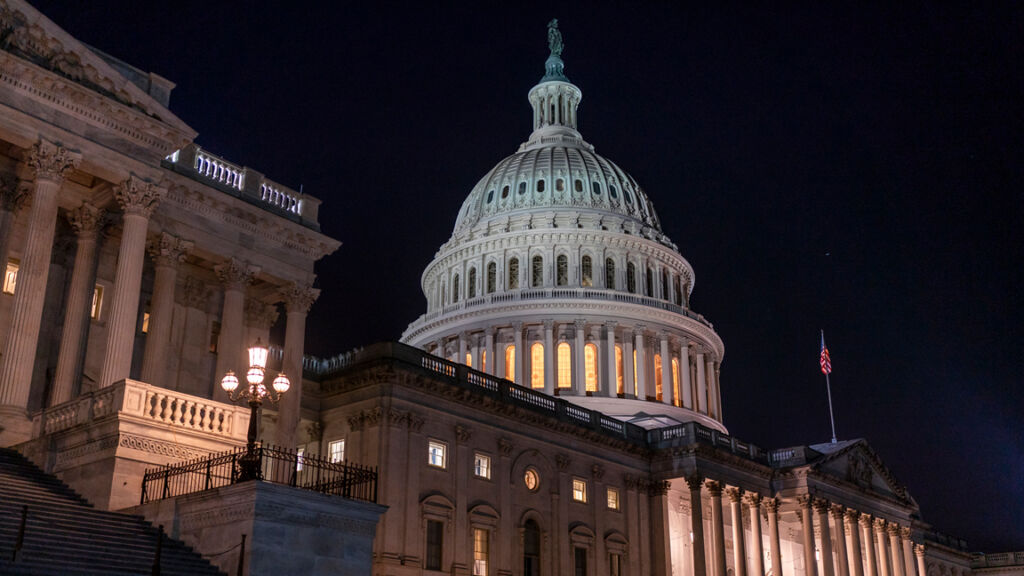
With the possibility growing by the day, a federal government shutdown triggered by political gridlock in Washington could reverberate deeply in New Jersey, affecting everything from food assistance to the economy.
Unless a budget deal can be reached before a new federal fiscal year begins Sunday, funding for government functions such as food-safety inspections, cancer research and infrastructure projects are among the many services that would likely be disrupted, executive branch officials have warned.
Active-duty military personnel, including those working in New Jersey’s several military installations, as well as air traffic controllers and federal law-enforcement officers would be among those forced to work without pay for as long as the shutdown lasts, the officials said.
Meanwhile, a new report by Moody’s Investors Service predicts a prolonged government shutdown is also likely to disrupt the national economy, especially as it relates to permit approvals and loans for small businesses.
Gov. Phil Murphy is among those sounding alarms in New Jersey, suggesting the economic fallout could also hurt the state economy and bring on a host of additional problems, including airport delays. The Murphy administration will seek to minimize the impact, he said Thursday, while also suggesting there’s only so much the state can do if there is a prolonged impasse.
“A protracted government shutdown would have devastating consequences on New Jersey’s economy and on our national security,” Murphy said in a statement.
GOP infighting
The nation is on the verge of a government shutdown because members of Congress have yet to come to a full agreement on federal spending, even though a new federal fiscal year is set to begin on Oct. 1.
Moreover, bipartisan efforts to send President Joe Biden a short-term, stopgap spending bill have also yet to reach the finish line amid ongoing infighting among majority Republicans in the U.S. House of Representatives.
As worries about a shutdown have increased in recent days, many have pointed to the negative economic effects of a partial government shutdown, like the one that occurred in 2019, during the tenure of former President Donald Trump.
That disruption lasted for 35 days, costing the U.S. economy an estimated $11 billion, according to the Congressional Budget Office.
Heading into the potential shutdown, Congress held a 17% job-approval rating and nearly 70% of Americans say the country is headed in the wrong direction, according to a recent Monmouth Poll.
The 2019 shutdown also forced thousands of federal workers based in New Jersey to go without pay, affected air traffic controllers at Newark Liberty International Airport and limited services in federal parks such as the Gateway National Recreation Area, which includes Sandy Hook.
U.S. Rep. Josh Gottheimer (D-5th) has been among a group of lawmakers that has been urging colleagues to find common ground as the potential for another shutdown has increased in recent days. He pointed to the recent Moody’s report, as well as the estimated economic impact of the last shutdown, during an event held earlier this week in Leonia.
“The only winner (will be) the government of China that’s dying to see us falter, adding to a black eye that we narrowly avoided with the debt ceiling fight,” Gottheimer said.
Varying impacts
Meanwhile, concerns about the ways a shutdown would hurt the state’s neediest families have been aired by New Jersey Citizen Action, a group that works closely with low-income residents. Food assistance for needy families and services for veterans and those in need of housing are among the programs at risk of losing funding.
Similar concerns were also aired in recent days by Biden administration officials, who also warned a shutdown could endanger federal disaster-recovery funding and lead to delayed food-safety inspections, among other outcomes.
“These consequences are real and avoidable — but only if House Republicans stop playing political games with peoples’ lives and catering to the ideological demands of their most extreme, far-right members,” the White House said in a statement.
Americans, by a 2-to-1 ratio, said they want members of Congress to compromise and avoid a shutdown, a recent Monmouth Poll shows.
During the 2019 shutdown, Murphy and other state officials had to urge banks and other financial institutions to come to the aid of the thousands of federal employees working in New Jersey who were left unpaid for weeks.
This time around, Murphy, a second-term Democrat, is also faulting “extreme House Republicans” for ignoring a bipartisan deal on spending that was hammered out earlier this year as part of efforts to extend the federal debt ceiling.
“We will be monitoring developments closely to minimize any impact on the people of New Jersey,” Murphy said in the statement issued Thursday.
Heading into this latest potential shutdown, Congress held a 17% job-approval rating and nearly 70% of Americans say the country is going in the wrong direction, according to the results of a recent public opinion poll released earlier this week by the New Jersey-based Monmouth University Polling Institute.
Another government shutdown caused by political gridlock would also likely be unpopular. Americans, by a 2-to-1 ratio, said they want members of Congress to compromise and avoid a shutdown, according to the recent Monmouth Poll.
