
When federal inspectors uncovered long-standing infection-control problems and potential abuse of residents at the Veterans Memorial Home at Menlo Park last fall, New Jersey officials dispatched a three-person team of institutional-care experts to reform operations at the state-run facility.
The intervention worked, state health commissioner Judy Persichilli said Monday. “I think we’ve had success. I think DMAVA turned the corner right now,” she told members of the Assembly Budget Committee during their review of the governor’s proposed fiscal year 2024 spending plan for the health department, which the Legislature must approve by July.
“We know some of these long-term care facilities have peaks and valleys,” Persichilli said, but Menlo Park employees “not only accepted the mission-critical team but they worked very diligently with them to make a difference in the care that the vets received.”
New Jersey is now looking to expand this initiative statewide by adding two additional mission-critical teams to the health department’s roster. Gov. Phil Murphy’s $53.1 billion budget proposal for next fiscal year includes $1.2 million to hire additional professionals to staff three separate teams to respond to facilities in north, central and south Jersey. The request is a tiny slice of the health department’s $2.6 billion proposed spending plan for the coming fiscal year, which involves $1.2 billion in state funding, nearly $781 million in federal dollars and $601 million from other sources. The proposal is almost 3% more than the department received in this current fiscal year.
Major focus of lawmakers
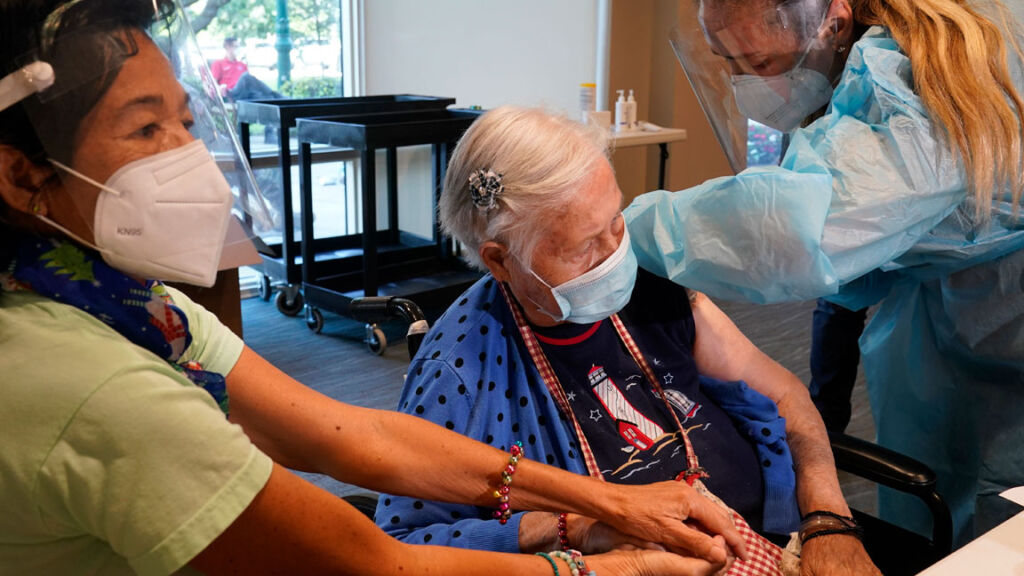
While a small-dollar item, the mission-critical teams were a focus of the Assembly budget hearing Monday. Both Democratic and Republican lawmakers raised questions about the state’s support for nursing homes, which have been hard-hit by the COVID-19 pandemic and long-standing staffing shortages. The Menlo Park veterans home — and another state-run veterans facility in Paramus — struggled to respond to COVID-19 outbreaks, prompting state and federal probes and lawsuits from victims’ families. In all, roughly one in four of New Jersey’s roughly 36,000 COVID-19-related fatalities involved a nursing home resident, state statistics show.
 Credit: (Tyger Williams, the Philadelphia Inquirer)
The health department is also looking to hire a fourth person to complement the existing trio at Menlo Park, using money remaining in the current annual budget. Murphy appropriated $500,000 for this work last year but delays in hiring the initial team — a long-term care administrator, a nursing administrator and an infection-control expert, all professionals in high demand nationwide — meant more than $300,000 remained unspent, as of March. The department was unable to provide additional information on the team hiring process by Tuesday.
“Is there a reason for allocating more money when we don’t seem to be able to spend what has already been allocated?” Assemblyman Brian Rumpf (R-Somerset) asked Persichilli during the hearing.
‘The most critical step to address the staffing shortages in our nursing homes is for the state to provide more funding.’ — Andy Aronson, Health Care Association of New Jersey
Deborah Hartel, deputy health commissioner, said the national nursing shortage has made creating the initial team a challenge. But the need for three, regional teams is clear, she said. “At any given time, there are facilities that could truly benefit from this team going in,” she said.
Formation of the teams was among recommendations outlined by consultants from Manatt Health, which the state hired in May 2020 to review the COVID-19 response at New Jersey’s 370 nursing homes.
Improvements already made
The Murphy administration has implemented many of the consultants’ recommendations, including beefing up pay for frontline caregivers — it provided more than $150 million in hazard pay for nursing home staff; tightening staffing requirements and making more facility information public through an online dashboard that launched last fall, but the work continues.
The concept of the mission-critical teams was also tested at Woodland Behavioral and Nursing Center, the Sussex County facility the state closed last summer after a growing list of federal and state violations, Persichilli told lawmakers. A judge approved the unprecedented action after operators failed to resolve problems with infection control, staffing shortages and clinical care at the facility, formerly known as Andover Subacute and Rehabilitation Center, which made national news in April 2020 when 17 bodies were found in a makeshift morgue there.
‘Mission-critical teams will never leave these high-risk organizations.’ — Department of Health Commissioner Judy Persichilli
The first mission-critical team is now working at the Deptford Center for Rehabilitation and Healthcare, where it was sent in early March, according to budget documents. The group is dispatched based on the department’s analysis of ten specific risk factors, including leadership turnover, prolonged disease outbreaks, payroll challenges and federal assessments, among others.
Persichilli, a nurse and former hospital executive, said the goal is to intervene when regulators “see a facility getting into trouble” but before they catalog violations. “They really work side by side with individuals, the leadership and primarily the people on the front lines, embedding practices and process that people from the hospital industry have embedded in hospitals for years,” she said. These practices are less common in nursing homes or assisted living facilities, she said, so the goal is “to make sure the DNA of the long-term care facility is changed.”
Identifying risks
The mission-critical team “augmented a number of consultants and subject-matter experts already on scene” at the Menlo Park veterans home, according to Maj. Agneta Murnan, a spokeswoman for the state Department of Military and Veterans Affairs, and gave the department a “more immersive look at our operations.” It also helped to identify areas of the home with higher risk of disease transmission, she said. These best practices are sustainable, she said, adding that there are multiple quality-assurance projects now in place in Menlo Park to monitor the process.
 Credit: NJ Spotlight News
Andy Aronson, president and CEO of the Health Care Association of New Jersey, which represents nursing homes, said operators are “very supportive” of the program. Enabling facilities to work in a “non-confrontational, non-punitive” way with the department is a positive, he said. “Working collaboratively to help implement best practices can lead to significant, lasting improvements,” he said.
But Aronson said it was ironic that the department is seeking additional funding to expand the teams while struggling to hire nurses for the first team. “This is exactly what nursing home operators have been saying to the administration and the legislature,” he said. “The most critical step to address the staffing shortages in our nursing homes is for the state to provide more funding.”
Meanwhile, the team’s work at Menlo Park continues part-time, Persichilli said, adding that some of the same practices may also be implemented at the state’s veterans homes in Paramus and Vineland, facilities that have received high marks from federal regulators recently. “Mission-critical teams will never leave these high-risk organizations. They are still there, at a minimum, one day a week. Sometimes it’s evenings, sometimes its nights, sometimes its weekends, to make sure the policies and practices they embedded … are adhered to,” she said.
— Editor’s note: This story has been updated to correctly identify Deborah Hartel as the deputy health commissioner quoted.
