
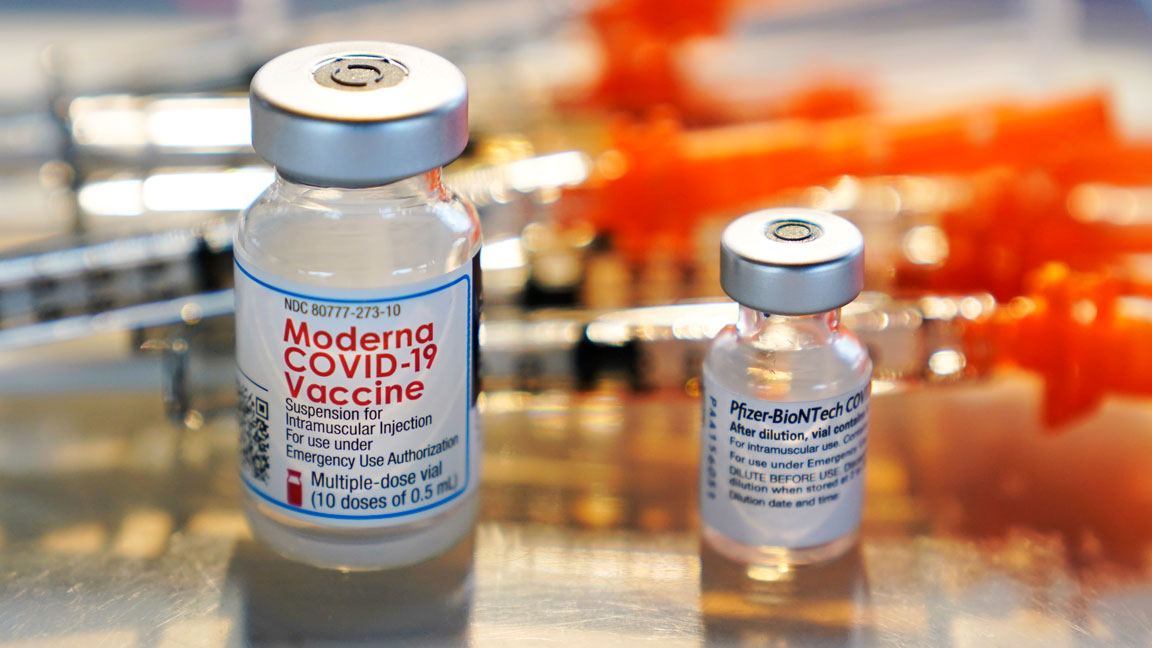
 Credit: (AP Photo/Charles Krupa, File)
Rutgers University’s decision to maintain its requirement that students be immunized against COVID-19 has renewed the debate over vaccines and whether they should be mandated in New Jersey’s colleges now that the worst of the pandemic is likely behind us.
The state’s flagship university said in May it would no longer require booster shots for everyone on campus but that all students and employees would need at least a primary series of COVID-19 vaccinations to be on campus this fall. Staff and students in some clinical programs must also get a COVID-19 booster dose.
The decision was greeted by criticism from vaccine skeptics online and some Republican lawmakers. State Sen. Declan O’Scanlon (R-Monmouth) criticized Rutgers leaders for what he called a “monumentally irrational policy” and called on the college president and other administrators to resign.
The Rutgers policy appears to be rare but not singular. Montclair State University’s policy also calls for COVID-19 shots for residential students, in addition to the three vaccinations already required by the state for all colleges. They are to protect against MMR (measles, mumps and rubella), hepatitis B and meningococcal disease.
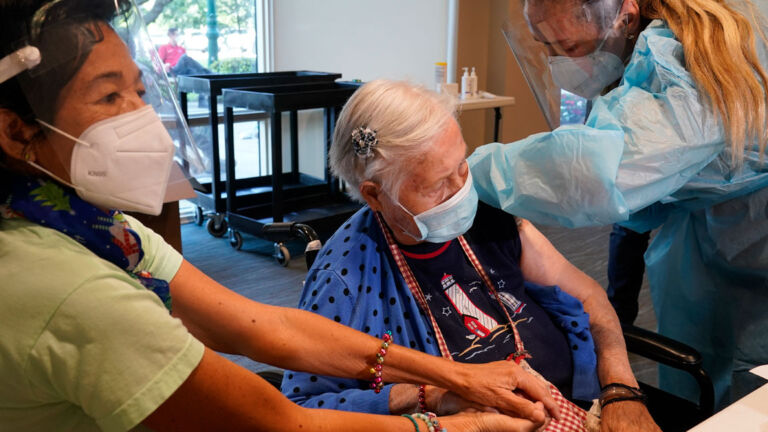
Nationwide, more than 100 higher education systems in 30 states and the District of Columbia still require COVID-19 vaccinations for at least some people on campus, according to a list by Best Colleges, which ranks and surveys schools across the nation. Eight schools in New York mandate these shots — primarily smaller schools in New York City — along with at least 18 in Pennsylvania, ranging from private schools like Bryn Mawr and Swarthmore to the clinical programs like the Philadelphia College of Osteopathic Medicine and all four campuses of the University of Pittsburgh, Best Colleges notes. (The list may be incomplete as Best Colleges listed Rutgers as the only school in New Jersey with this mandate, without including Montclair State.)
‘Strongly encourage’
Officials from the New Jersey Department of Health said they do not maintain a complete list of in-state colleges that require additional immunizations beyond the trio of vaccines mandated in state law. Leaders at the New Jersey College Health Association also said they don’t compile this information. But a survey of websites for more than two dozen of New Jersey’s best-known colleges found that while many had required students be vaccinated against COVID-19 in past years, most now “strongly encourage” those on campus to get COVID-19 shots. Montclair and Rutgers were alone in mandating these vaccinations.
Lilo H. Stainton with more on college COVID-19 vaccinations
“The rationale is that congregate housing situations are more prone to the spread of infectious disease,” said epidemiologist Stephanie Silvera, a public health professor at Montclair who has advised the university’s administration on COVID-19 policies. The mandate applies only to residential students, who she said make up less than one-third of the total school population at Montclair.
“That said, I believe our vaccination rate, when it was required for all students, faculty, and staff, was near 96% so while that number may go down as new first-year and transfer students arrive this year, we will likely maintain having a campus where the majority of the community is vaccinated,” Silvera said.
How many people are actually getting all their shots is another question; state law permits people to receive exemptions for medical or religious reasons.
COVID-19 transmission is now minimal in New Jersey, when compared to years past, but case numbers ticked up slowly from mid-July through mid-August, according to state data. Acute care hospital admissions for COVID-19 — a key indicator of the disease’s impact on the health system — have also increased since July, but with fewer than 350 people hospitalized as of Thursday, these numbers are also a fraction of what the state experienced in past years.
A new version of the COVID-19 vaccination, better targeted to protect against the strains of the disease now circulating, is expected to be available in mid- to late September. Nearly 7 million people have received at least a primary series of two shots in New Jersey, according to state data, and more than 1.4 million got the updated bivalent booster, available last fall. Experts urge those at higher risk for respiratory illness to also consider the RSV vaccine, which protects against respiratory syncytial virus.
Other vaccinations
State law requires higher education students to receive three vaccines, all shots in-state students would have had to attend elementary and secondary school here. These shots protect against hepatitis B, meningitis and MMR while reducing the chances of a larger outbreak and “educational disruptions,” according to a 2022 Health Department report on the program. “Universities and colleges, with their high concentration of students from various backgrounds, living and interacting closely, are particularly susceptible to the spread of vaccine-preventable diseases,” it notes.
How many people are actually getting all their shots is another question; state law permits people to receive exemptions for medical or religious reasons. Fewer than two-thirds of the 80 higher education facilities licensed by the state reported immunization data to the Health Department in 2022, according to the report, despite a requirement that it be done annually. And the data collected suggests there is a disparity in compliance, with students at four-year schools far more likely to be vaccinated as required than those attending two-year programs.
Statewide, nearly 8 in 10 college students received the MMR vaccine for measles, mumps and rubella, the report shows, and more than 3 out of 4 were immunized against hepatitis B. Compliance with the vaccine requirement for meningococcal disease was far lower, however, with just two-thirds of all New Jersey college students reporting they were immunized.
