
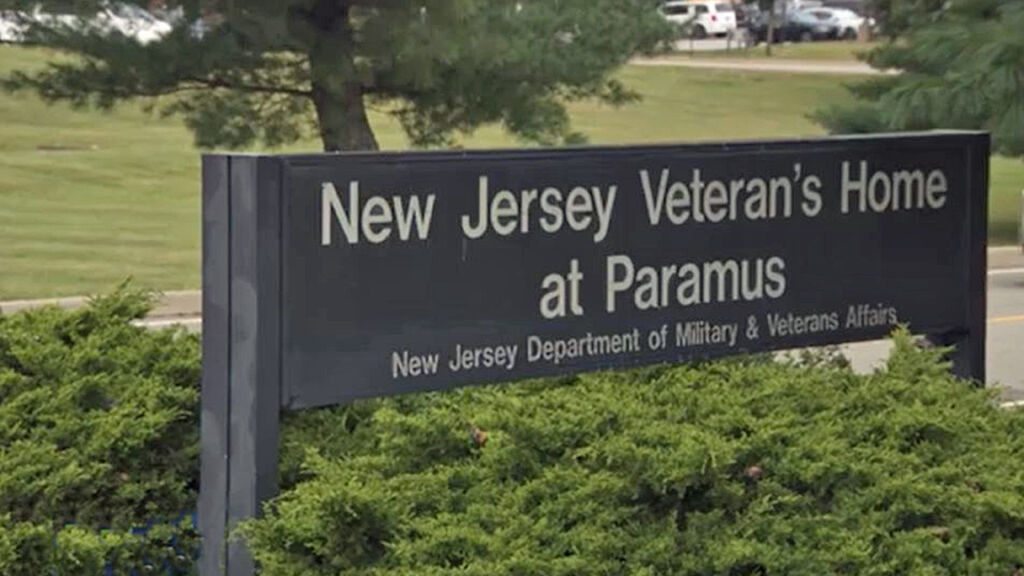
The state underreported the number of deaths from COVID-19 at two of New Jersey’s state-run veterans homes during the first five months of the pandemic, according to last week’s damning report by federal officials. A comparison of data from the report by the U.S. Department of Justice and data from the state Department of Military and Veterans Affairs shows New Jersey is still underreporting those deaths.
The number of COVID-19 deaths listed on the DMAVA’s website through last Tuesday at the two homes inspected by Justice Department officials — the Paramus Veterans Memorial Home and Menlo Park Veterans Memorial Home — was 174. But the Justice Department’s report put the number of COVID-19-related deaths at 190 combined in Paramus and Menlo Park in just the first five months of the pandemic in 2020. That’s 26 more deaths through July 2020 than were being reported by the state up to Sept. 5 this year.
It’s unlikely the actual number of deaths will ever be known, due to what the report called “limited testing and a failure to systemically track probable COVID deaths.” The report called the number “extraordinarily high.”
It was because so many died at the two veterans homes that the DOJ launched an investigation into the facilities in October 2020, seven months after the first case of COVID-19 was discovered in the state. Veterans living at the two facilities continue to receive inadequate care, the DOJ report said, and the Paramus and Menlo Park homes “continue to have high mortality rates.”
Lawmakers call for overhaul
The DOJ report alleged the two homes are violating the civil rights of residents by providing inadequate care, including poor infection-control procedures that contributed to the devastating COVID-19 outbreaks at the facilities. A number of legislators have called for overhauling oversight of the veterans homes. Lawmakers have described conditions as “outrageous” and “horrific.”
There are indications in the DOJ report that officials at the homes were reluctant to report people were dying as a result of COVID-19, at least initially.
‘It is clear that the number of deaths during COVID’s early months was substantially higher than the numbers publicly disclosed, and substantially higher than at other facilities.’ — DOJ report
The report states that an official at Menlo Park told his supervisor on April 1, 2020 that one resident who had tested positive for the disease and died at a hospital had died of pneumonia and the facility had “0 death(s) COVID related.” A Paramus official reported to his supervisor that a resident who had tested positive for COVID had died “with COVID-19 not because of COVID-19.”
It was clear the facilities were having trouble handling the pandemic. Members of the National Guard were deployed to both facilities in April 2020 to help handle the outbreaks as residents were dying at the rate of more than one per day.Six weeks into the pandemic, 39 residents of the Paramus home had died, roughly 16% of the population, including 12 in one week, while at Menlo Park, 25 had died — 11% of the population — eight in one week. By the end of April 2020, the report states, 95 residents of Menlo Park had died of numerous recorded causes, representing close to a third of its total population before the pandemic. At the same time, Paramus had 84 deaths, more than a quarter of its residents; 51 of those were recorded as COVID-positive or probable.
“It is clear that the number of deaths during COVID’s early months was substantially higher than the numbers publicly disclosed, and substantially higher than at other facilities,” the report states. While 100 residents died in a typical year in each of those homes, 98 Menlo Park residents and 92 Paramus residents died of all causes in April 2020 alone, the report added.
The Justice Department report refers to a likely undercount of deaths ‘due to a failure to systematically monitor and document clinical symptoms of COVID for all residents during the early days of the pandemic.’
The report notes that the state Department of Health told all long-term care facilities at the end of March 2020 that they should list the cause of death as a probable COVID-19 infection if the person who died had exhibited symptoms of the disease and lived in a facility where others had tested positive for COVID-19, and even if they had not had a positive COVID-19 test.
An “internal accounting” that included probable COVID-19 deaths put the numbers of those who had died as of July 2020 — 89 residents at Paramus and 101 at Menlo Park — 47 more than the state was officially reporting at that time. The 101 deaths at Menlo Park through July 2020 are higher than the 80 still being reported through last Tuesday on the DMAVA website. The DMAVA did not answer a request for clarification on the potential discrepancy.
The Justice Department report says even those numbers “are likely an undercount due to a failure to systematically monitor and document clinical symptoms of COVID for all residents during the early days of the pandemic.”
COVID unchecked in close quarters
The veterans homes were not alone in their inability to control the spread of COVID-19. The state’s long-term care facilities suffered thousands of deaths. By mid-April 2020, about six weeks into the pandemic and the first time the DOH reported COVID-19 cases and deaths for long-term care facilities, more than 1,500 had died. An NJ Spotlight News analysis found that these and other congregate living facilities — prisons, psychiatric hospitals and developmental centers — were responsible for 35% of some 6,400 lab-confirmed COVID-19 deaths in the first two months of the pandemic.
COVID-19 has generally been more fatal among elderly populations who are the majority of those in long-term care facilities, including the veterans homes. But poor infection-control procedures and a lack of personal protective equipment for staff, initially, and staff failing to wear or properly use PPE as late as mid-April 2020 also contributed to the high number of deaths.
According to the DOJ report, the Paramus and Menlo Park veterans homes continue to have higher mortality rates than most other New Jersey long-term care facilities.
Gov. Phil Murphy early on began promising there would be a full accounting of what went wrong in long-term care facilities. Last November, he finally announced an independent review would be conducted by an outside firm, with the results expected by the end of this year.
The DOH’s online COVID-19 dashboard lists almost 9,300 deaths of long-term care facility residents statewide through last Wednesday, roughly a quarter of the more than 36,000 deaths in the state since the start of the pandemic. Some 143 nursing facility staff have died. The DMAVA website lists three staff deaths, one at each of the three veterans homes.
According to the DOJ report, the Paramus and Menlo Park veterans homes continue to have higher mortality rates than most other New Jersey long-term care facilities. The report looked at the total number of people who died during the first months of the COVID-19 omicron variant in 2021 and 2022 and found that residents at the two facilities died at a higher rate than most other nursing homes; only 11% of the state’s 346 long-term care facilities had a higher death rate from all causes during the period. That led the authors of the report to conclude that Paramus and Menlo Park “continued to experience significant difficulties in implementing adequate infection control measures.”
— Chart by Colleen O’Dea
