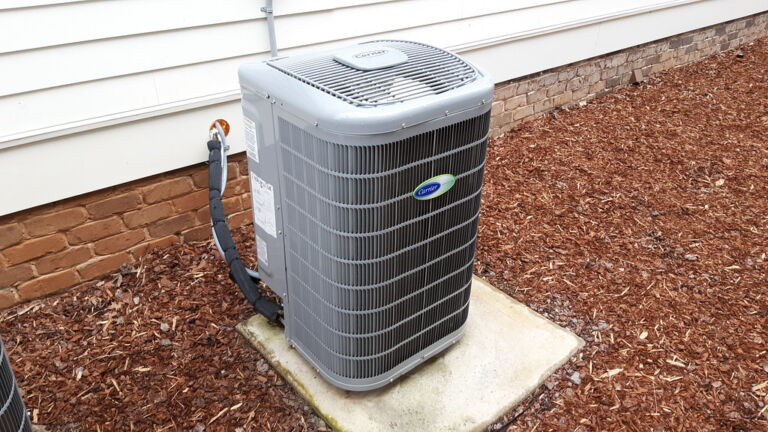
Credit: Jon Moore on Unsplash
New Jersey is considering establishing a “clean heat” standard, a market-based tool to drive down greenhouse gas emissions from fossil fuels used by utility customers, primarily natural gas.
By the end of this decade, Gov. Phil Murphy wants to reduce carbon pollution from the natural-gas industry by 50% below 2006 levels, a target set by an executive order issued earlier this year.
The ambitious goal has wide-ranging impacts for the future of the state’s four gas utilities, as well as their employees. And, perhaps more significantly, impacts on how millions of customers will heat and cool their homes and offices and at what cost.
“The need for climate action is not only obvious to us here in New Jersey. It’s existential,’’ said Catherine Klinger, executive director of the state’s Office of Climate Action and Green Energy, citing the extreme heat, thunderstorms and flooding occurring throughout the state in recent months. “Today is a very important first step.’’
Last week, the New Jersey Board of Public Utilities adopted what it touted as a building decarbonization start-up program, an initial step to electrify 400,000 homes and 20,000 commercial properties by 2030. The building sector is the second biggest source of greenhouse gas emissions, accounting for 26% of the state’s carbon pollution.
Success in power sector
New Jersey has done well in reducing global-warming emissions from the power sector, but has been less successful in curbing pollution from the building sector, according to Eric Miller, New Jersey energy policy director for the Natural Resources Defense Council.
“It’s been pretty flat,’’ said Miller, a panelist at a conference in Trenton held by the BPU Wednesday on reducing emissions from the gas industry. “There have been less policy levers than in the power and transportation sectors.’’
Miller and others suggested a “clean heat” standard as one policy that might produce more consequential results. Vermont and Colorado have adopted such standards as they have sought to reduce emissions, Miller noted.
‘The need for climate action is not only obvious to us here in New Jersey. It’s existential.’ — Catherine Klinger, NJ Office of Climate Action and Green Energy
A clean heat standard seeks to regulate and reduce emissions from natural gas and other fossil fuels by creating a cap-and-trade program. A clean heat credit market is where companies earn credits through such actions as energy efficiency upgrades or installing electric heat pumps.
In his executive order, Murphy directed the regulatory agency to consider whether competitive markets could drive down the lowest-cost method for reducing greenhouse gas emissions.
The tough questions
While the all-day conference marked the opening of what could be an 18-month process, no clear consensus emerged for any alternative. Options mentioned included heat pumps, energy efficient upgrades, green hydrogen and renewable natural gas, as well as leak detection and carbon capture programs.
“This is a technological-neutral standard,’’ Miller said. The state’s recent building decarbonization program will help to answer key questions, he added.
Tough questions remain to be answered no matter what policies New Jersey decides to pursue. If the state decides to require heat pumps installed in commercial and residential buildings, it will mean a greater reliance on the electric power grid, which will likely need costly upgrades, policymakers conceded.
“The interplay between gas and electric is key,’’ said Abe Silverman, a former BPU executive and now head of a clean-energy transition program at Columbia University. “You have to make sure the electric grid can handle the load.’’
Others expressed concern the transition to a clean-energy future will leave some customers behind, particularly low-income residents who cannot afford to make the switch to cleaner technologies.
“The average ratepayer is going to look at how much it will cost him, but they are going to pick the cheapest option,’’ said Brian Lipman, director of the New Jersey Division of Rate Counsel.