
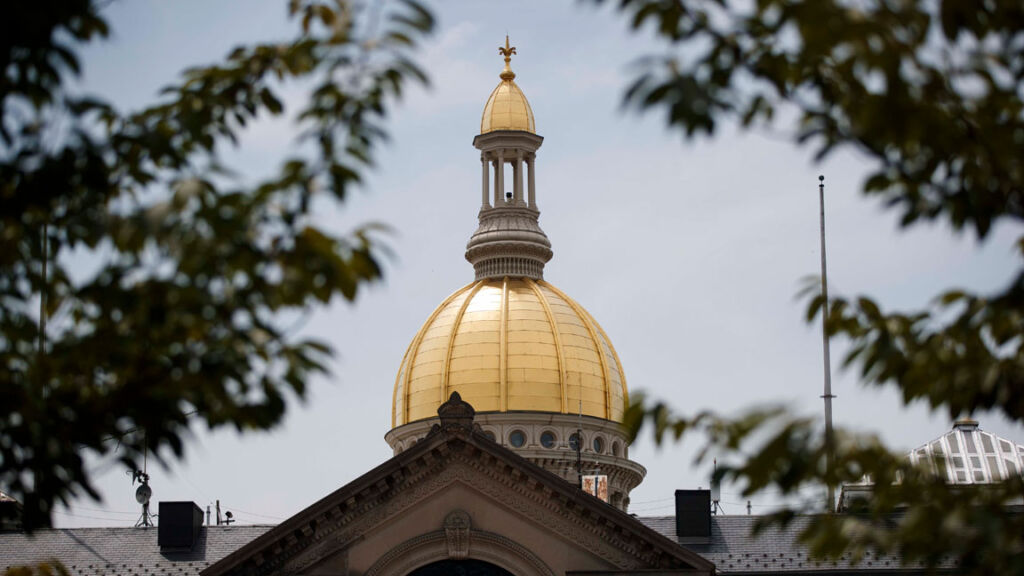
The latest round of spending from New Jersey’s dedicated debt-relief fund will pay for, among other projects, a new training facility for the New Jersey State Police and the replacement for a troubled state women’s prison in Hunterdon County.
In all, Gov. Phil Murphy and lawmakers approved more than $370 million in new spending out of the Debt Defeasance and Prevention Fund in late June when they also enacted a new annual budget for the fiscal year that began July 1.
Created by law in 2021, the debt-relief fund’s balances can be used to either retire existing bonded debt or to fund new capital projects on a pay-as-you-go basis to prevent the need for new borrowing.
The fund operates as an “off-budget” account, meaning spending backed by the fund’s balance occurs separate from the state’s annual budget, which now totals $54.3 billion.
Earlier this year, the Murphy administration used the debt-relief fund’s resources to retire roughly $1 billion in bonded debt, a move that was expected to save nearly $600 million in long-term interest costs ultimately covered by taxpayers.
The latest round of pay-as-you-go spending from the fund was authorized via legislation signed by Murphy, a second-term Democrat, on June 30.
Line items
Included in that debt-relief spending bill was $137 million for the Department of Transportation, which will use the funding as the matching dollars the state is required to put up for certain federal infrastructure-investment programs, according to the legislation.
Murphy and lawmakers also approved spending $120 million on the design and construction of a new training center for the New Jersey State Police, which uses a training center in Sea Girt, Monmouth County that’s more than 100 years old. The new training center was first proposed by Murphy in late February when he proposed a new annual budget for the 2024 fiscal year.
The fund operates as an ‘off-budget’ account, meaning spending backed by the fund’s balance occurs separate from the state’s annual budget, which now totals $54.3 billion.
Another $90 million from the debt-relief fund was allocated to cover expenses related to the planned replacement of the troubled Edna Mahan Correctional Facility for Women in Hunterdon County. Murphy called for closing the state’s only women’s prison in June 2021, following a report of several women being physically assaulted by corrections officers.
Murphy first proposed the funding for the women’s prison in February, with administration officials saying at the time that the allocation would be used to cover the cost of transitional modular housing likely to be located at an existing men’s prison while a new women’s prison is built.
Meanwhile, the Camden-based South Jersey Port Corporation is getting $24 million from the debt-relief fund to cover capital investments, including “maintenance, repair, and technology projects,” according to the legislation.
Tackling NJ’s debt
Murphy and lawmakers created the debt-relief fund in 2021, as part of efforts to ease New Jersey’s significant bonded debt, which rose to a record-high $48 billion during the 2021 fiscal year.
The fund’s establishment also came on the heels of the decision by Murphy and fellow Democrats who control both houses of the Legislature to borrow $4 billion without voter approval during the initial months of the COVID-19 pandemic, when the administration was predicting major revenue losses would be triggered by the health crisis.
But those losses never materialized in full and the state would instead go on to experience record tax collections amid a robust federal response to the pandemic, helping to generate a massive budget surplus.
Murphy and lawmakers seeded the debt-relief account with an initial deposit of $3.7 billion in 2021. Months later, a $2 billion-plus share of the initial deposit was used to retire, or defease, some of the state’s existing bonded debt to generate savings on long-term interest costs.
Murphy and lawmakers created the debt-relief fund in 2021, as part of efforts to ease New Jersey’s significant bonded debt, which rose to a record high sum of $48 billion during the 2021 fiscal year.
Last year, Murphy and lawmakers approved another sizable deposit, totaling more than $5 billion, as state tax collections continued to surge despite the ongoing health crisis. A roughly $2 billion share of that deposit was immediately appropriated to cover school construction projects through the state Schools Development Authority.
Earlier this year, Murphy proposed making a third deposit, totaling more than $2 billion, after tax collections continued to outperform projections through the first half of the 2023 fiscal year, which ended June 30.
But his administration revised its revenue forecasts in May, with projections for the remainder of the 2023 fiscal year and the full 2024 fiscal year reduced by a combined more than $2 billion.
As lawmakers introduced the annual spending bill for the 2024 fiscal year, they added more than $1 billion in new spending to Murphy’s draft, including to cover dozens of add-ons commonly referred to as “Christmas-tree” line items inside the State House, according to final budget documents. At the same time, lawmakers also reduced the planned deposit into the debt-relief fund from $2.35 billion to $400 million.
According to estimates from Moody’s Investors Service that were included in the state’s latest annual debt report, New Jersey ranked 4th among U.S. states in the category of per-capita debt, behind only Connecticut, Hawaii and Massachusetts.
