 Credit: NJ Spotlight News
No major spending cuts or other drastic budget changes are looming in New Jersey despite a sizable outlook revision that has reduced state tax forecasts by more than $1 billion with only a few weeks left in the fiscal year.
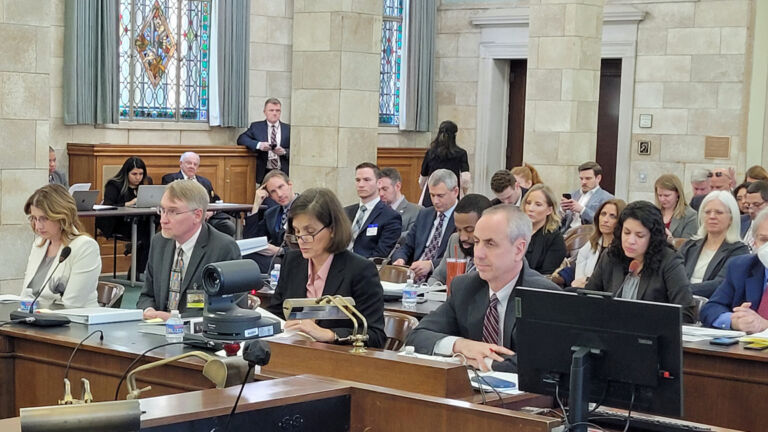
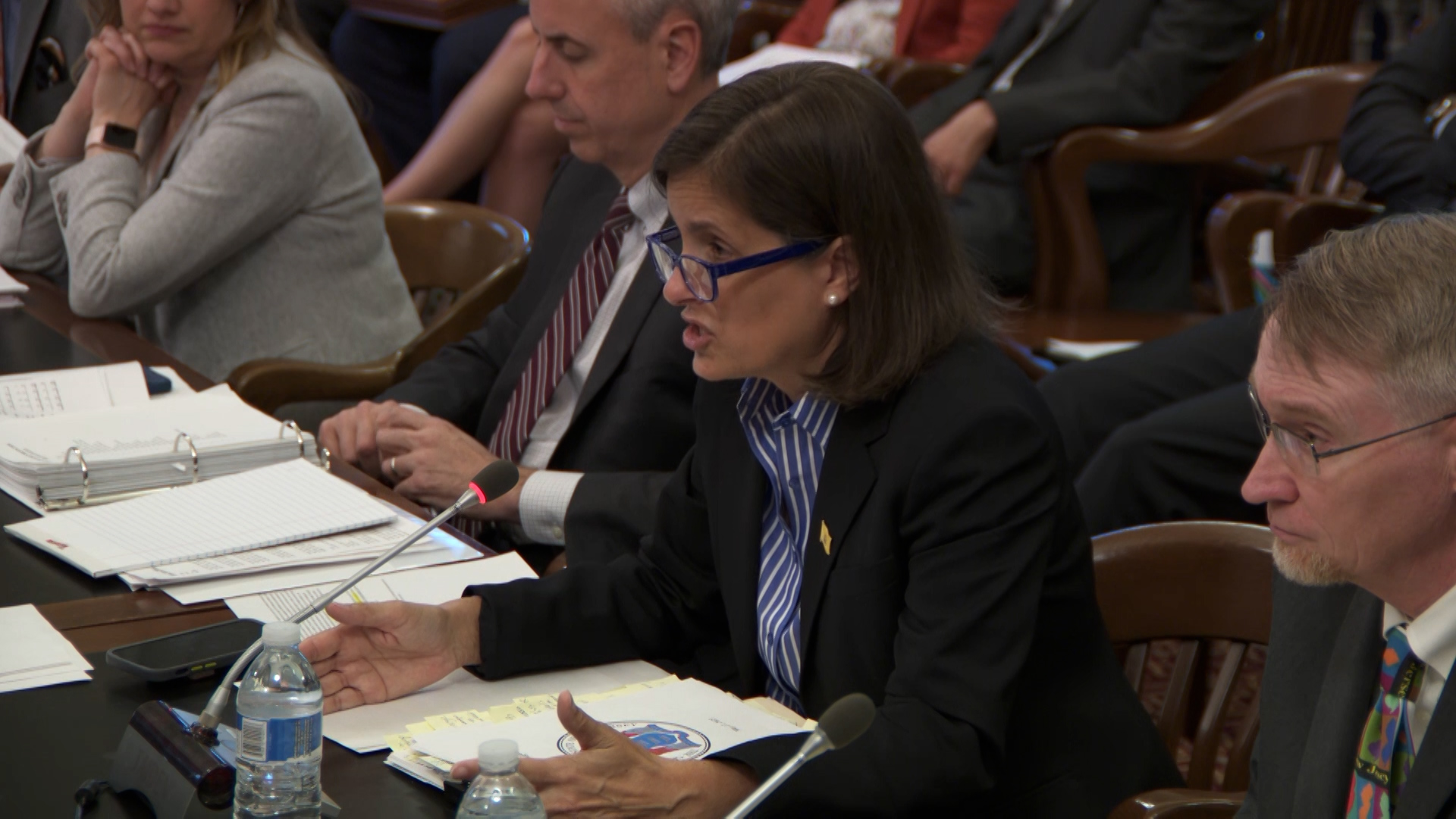
That was the message delivered to lawmakers on Wednesday by state Treasurer Elizabeth Maher Muoio as she detailed lower- than-expected April tax collections, but also ways a bolstered state budget surplus has prevented the need for “emergency budgetary actions.”
“Thanks to judicious fiscal planning, the state is in unprecedented shape to handle April’s momentary revenue weakness,” Muoio told members of the Assembly Budget Committee.
“Today we face no crisis,” she said.
Still, Muoio also warned members of the committee New Jersey is facing the potential for additional economic uncertainty as ongoing negotiations in Washington, D.C. over the federal debt ceiling have yet to bring about a deal.
The continued impasse brings the federal government a day closer to an unprecedented debt default that economists have warned would roil financial markets and trigger a surge in unemployment.
“That, obviously, is going to have an effect on New Jersey revenue levels,” Muoio said when asked about the potential repercussions of a default.
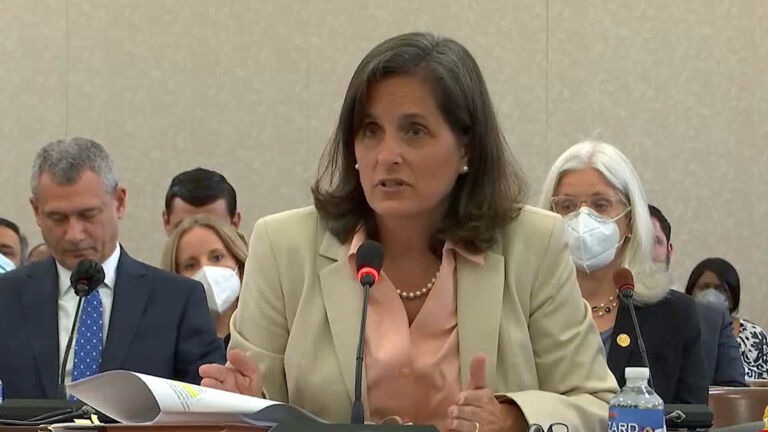
Later, Republicans on the budget committee raised their own set of concerns about the state budget and taxes.
They asked Muoio whether a “structural deficit” is looming in the fiscal year that begins July 1 because her office’s long-range revenue forecast was also lowered by $1 billion, even though the projected spending for the new fiscal year was largely unchanged.
“We’re obviously spending more than we’re taking in,” said Assemblyman Hal Wirths (R-Sussex).
In all, the forecasts for both the remainder of the current fiscal year, which ends June 30, and the new fiscal year that begins July 1 were downgraded by the Department of Treasury on Wednesday by a combined more than $2 billion.
A new set of forecasts released this week by fiscal analysts from the nonpartisan Office of Legislative Services project even more weakening in the state revenue stream in the wake of a spring tax-collection season that fell short of expectations.
Treasury’s forecast revisions, in raw dollars, total a significant amount of money. But for a state that now spends more than $50 billion annually, the $2 billion markdown across two full fiscal years represents only a small fraction of the total budgeted spending for the 2023 and 2024 fiscal years.
Around this time last year, New Jersey had just experienced a banner month of tax collections in April 2022. But this time around, April income tax collections alone plummeted by more than 27% off last year’s monthly high.
Moreover, annual income tax return payments fell $900 million below expectations this year, Muoio told lawmakers during Wednesday’s meeting.
Earlier this year, Treasury had upgraded the revenue forecast for the current fiscal year, adding more than $3.5 billion to the original projections that set a foundation for a $50.7 billion spending plan enacted by Gov. Phil Murphy and lawmakers late last June.
Even with the latest forecast revisions, total tax collections are still expected to exceed Treasury’s original projections by more than $2 billion, said Thomas Koenig, the budget and finance officer for OLS.

However, budget reserves that were expected to grow to over $9 billion through the end of June will instead come in closer to $8 billion, according to Treasury’s latest projections.
A series of additional spending cuts known as “lapses” will also help bring spending in balance, according to budget documents.
It was just a few years ago, after the onset of the COVID-19 pandemic triggered near-term revenue losses, that Murphy and lawmakers had to enact a series of unexpected mid-year budget cuts to keep overall spending in balance.
Property-tax relief benefits for senior and disabled homeowners and housing assistance programs for veterans were among the budget casualties at the time.
And in prior years, when the state’s budget reserves were not as well stocked as they are today, short-term revenue losses caused everything from K-12 public education aid to contributions into the public-worker pension funds to be reduced in response to mid-year forecast revisions.
However, this time around, the state’s budget reserves were big enough to help absorb a $1 billion hit with little to no pain.
‘This is a budget we can all be proud of, and we look forward to working with you and members of the committee in the coming weeks to finish the job.’ — Treasurer Elizabeth Maher Muoio.
“Given the state’s history over the last 20 years, that is a remarkable turn of events,” Koenig noted during Wednesday’s hearing.
Despite the forecast change for the 2024 fiscal year, Murphy is still projecting just over $53 billion in total spending, roughly the same amount he proposed in February, according to budget documents.
Meanwhile, a planned doubling of the state’s child tax credit also remains on course, as does the expected expiration of a special corporate-tax surcharge on New Jersey’s top-earning businesses that will further cut into the state’s revenue stream midway through the 2024 fiscal year.
Muoio said the Murphy administration is also still planning to deposit by June 30 more than $2 billion into a special account that’s been used in recent years to retire bonded debt or fund large projects on a “pay-as-you-go” basis to prevent the need for additional borrowing.
“This is a budget we can all be proud of, and we look forward to working with you and members of the committee in the coming weeks to finish the job,” Muoio said.