 Credit: (AP Photo/Jason R. Henske)
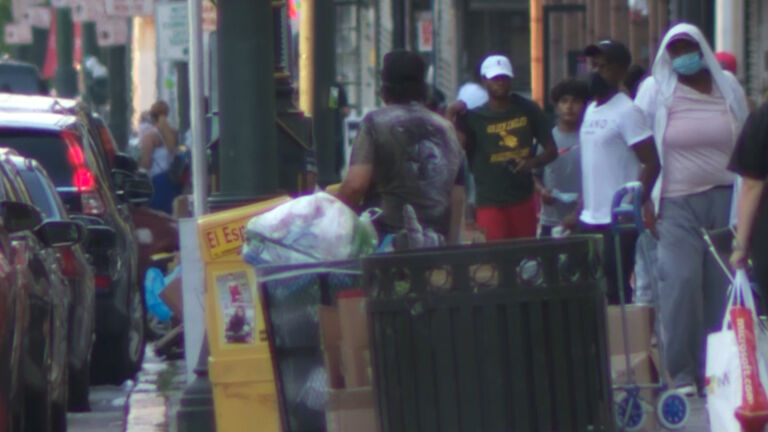
Almost 15% of New Jersey’s children were living below the federal poverty level in 2021, up 2% from 2019, according to a recent report by a nonprofit research and advocacy group.
Highlighting the most pressing problems families face, among them poverty, Advocates for Children of New Jersey earlier this month released “NJ Kids Count 2023: The State of Our Counties,” the first report on the well-being of the state’s children and families since 2020. The report explores a wide variety of issues that impact the state’s children, young people and their families from economic security to prenatal health care. The data is broken down by county, race and ethnicity.
The last ACNJ report came at the height of the COVID-19 pandemic in 2020. This year’s report aimed to capture the state of children and families’ well-being “as the state returns to a new normal after COVID-19,” examining the early effects of pandemic-related policies such as statewide shutdowns and remote education. In 2021, about 16.9% of children were living in poverty nationally.
Mary Coogan, the CEO of Advocates for Children of New Jersey, said the 2023 report can act as an introduction to understanding the effects that the pandemic and the policies that came with it had on children in New Jersey.
“Though it will be a long time before we can determine the true effect the pandemic has had on the physical and mental health, educational opportunities, and overall stability of children, youth, and families, the data book can offer a baseline to start,” she said.
The data book explores family economic security in New Jersey through a variety of measures. According to the report, 14% of New Jersey’s children were living below the federal poverty level in 2021. In some counties — Atlantic, Essex, Hudson, Ocean, Passaic and Salem — more than one-fifth of all children were living under the federal poverty threshold. However, the federal poverty threshold fails to fully reflect the burden on these families and children as the measure does not account for the cost of living in each state. In New Jersey, advocates argue that the federal poverty threshold should be doubled to accurately represent the families who are struggling to make ends meet.
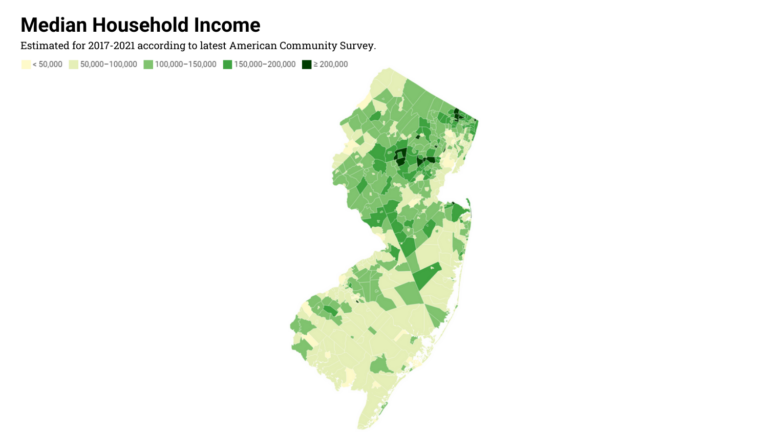
In New Jersey, the median income of families with children under 18 was $111,913 in 2021. Cumberland County had the lowest median income of any county in the state at $59,325; the highest was in Morris County, at $165,800.
The high cost of housing in the state is also burdening New Jersey families. Nearly half of all New Jersey households spend more than 30% of their income on rent. This is on par with the rest of the nation; 49% of renter-occupied households in the U.S. pay more than 30% of their income on rent.
Child health care
The ACNJ also examined child health care across the Garden State, showing glaring racial disparities in prenatal care and infant mortality.
In 2021, Black, non-Hispanic and Hispanic women were less likely to receive prenatal care than white women in New Jersey. While 83% of white women received prenatal care, 65% of Black, non-Hispanic women and 64% of Hispanic women received this important early care for their infants.
Infant mortality also disproportionately affects minority groups in New Jersey, and across the country. Black, non-Hispanic babies had an infant mortality rate of 9.2 per 1,000 over the years 2016-2020, double that of the state as a whole and more than 3.5 times the rate of infant mortality of white babies (2.5 per 1,000). One of the leading causes of infant mortality is low birthweight, which can also lead to other health problems. In New Jersey, there were twice the number of Black low-birthweight babies (12.8%) as white low-birthweight babies (5.9%).
The ACNJ report also noted that in every county, from 2018 to 2022, there was an increase in the number of NJ FamilyCare recipients under age 19. NJ FamilyCare is New Jersey’s publicly funded health insurance program for children in families with a household income up to 355% of the federal poverty level.
New Jersey had the highest rate in the country of births to foreign-born mothers. Thirty-eight percent of all births in New Jersey were to foreign-born mothers in 2021. They accounted for 50% or more of total births in Hudson, Middlesex and Union counties. According to the Pew Research Center, foreign-born mothers of newborns “are far more likely to have low family incomes and to be living in poverty than their U.S.-born counterparts.”
— Graphics by Genesis Obando.