
Income rose almost universally throughout New Jersey at the end of the last decade, reducing poverty levels and helping ease the financial burden of housing costs, the latest data from the U.S. Census Bureau shows.
But the data, five-year estimates for the period 2017-2021 for all municipalities, only partly accounts for the impacts of the COVID-19 pandemic on the economy. And, it covers little of the steep rises in rent and home prices that occurred as a result of the easing of pandemic restrictions. Due to the constraints of the annual American Community Survey, the data calculates only five-year estimates for small geographic areas like municipalities in order to provide more accurate information.
Statewide estimates for single years found poverty was virtually unchanged when comparing 2016 to 2021, when 10.2% of people were living under the federal poverty limit – an income of $26,500 for a family of four. But that was higher than in 2019, when the level had dropped to 9.2%. Meanwhile, the median household income rose by more than 17% over the five-year period from 2016 to 2021, reaching $89,296.
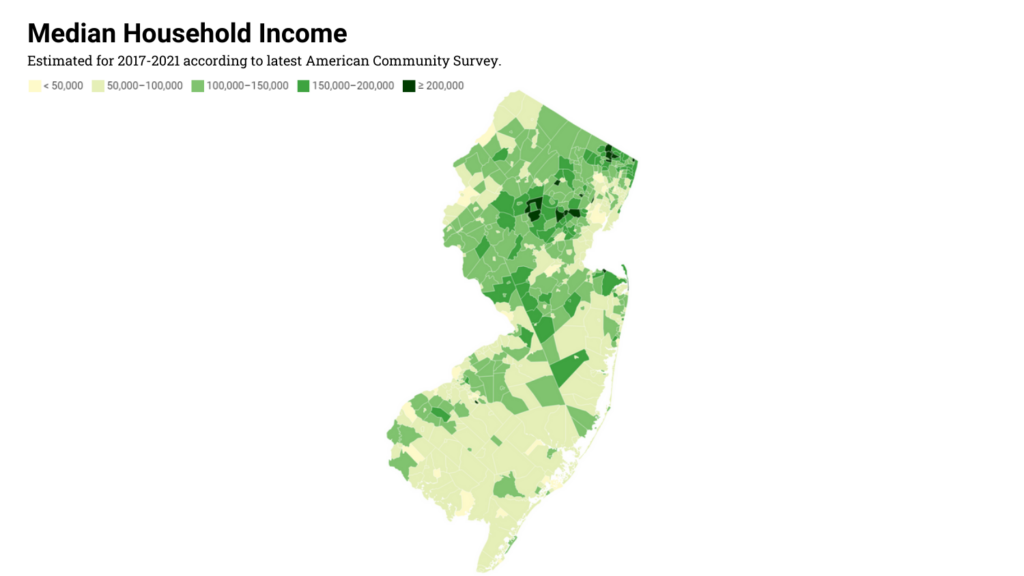
The local data released last month by the Bureau showed the median household income exceeded the maximum $250,000 measured by the survey in four New Jersey municipalities, all in the north – Saddle River, Essex Fells, Millburn and Mountain Lakes. Some 95% of communities registered increases in median income, the vast majority of those were double-digit increases.
While median housing costs for homeowners and renters also rose from the period of 2012-2016 to 2017-2021, the proportion of people in both those groups considered burdened because they paid at least 30% of their income on housing costs dropped in a majority of communities.
The map below shows median incomes by municipality and the table has housing data for each community.
