
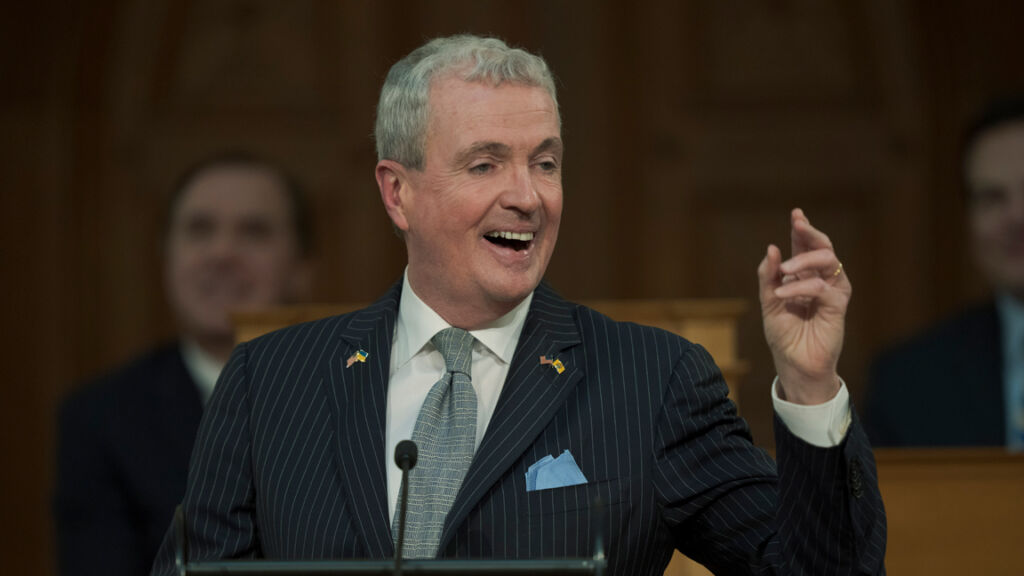
Gov. Phil Murphy is proposing more than a dozen ways New Jersey should spend its remaining federal pandemic aid, with funding for Jersey Shore boardwalks and aid for local governments facing rising employee health care costs among his requests.
Murphy’s latest plans for deploying the last of New Jersey’s direct COVID-19 aid were included in a proposed state budget currently being reviewed by the Legislature.
In all, Murphy has identified nearly $500 million in new spending that would be backed by money the state received in 2021 through the federal government’s American Rescue Plan Act, according to budget documents.
If lawmakers go along with his plans, it will add to the more than $53 billion in appropriations that Murphy requested lawmakers approve as part of his overall spending plan for the 2024 fiscal year, which begins July 1.
More than $1 billion of the state’s original $6.2 billion allocation has yet to be appropriated, according to the latest official accounting. That means lawmakers will also likely have their own ideas about ways the remaining federal aid should be used as they draft an annual spending bill in the run-up to July 1.
If past practice is repeated this year, a deal will once again be made behind closed doors, with the public likely learning only in the final days before the budget deadline exactly how Murphy and majority Democratic lawmakers agreed to use the leftover federal aid.
Urgency, expectations
Meanwhile, as Murphy has identified new ways to spend down New Jersey’s remaining federal aid, he’s facing criticism from Republican lawmakers who have questioned why it’s taking the administration a long time to pay out a large share of the federal aid it has appropriated.
They cite a recent report compiled by the Legislature’s state auditor that indicated just over $1 billion out of a sum of $5.2 billion in previously approved pandemic aid had been deployed by the administration as of the end of March.
Under federal law, New Jersey’s share of the funding through the American Rescue Plan Act doesn’t have to be appropriated in full until the end of 2024. From there, New Jersey and other states have another two years to spend down their federal dollars, according to the law enacted in March 2021.
Among the many new spending proposals Murphy has in his budget plan is a $100 million allocation to a planned ‘boardwalk fund.’
Murphy has already indicated he wants New Jersey’s remaining federal dollars — about $1.3 billion, according to the Legislature’s top fiscal analysts — to be appropriated in full by July 1 this year.
Last summer, the administration collected written suggestions from the public for using the remaining federal aid and also hosted a series of invite-only events to further discuss areas of need throughout the state.
In more recent weeks, policy advocates and experts have also been outlining ways the state should spend its leftover federal aid, including during the Legislature’s recent budget hearings.
Other potential uses
Everything from additional operating aid for state colleges and universities to increased support for University Hospital in Newark have been among the potential uses of the federal aid floated by advocates in recent weeks.
A little over a year ago, Murphy and Democratic legislative leaders agreed, as part of the current budget, to allocate more than $2 billion of the state’s federal aid for everything from statewide water-infrastructure improvements to major capital investments at Rutgers University.
Among the many new spending proposals Murphy has identified in his budget plan for the 2024 fiscal year is a $100 million allocation to a planned “boardwalk fund” that would be used to “help repair and renovate the seaside attractions that are so emblematic of the Jersey Shore,” according to the fiscal year 2024 Budget in Brief prepared by the administration.
Another $200 million would be used to help local governments contend with rising costs related to employee health benefits that experts say have been triggered, at least in part, by the ongoing pandemic.
That proposed spending item would fund “one-time grants” that would be conditioned on recipient local governments identifying “sustainable and actuarially verified savings ideas,” according to the Budget in Brief.
Among other items, Murphy is also proposing a $100 million appropriation for affordable “workforce” housing production. More than $40 million combined in new spending on technology upgrades at the state Department of Labor and Workforce Development and the state Motor Vehicle Commission has also been proposed by the governor.
‘The Administration and the Legislature have dedicated [American Rescue Plan funding] to many transformative, one-time investments that are simply longer-term in nature.’ — Murphy spokeswoman Jennifer Sciortino
All these items, and other proposals put forward by Murphy without specific dollar amounts attached to them, will likely be part of budget talks that aren’t expected to heat up until closer to July 1. Lawmakers will also soon begin drafting written budget resolutions that detail their own suggested additions to the annual spending bill, including those to be funded with the federal dollars.
“As always, the final budget product will be subject to negotiations with the Legislature,” said Jennifer Sciortino, a spokeswoman for Murphy, when asked about the process that will be used this year to allocate the remaining federal aid.
Republican criticism
Meanwhile, Sciortino also pushed back strongly against the criticism lodged by Senate Republicans after the release of the state auditor report earlier this month. Among other accusations, GOP senators said the Murphy administration is showing “absolutely no urgency” as it spends down the federal pandemic aid.
Among previously authorized appropriations where the funding has yet to be expended, according to the report, are $305 million approved last year for statewide affordable housing and $300 million for Rutgers University capital projects. Another $150 million for Robert Wood Johnson University Hospital in New Brunswick and $120 million for universal pre-K facilities are also listed as “unexpended” in the report.
While prior federal funding programs were intended to address short-term needs, Sciortino said the American Rescue Plan dollars are supposed to support the state’s “long-term strategic recovery and resilience,” such as funding capital projects that take longer to plan and to finance in accordance with all federal rules.
She also referred to a Dec. 31, 2026 expenditure deadline that was written into the American Rescue Plan Act.
“In accordance with the guidance, the Administration and the Legislature have dedicated [American Rescue Plan funding] to many transformative, one-time investments that are simply longer-term in nature,” she said.
[Editor’s note: This story has been updated from the original post.]
