
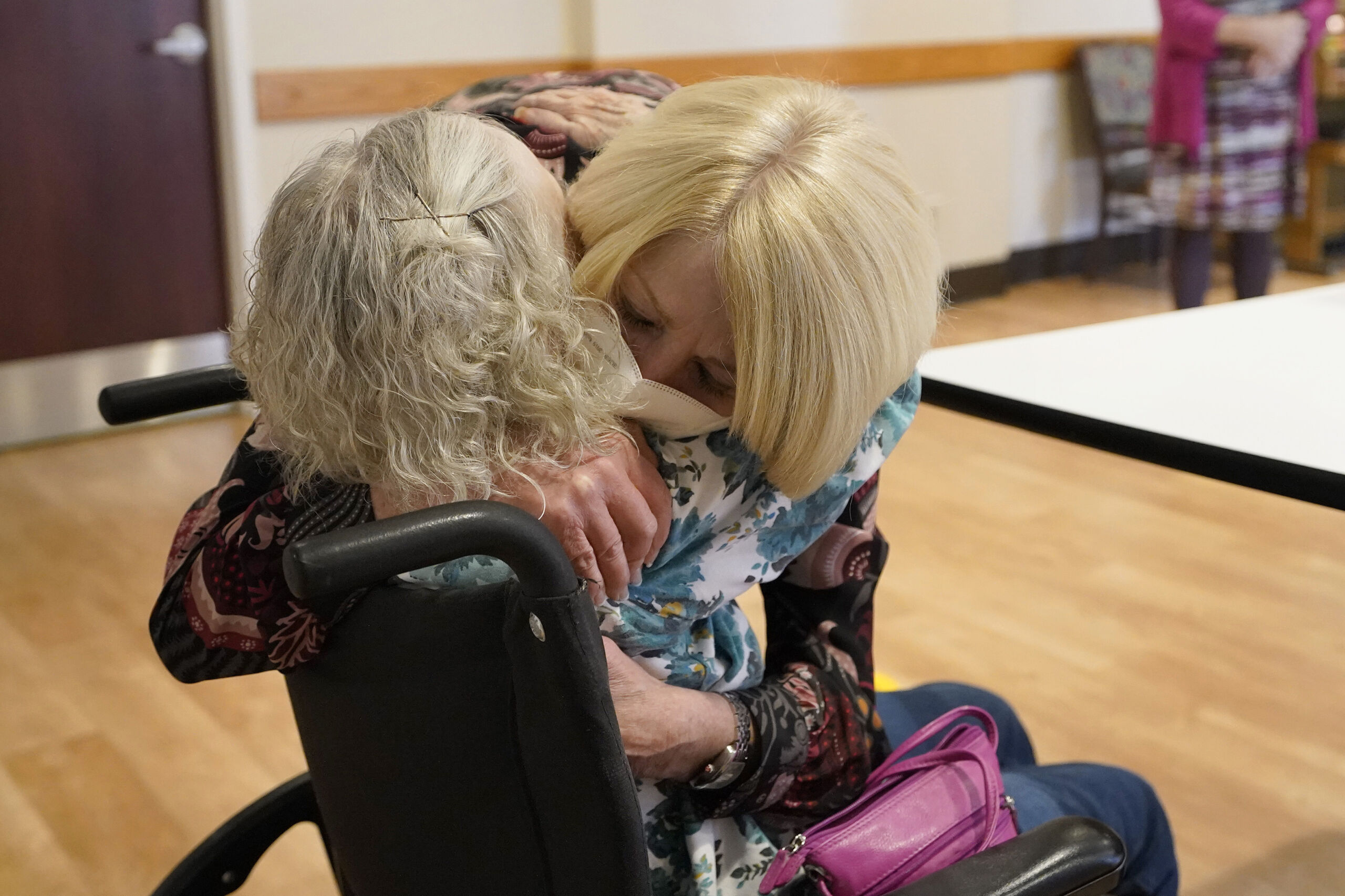
New Jersey officials may have closed Woodland Behavioral and Nursing Center, with the last residents leaving last month, but the legacy of the troubled Sussex County facility still looms large in Trenton.
Advocates for nursing home reform have said the situation at Woodland, formerly known as Andover Subacute — where the bodies of 17 residents were found in a makeshift morgue early in the pandemic — underscores the need for greater state scrutiny of long-term care operations. In all, more than 9,500 long-term care residents have died from COVID-19, nearly a third of New Jersey’s total pandemic fatalities.
To address some of the needs, state lawmakers advanced a handful of bills Thursday to better protect the 45,000 vulnerable New Jerseyans living in nursing homes by expanding state oversight and support for struggling long-term care facilities. They also discussed, but did not vote on, ways to improve financial transparency around New Jersey’s 370 nursing home operations so regulators have a clear picture of where all money is spent.
‘We can’t have the eyes of government regulators everywhere, so we have to make sure our regulations are as thorough as they need to be to make sure vulnerable people are protected in institutional care.’ — Assemblyman Herb Conaway Jr.
State officials took unprecedented steps this spring to suspend Woodland’s nursing home license after they documented dozens of violations related to staffing, safety and resident care over the past year. Federal regulators also assessed operators nearly $200,000 in fines for various infractions and eventually suspended Medicaid funding that made up 92% of the facility’s revenue.
“As we saw firsthand with the closure of Woodland Behavioral and Nursing Center, some facilities lack the capacity and/or will to quickly remedy serious health and safety violations,” New Jersey Long Term Care Ombudsman Laurie Facciarossa Brewer told members of the Assembly Health Committee on Thursday. “It is always residents and staff who suffer the most in failing facilities, especially where there is no leadership capable or willing to step up and remedy serious problems.”
Worst-rated nursing homes
Woodland is certainly not alone. A report released in February by the state comptroller’s office identified New Jersey’s 15 worst-rated nursing homes, which together receive more than $100 million annually in public Medicaid dollars. An update two weeks ago found some facilities had shown improvement while others had been downgraded, resulting in nine nursing homes receiving one of five stars through the federal rating system.
 Credit: (NJ Spotlight News)
Thursday’s actions by the Assembly Health Committee are the latest step in the state’s ongoing effort to improve outcomes at long-term care facilities, but the bills approved face additional votes in both the Assembly and Senate before they could be sent to Gov. Phil Murphy for final approval. Working with Democratic allies in the Legislature, Murphy’s administration has provided more than $150 million in bonus pay for frontline workers, set up systems to ease communication with nursing home operators and — despite strong opposition from industry leaders — set strict staffing requirements in law, among other recent reforms.
What has not happened is a formal review of the state’s response to COVID-19 in long-term care facilities, something that Murphy promised early in the pandemic but has yet to do. Murphy and other administration officials have said it is not appropriate to begin an appraisal of their past actions while the public health emergency is still active, but Republican lawmakers have repeatedly called for an investigation.
Advocates like Brewer and AARP New Jersey have largely embraced the changes that have been implemented, but they say more needs to be done to protect vulnerable nursing home residents. Many lawmakers seem to agree.
“We can’t have the eyes of government regulators everywhere, so we have to make sure our regulations are as thorough as they need to be to make sure vulnerable people are protected in institutional care,” said Assemblyman Herb Conaway Jr. (D-Burlington), who chairs the health committee.
“We have a fiscal responsibility to ensure the dollars that are being spent are being spent to achieve our goals as a society, that people are able to live with dignity in these institutions,” Conaway added. New Jersey nursing homes collect $1.7 billion in public funds annually, he said.
‘Mission critical’ in long-term care
The health committee unanimously approved a bill (A-4335) that would enable the Department of Health to form “mission critical” teams that would work with long-term care operators to identify problems and improve outcomes. Murphy included $500,000 in the current budget to fund this team effort. The panel also passed a measure (A-4322) that would allow the department to appoint a monitor for facilities that are struggling, something it did with Woodland. “These bills are designed to work together,” Conaway said.
These measures would improve the health department’s oversight ability and help it identify problems early on, ombudsman Brewer said, making it easier to prevent “dangerous and inhumane” conditions like those that developed at Woodland. “As I see all too often, facilities can deteriorate in quality and safety, especially after ownership changes hands, and sometimes very quickly,” Brewer said.
What has not happened is a formal review of the state’s response to COVID-19 in long-term care facilities, something that Gov. Phil Murphy promised early in the pandemic.
Nursing home industry representatives supported the proposal for “mission critical” teams, although John Indyk, vice president of the Health Care Association of New Jersey, said he hoped the process would not be overly punitive. “We don’t want people to be penalized for finding and trying to correct things on their own,” he said.
The health committee also approved a bill that would expand the scope of Brewer’s office so it could monitor care for institutionalized residents younger than 65 years, a change that would align state and federal law, and passed a measure that spells out nursing home residents’ right to sue facilities for improper treatment or care. The panel also backed a proposal to cap at 4% annual rent increases at nursing homes, although Conaway and others agreed that number needs further study.
Nearly half of the committee hearing’s time was focused on a proposal that was not scheduled for a vote. The bill (A-4340) would revise the list of financial documents that nursing homes are required to file to the state, something advocates have long said is needed to ensure nursing home operators are not hiding profits through complex ownership structures or by paying vendors in which they have a business stake.
“In my opinion there are lots of gaps in our knowledge of the financial structures that underpin these operations,” Conaway said. “If there are calls for increased spending, we want to know if those calls are justified, and we don’t have the financial information to determine that.”
Transparency is an issue
Indyke, with the Health Care Association, said “we’re all for transparency,” but said it could be redundant given how nursing homes must already file volumes of financial information with federal and state regulators. He urged lawmakers to reinstate the use of annual cost reports, which he said the industry submitted until 2014, but state officials no longer collect these filings.
“That would provide the transparency that we so often get accused of not providing,” Indyke said. But these filings also come at a cost, he noted, with a price tag of $100,000 and significant staff resources, both of which can negatively impact residents. “That’s $100,000 less to spend on patient care. It all adds up. And eventually it detracts from patient care,” he said.
