
 Credit: (AP Photo/Julio Cortez)
New Jersey’s red-hot warehouse market showed more strong demand in the last three months although may see less vigorous growth in future if the economy slows and curbs on the industry are imposed by state lawmakers and local officials, according to industry analysts.
Data for the first quarter of 2023 from the real estate firms Newmark and Cushman & Wakefield showed that rents rose again for warehouse space throughout the state, reflecting continued strong demand despite the addition of millions of square feet of new space becoming available.
Almost 12.5 million square feet of industrial space — a category that consists mostly of warehouses — was under construction statewide in the quarter, well ahead of the 3.7 million square feet where construction was completed during the period, according to the Cushman & Wakefield report.
The new data shows a market where growth is moderating from its breakneck pace spurred by the COVID-19 pandemic but still shows strength, the company said.
“Demand in New Jersey’s industrial market has stabilized to pre-pandemic norms but is still outperforming other regions across the country,” Cushman & Wakefield said. “The current construction pipeline remains robust, though there may be a slowdown in future construction starts due to the current economic environment and the challenges in securing project financing.
Rents rise
The Newmark data matched the upbeat account, showing that the average asking rent for industrial space in northern and central New Jersey rose to $13.57 a square foot, its highest in at least 10 years. The report also showed that about 8.2 million square feet of warehouse space was under construction in that part of the state, down from 9.6 million square feet in the fourth quarter of last year.
Newmark predicted that the average asking rent for industrial space will continue to rise this year, and the vacancy rate, at 2.7% in the first quarter, will remain below the national average. But warehouse space may face future constraints on growth because of legislation to control warehouse growth, and possible changes to zoning at the municipal level to control the recent rapid expansion.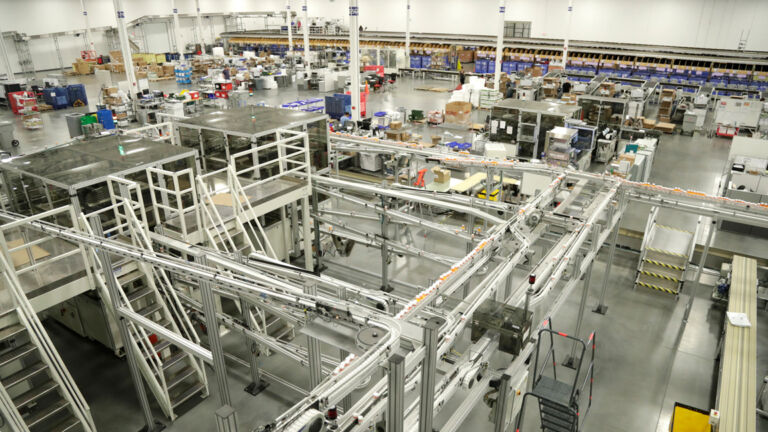
Statewide, the industrial vacancy rate rose to 3.2% but remained low by historical standards, according to the Cushman & Wakefield report. In central New Jersey, strong demand for newly delivered space drove “net absorption” — the rate at which new property is occupied, and a key indicator of demand — into positive territory. But demand was less robust in the northern part of the state, resulting in a negative rate there.
First-quarter market growth represented a return to pre-pandemic norms, now that online buying has subsided and economic stimulus by state and federal governments has been withdrawn, the Cushman & Wakefield report said. New leasing totaled 5.3 million square feet, up slightly from 5.2 million square feet in the previous quarter.
Rents are expected to continue to increase, albeit less strongly than in the pandemic-fueled days of 2021 and 2022, the Cushman & Wakefield report said. The construction pipeline will remain robust this year but may moderate in response to rising capital costs and a slowing economy. But tenant demand is expected to continue to perform well compared with other regions of the U.S.
Exit 7A/Exit 8
Key lease transactions were all in the warehouse/distribution sector in the first quarter. The biggest was a new lease for some 845,000 square feet in the area near Exit 7A and Exit 8 off the New Jersey Turnpike.
Another lease was signed by Vanguard Logistics for about 372,000 square feet at Linden, part of the 4.1 million-square-foot Linden Logistics Center, the largest planned development in the region of the Port of New York and New Jersey, the Newmark report said.
In a separate preliminary report on South Jersey, Newmark said the region saw the biggest increase in subleasing of industrial space among three areas within the Philadelphia market during the first quarter. The trend was driven by industrial companies “right-sizing” their footprints in response to a slowing economy, said Trae Hoffner, a research analyst for Newmark.
“Distributors and e-commerce tenants were very aggressive acquiring space over the last few years due to strong e-commerce sales and consumer spending,” Hoffner said in a statement. “Now that the economy is weakening and consumer spending is moderating, some tenants are drawing back their operations and giving back space as a result.”
But he said companies may reoccupy the space they have subleased if economic conditions become favorable again.
Community opposition
Despite some signs of a slowdown, logistics companies and other industrial users still have “great interest” in South Jersey. “The submarket’s proximity to major ports, highways, and population centers has solidified the area as desirable setting for distribution operations,” he said.
Statewide, the latest addition of warehouse space, and the expectation of still more to come, will fuel opposition in many communities where residents fear surging truck traffic, deteriorating air quality and the industrialization of remaining rural corners of the state. Some critics argue that warehouses should be built near ports and major highways rather than in suburban neighborhoods or in flood plains where they can worsen flooding or hurt the quality of local life.
“I’ve never been opposed to all warehouse development,” said Tirza Wahrman, a leading critic of a plan by the developer Bridge Industrial to build New Jersey’s biggest warehouse complex, covering 5.5 million square feet on a site that includes wetlands in West Windsor, Mercer County. “But warehouses that take farmable or floodable land are a mistake.”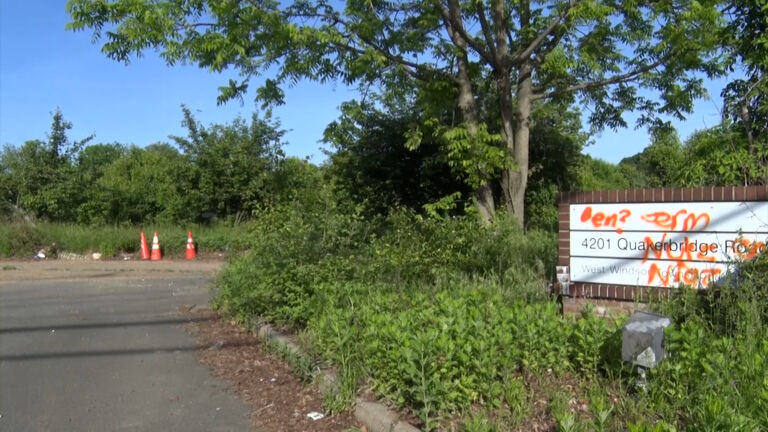
But supporters say more warehouses mean more jobs in an economically important industry, and a boost to local tax revenue in towns that approve the projects.
“We continue to support warehouse growth given its continued strong demand shows there is a market need,” said Ray Cantor, a spokesman for NJBIA (New Jersey Business & Industry Association). “Warehouses support our ports and logistics economy. Warehouses are also in response to consumer demand; people are buying more through e-commerce and warehouses are just the new shopping centers and malls of the ’80s.”
But he said the association also supports “sound planning on the state and local level so that warehouses are built in areas with the necessary infrastructure, near major highways, and with as little impact on communities as possible.”
State officials, led by the State Planning Commission, last year laid out detailed guidelines for municipalities facing warehouse applications. But they said the state has no authority to restrict the industry’s growth, and that land-use power rests with towns in a state that maintains its tradition of home rule.

