Credit: (RUSA)
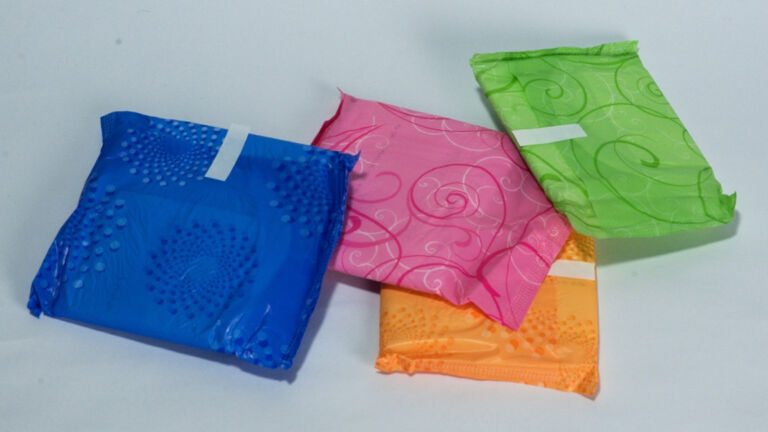
On Rutgers University’s New Brunswick campus, the bathrooms in newer buildings are generally well stocked with period products, according to undergraduate student leaders. But restrooms in many of the older facilities have dispensers that are dirty, damaged or empty of pads or tampons.
“Not only are they rusted, but the knob doesn’t turn, or there’s no knob to turn, or there’s no products inside. Whatever ‘broken’ means, we have a variety of ‘broken’,” said Allison Smith, the undergraduate student body president, who worked with other students to collect data on the machines’ availability and condition. “I have lost so many quarters trying” to get period products, she said.
This picture is starting to change. Thanks to advocacy by Smith, a senior, and other student leaders, Rutgers University has committed to install dozens of new dispensers at multiuse buildings across the central New Jersey campus and stock them regularly with period products that will be available for free to students, staff and visitors.
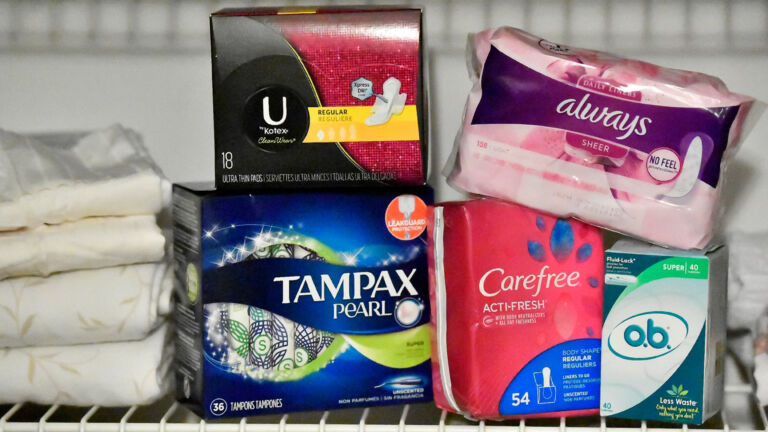
The university is also developing similar plans for its Newark and Camden campuses, according to Dory Devlin, the assistant vice president for media relations. “This project is a perfect example of the administration working with students to understand their needs and acting on them,” Devlin said, a response to the “clear need” communicated by the Rutgers University Student Assembly, also known as RUSA.
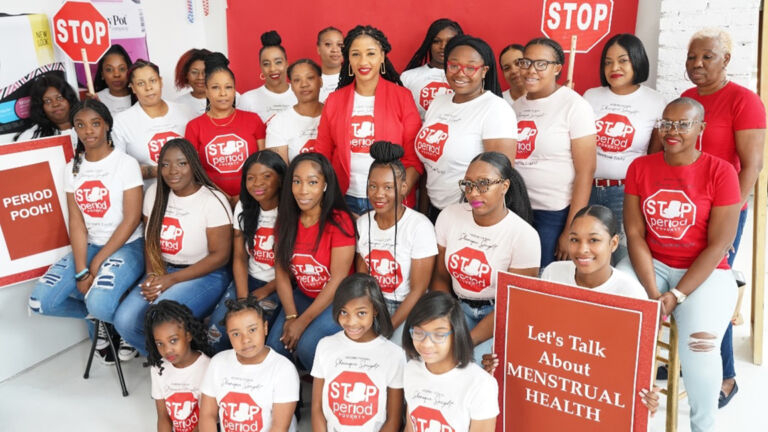
The student advocacy at Rutgers reflects a growing awareness of so-called period poverty, defined as a lack of access to menstrual hygiene products or a limited understanding of period health in general. Like many health issues, it is complicated by racial disparities; Black women face higher risks than white women for uterine fibroids and other conditions that can result in painful periods and extreme bleeding but are less likely to receive effective treatment.
Period poverty in NJ
Period poverty has also attracted attention from advocates and lawmakers in New Jersey. The Legislature — led largely by Assemblywoman Shanique Speight (D-Essex) — is advancing a package of bills designed to make tampons and pads available at homeless shelters, food pantries and through other social service programs and expand screenings to detect period health issues earlier.
And high school students have become involved with period health initiatives. A 2019 civics project led two young women at Bergen Technical High School to convince school officials to provide free products in the bathrooms of the Teterboro school.
Plenty of colleges have taken similar steps, Smith said. In her pitch to Rutgers leaders, she listed other Big Ten schools that already provide free menstrual health products, including the University of Michigan, Michigan State University, University of Minnesota, Northwestern University, the University of Nebraska at Lincoln, Indiana University and Ohio State University.
Work at other facilities was delayed by the COVID-19 pandemic but resumed this semester.
Smith said a project at the University of Maryland served as a model for the Rutgers student government’s proposal, which was supported by dozens of student organizations. Following Maryland’s playbook, Smith offered to use most of her presidential budget — $10,000 a year — to fund a pilot project with new dispensers and high-quality products available at no charge.
But Rutgers officials countered with a better deal, offering to fund the project itself. “The administration said, ‘You shouldn’t have to do that, we can do it’,” Smith said. “It was like, ‘We got you.’ And I’m super grateful.”
Devlin said some of this work began several years earlier. By the end of 2019 she said the university had installed new machines stocked with free products at the half dozen student centers on the central Jersey campus, which spans parts of New Brunswick, Piscataway and Edison. The university spent $20,000 on those upgrades, which involves 32 dispensers and three years of free products, she said.
Delayed by the pandemic
Work at other facilities was delayed by the COVID-19 pandemic, Devlin said, but resumed this semester with a focus on the four recreation centers on the New Brunswick campus. Some 25 machines will be installed by the end of the school year, with free products that will be “stocked on a regular, ongoing basis,” she said.
Rutgers sophomore Katrina Leigh plans to track the installation of the machines on maps she created. Leigh said she has been sharing data with Smith and other student leaders so they can help identify where new dispensers should be located.
“I’ve posted them on social media so that students can easily access the information and I hope to update the maps if [Rutgers adds] more dispensers around campus. However, any old dispensers that are not actively being restocked have been removed, so the maps are pretty bare,” Leigh said.
Advocates note there is much more work to do. In all, Rutgers University includes more than 900 buildings on three main campuses across some 6,000 acres, according to its website. It serves more than 67,600 students — including 48,000 undergraduates — and includes at least 23,000 faculty and staff, half of whom could be menstruating for multiple days each month.
“Obviously my goal is to have it in every building on every campus,” Smith said, “but I realize that may take a little longer.”
‘I’m just trying to spread awareness as much as possible before I leave office because I just want people to know Rutgers is doing this.’ — Student body president Allison Smith
While installation work continues, Smith said the immediate challenge is raising awareness about new dispensers with free products that now exist. To help spread the word, RUSA will host an event on Friday, March 31 at the Livingston Student Center to promote the project with free period products and a questionnaire designed to gather additional feedback on menstrual health needs.
“I think the issue is a lot of students don’t know about these [free] products. I was just told by the administration — and I was the ‘period-product girl’,” Smith said, joking about the reputation her advocacy created. “I’m just trying to spread awareness as much as possible before I leave office because I just want people to know Rutgers is doing this.”