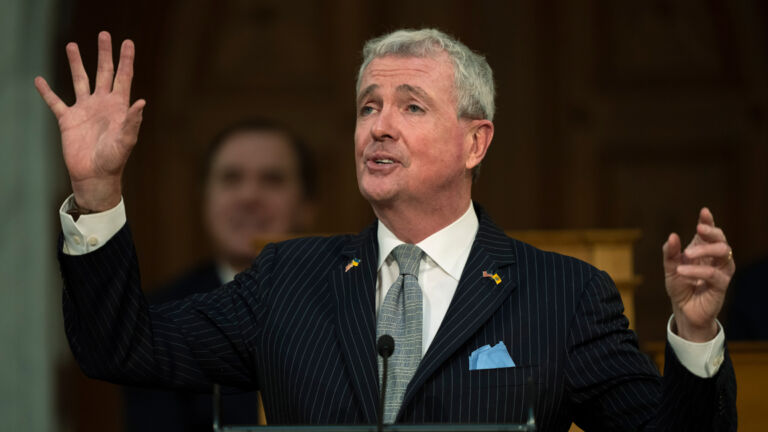
Credit: (NJGOV)
What it is: The state Department of Treasury each year publishes a “Budget in Brief” that provides an outline and summary of the sitting governor’s recommendations and plans for the new fiscal year that begins July 1.
According to a law that dates to the 1940s, the lengthy document — the latest covers 114 pages — is published at the time of the governor’s formal budget message before lawmakers, which generally occurs each year by the end of February.
The Budget in Brief for the upcoming 2024 fiscal year was released by Gov. Phil Murphy earlier this week, topped off with a short note penned by the governor, as well as a copy of the address he delivered to a joint session of the Assembly and Senate. The new edition outlines $53.1 billion in proposed annual spending, including increases for K-12 public schools, New Jersey Transit and the public-worker pension system, among other areas.
What it means: The Budget in Brief, often referred to in Trenton shorthand as the “BIB,” is required reading for anyone trying to keep close tabs on the latest fiscal proposals coming out of the executive branch, including areas where spending is due to rise or fall by a notable margin year-over-year. Moreover, the document often contains explanations that go into more detail on an administration’s top spending priorities, including some of the items the governor mentioned or highlighted during the annual budget message before lawmakers.
Detailed information about anticipated revenues and projected spending by departments, as well as a broader look at the state’s long-term economic and revenue outlook, are among the other items included in the BIB.
What BIB language looks like: This passage from the BIB for the 2024 fiscal year describes the administration’s latest plan to fully cover the state government’s annual employer obligation to the public-worker pension funds, as calculated by actuaries:
“The FY2024 budget also includes the third consecutive year of pension fund payments that meet or exceed the Actuarially Determined Contribution (ADC). The recommended contribution in FY2024, including contributions from the State lottery, totals approximately $7.09 billion. When the proposed FY2024 pension contribution is included, the combined pension contributions during the Murphy Administration will total over $32 billion, more than two and a half times the total amount contributed by the previous six governors combined. The ADC is nearly seven times higher than what it would have been if previous governors and legislatures had made the full payment.”
What comes next: After the budget message is delivered and the BIB comes out, the Legislature prepares to conduct a lengthy review of the governor’s recommendations and plans for the upcoming July-to-June fiscal year. This involves a series of hearings where members of the public are invited to testify on the administration’s specific budget proposals, as well as its broader fiscal policies and goals. From there, individual department heads and other key administration officials are also invited to appear before the respective budget committees in the Assembly and Senate during another round of public hearings.
The review process culminates with the drafting by lawmakers of an annual spending bill, which, in recent years, has incorporated a host of legislative add-ons that get tacked onto the governor’s budget plan after the public hearings have already concluded, leaving little time for the type of review given to the specific recommendations and plans outlined in the BIB.
After a spending bill is passed by both houses of the Legislature, the governor has the authority to sign the spending bill into law unchanged, use line-item veto powers to remove individual items or veto the spending bill in its entirety. All of this must take place before July 1 to avoid a constitutionally mandated shutdown of state government.