
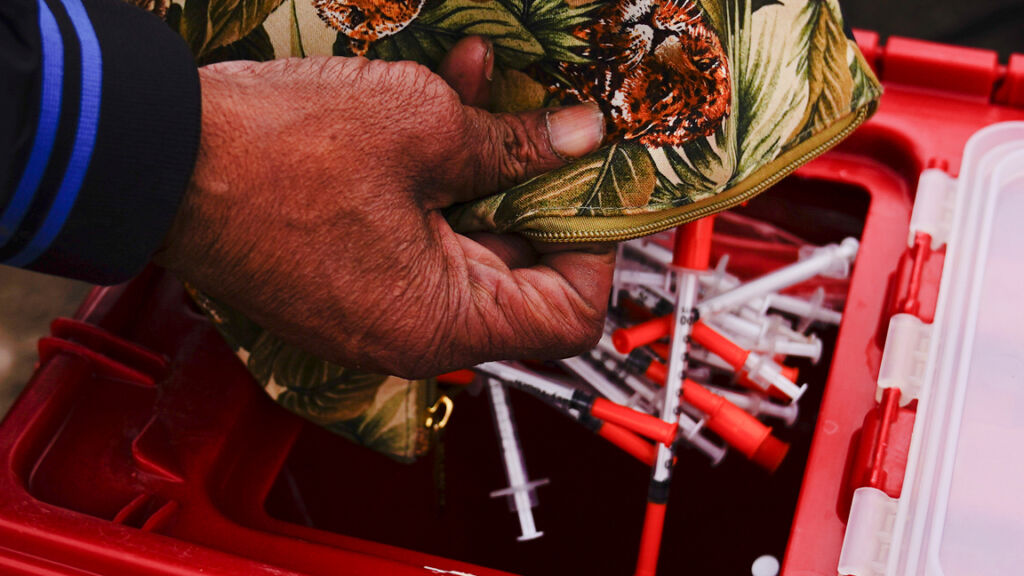
Lawmakers are seeking to create a new fund dedicated to receiving the state’s share of money from nationwide settlement agreements with opioid manufacturers, distributors and pharmacies under a bill scheduled to be heard Thursday.
“We want to make sure, as policymakers, we get ahead of this, and as money flows in, that we have a place for it, that it can be directed towards what the whole purpose of these settlements were about, which is to help people seek recovery and to help recover our communities that were affected by opioid addiction and overdose,” said Assemblyman Daniel Benson (D-Mercer), a primary sponsor of the bill.
The push by legislators to create a fund dedicated to the state’s share of national opioid settlement money comes as many continue to battle opioid addiction. So far this year, there have been 264 suspected drug deaths in the state, according to the Office of the Chief State Medical Examiner. Last month, the state joined nationwide settlements, totaling $20.1 billion with CVS, Walgreens and Walmart pharmacies and drugmakers Teva Pharmaceuticals and Allergan for their alleged role in the opioid epidemic, according to the state attorney general’s office.
What’s in the bill
In addition to creating the new fund, the bill establishes the Opioid Recovery and Remediation Fund Advisory Council. The council will consist of 13 members, including the commissioners of human services and health and the attorney general, along with 10 members of the public who were appointed by Gov. Phil Murphy in December.
The council will be tasked with providing the Department of Human Services, which is responsible for directing the disbursement and monitoring of the state’s share of the settlement money, with recommendations on how the money should be spent. The council is also required to provide data regarding access to substance use disorder prevention and treatment programs.
‘We know that if we’re not intentional about making sure where resources go, that it can fall into the black hole of government.’ — Sen. Troy Singleton
“For a long time, people who used drugs and people most harmed by the war on drugs were not part of creating New Jersey’s policy response,” said Jenna Mellor, the executive director of the New Jersey Harm Reduction Coalition and a member of the advisory council. “And that is changing. This council is a very important step in that change.”
The money in the newly created fund must be used for providing treatment to people with opioid use disorders, along with co-occurring substance use disorders or mental health conditions. Additionally, the money must be used to provide services to people with an opioid use disorder who are pregnant or are parents, and for working to prevent and reduce opioid overdose deaths, according to the legislation.
“We know that if we’re not intentional about making sure where resources go, that it can fall into the black hole of government,” said Sen. Troy Singleton (D-Burlington), a primary sponsor of the bill. “The families need this because they cannot wait to make sure that they have the programs that are necessary to help create deeper prevention and help folks…”
Accounting for the money
If the bill is signed into law, the human services department, in consultation with the advisory council, has 12 months to report to the governor and the Legislature how much money went to what programs.
‘For a long time, people who used drugs and people most harmed by the war on drugs were not part of creating New Jersey’s policy response. And that is changing’ — Jenna Mellor, New Jersey Harm Reduction Coalition
The state and any eligible county and municipal governments could receive a combined total of approximately $508.1 million from the nationwide settlement agreement, according to the attorney general’s office.
“Our hope is that … we see larger groups that can achieve certain statewide goals, as well as moneys being available to local groups that are kind of on the [front lines] fighting both the disease of addiction, but also helping to fuel recovery in our … hardest hit communities,” Benson said.
