The spread of HIV/AIDS has slowed significantly in New Jersey, with the number of new cases down two-thirds over a decade and a 50% drop in diagnoses between 2020 and 2021, according to an NJ Spotlight News analysis of state data. Some question the accuracy of the latest data however, given the impact of the COVID-19 pandemic.
State health officials highlighted the positive trends on World AIDS Day, an annual event held each Dec. 1 to support those living with the viral disease or those lost to it, and they said the numbers show New Jersey’s plan to eliminate the epidemic by 2025 is working. There are now 38,000 people here living with human immunodeficiency virus (HIV) infection or acquired immune deficiency syndrome (AIDS), the disease that can develop as a result; 80% are people of color and 9 in 10 are at least 40 years old.
“We continue to make progress in reducing HIV infection and continue to work toward the goals set forth in New Jersey’s strategic plan,” Health Commissioner Judy Persichilli said Thursday. “Getting tested for HIV is critical to protecting your health.”
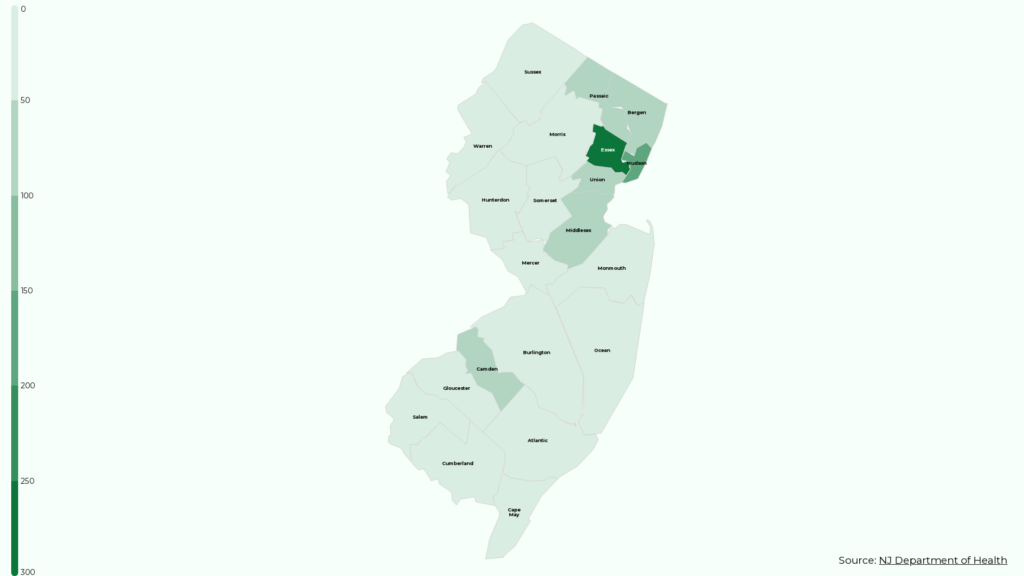
New diagnoses declined from 1,153 in 2019 to 860 in 2020, a drop state officials said was impacted in part by “delayed or disrupted” screenings during the height of the pandemic. Data culled from county reports linked to the health department’s new HIV/AIDS heat map indicates new cases dropped even more in 2021, when less than 400 people were diagnosed. State officials declined to comment on the 2021 data. Numbers may differ based on the reporting period and individual’s residence, as some people may be diagnosed in New Jersey but live elsewhere, these reports note.
But Kathy Ahearn-O’Brien, executive director of the Hyacinth AIDS Foundation and co-chair of the task force that developed the state’s strategic plan, is wary of the recent numbers. The COVID-19 outbreak reduced access to easy screenings, she said, increased the use of home tests – which may not always be reported – and created new challenges in collecting data. “It’s hard to tell” how we’re doing, Ahearn-O’Brien said. “The pandemic really did put a twist in things.”
Ahearn-O’Brien pointed to figures New York City released last week that showed new diagnoses increased 14% last year, over 2020. But that number – 1,594 cases – was down nearly a quarter from 2017 levels and 73% lower than 2001, according to NYC health. “Cases are definitely going down over time,” she said.
Federal data from 2020 indicates that while new cases are declining in the state – as they are nationwide – New Jersey still has a relatively high rate of HIV/AIDS spread. New Jersey had the 16th highest diagnoses rate that year, with 10.7 cases per 100,000 residents, more than Pennsylvania, all states in New England and much of the Mid-West. Other neighbors saw higher rates, however, with New York at 11.7, Delaware at 11.1 and Maryland at 13.8, according to data from the federal Centers for Disease Control and Prevention.
Despite the latest numbers, Ahearn-O’Brien said there is much to celebrate in the state’s recent progress. The state’s strategic plan – released in 2021 after some pandemic delays – is based on a pledge Gov. Phil Murphy made in 2018 to maximize the use of HIV testing, treatment for those who develop symptoms and medications that can reduce the risk of viral spread. The work is informed by a global campaign to encourage the use of these preventative medications, called pre-exposure prophylaxis, or PrEP, which can reduce viral levels until they are low enough that they can’t be passed on during sex.
New Jersey’s plan outlines a trio of goals for 2025, including reducing the number of new HIV infections by 75%, ensuring that everyone infected knows their status and linking at least 90% of those who are diagnosed with the virus with effective medical care. It provides dozens of recommendations on how government, health care providers and advocates can work together to expand access to testing and treatment and improve the lives of those living with the disease.
“Will we hit the 75% reduction in cases, I don’t know. But I think we’re doing what we need to do to try and get there,” Ahearn-O’Brien said. “We did a better job at getting people on PrEP. We also did a better job of connecting [people diagnosed] to medical care.”
Some 6,400 HIV/AIDS patients received PrEP or other treatments between June 2019 and June 2020, according to a state report published that summer, and many also got help with case management, insurance coverage, housing, transportation and more. More than 5,600 have received medication or help with insurance coverage so far this year, the health department said. Figures for 2021 were not available last week.
While the data show the vast majority of new cases involve men who have sex with men, New Jersey is also working to reduce the spread of HIV/AIDS – and other bloodborne diseases – among intravenous drug users. There are now seven harm reduction programs that provide people with clean needles and the state is working to add more.
The strategic plan also highlights the need to focus on underserved communities with high social needs, which may struggle to access testing and care without assistance. The majority of HIV/AIDS cases involve people who are poor, state data show, and 44% of those living with the virus in 2020 were Black while 29% were Hispanic. 15% of New Jersey’s population is Black and about 21% is Hispanic, U.S. Census numbers show.
The health department said the ‘theme’ of this year’s Word AIDS Day celebration was “putting ourselves to the test: achieving equity to end HIV.” Ahearn-O’Brien agreed greater outreach to at-risk populations should remain a priority going forward. “If we’re really going to end this epidemic, that’s it – getting more people on medication so there’s less threat of HIV in the community,” she said.
Individuals who want more information on HIV/AIDS can call the state’s free, confidential hotline at 1-800-624-2337 or text 973-339-0712. A chat feature is also available through the hotline’s website. Testing locations can also be found through the DOH website and people who need help with HIV medications can call the New Jersey AIDS Drug Distribution Program directly at 1-877-613-4533.
Editor’s note: This story has been updated to clarify the possible differences in numbers included in the state reports.