Credit: (NJ Spotlight News)
Synagogues in New Jersey are at high alert after the FBI in Newark tweeted Thursday there was a credible threat against them, following anti-Semitic remarks in popular culture discourse.
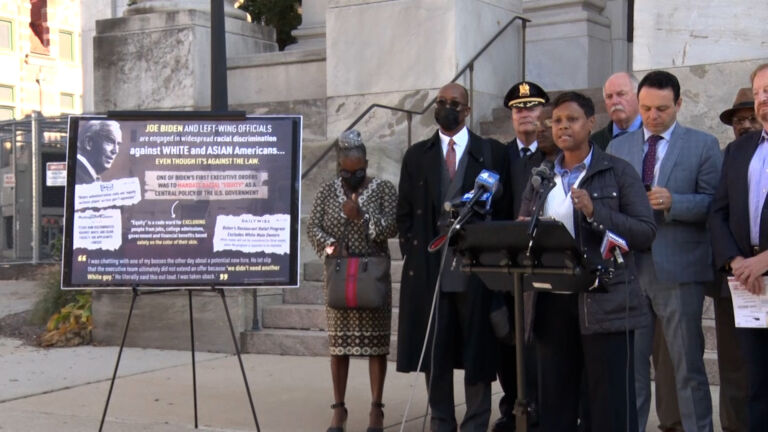
The Proud Boys, a white supremacist group, have announced they’ll attend a reproductive rights, pro-LGBTQIA rally in Franklin. And Asian Americans in north Jersey reported receiving advertisements from former Trump affiliate Stephen Miller’s new organization America First Legal, which purport that President Joe Biden’s diversity, equity and inclusion job-hiring initiatives discriminate against white and Asian Americans.
As Election Day nears, white supremacist tensions are bursting at the seams.
“It is something that I think the polarization of our politics has contributed to. And so when we have people at the highest positions of government, the Trump administration … using rhetoric that is laden with hate and fear — of course that’s going to trickle down and impact the way neighbors treat each other,” said Amol Sinha, executive director of ACLU-NJ.
Fear is a campaign tool
These separate incidents can be categorized as passive, like the mailers, or aggressive, such as threatening harm against Jewish Americans. But political strategists, misinformation experts and other civil rights activists have warned that fear is being used as a campaign tool, particularly by the right, to move some people to the polls or to keep others from voting. Advocates say all these actions aim to divide community members by pitting them against one another. And, they add, while animosity toward various races or ethno-religious groups has always simmered at the surface, the timing of these threats near Election Day is suspicious.
Everything is related to everything else … What’s happening culturally with antisemitism and celebrities out there … and what’s happening culturally with anti-Asian hate in so many different aspects of our lives, all of it is related,” said Sinha, adding that “of course it’s going to influence politics as well.”
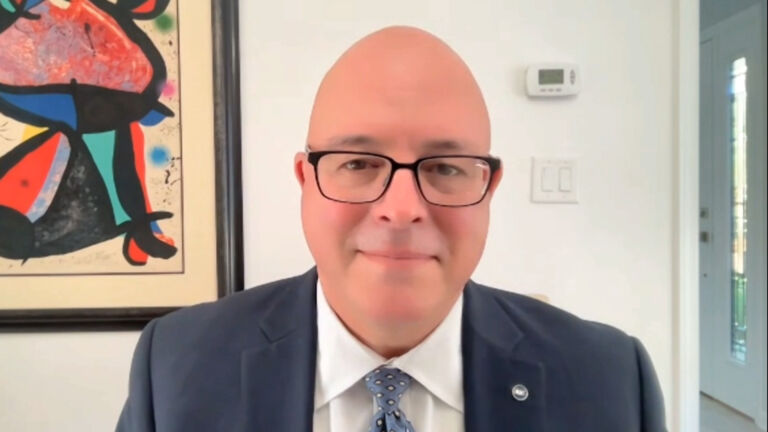
“I think the sharp divides in our society that we’re seeing portrayed in much of the rhetoric of the election is related. But when we have a society that allows for conflict rather than concord, where the idea of working together is no longer raised as a high value, that toxifies the field,” said Levy.
Paul Goldenberg, former ranking member of the U.S. Department of Homeland Security’s advisory council, said the attacks against the synagogue are not necessarily election-related because “hatred takes no holidays.” Goldenberg, who has worked to combat extremism and who is also a senior fellow at the Rutgers University Miller Center for Policing Excellence and Community Resilience, agreed that race has become a talking point in American politics. He believes “there are unfortunately some bad actors that are feeling now is their time to act,” seizing upon the political divisiveness in the air.
In the case of the advertisements mailed to Asian Americans in New Jersey, the postcard is election related. Stephen Miller’s America First Legal organization has poured $5 million into radio ads in states with critical elections, and it appears his group targeted Asian American residents in New Jersey who may vote in key races. Sinha of ACLU-NJ, who received one of the mailers from Miller’s group, said he believes he was targeted because he is Asian American.
Lavanya Raghavan, a member of AAPI Montclair who also received the mailer, feels the same. She said that she only heard of other Asian Americans who received the political postcard, while her non-Asian neighbors did not. Both Raghavan and Sinha live in districts represented by Rep. Mikie Sherrill (D-11th), who is running for reelection. Her election contest, while still favoring Democrats, has grown contentious as of late.
The advertisement makes false claims about race-based hiring practices. And while the topic of the advertisement doesn‘t seem directly related to the election or mention a specific candidate, it comes on the heels of the U.S. Supreme Court hearing cases on affirmative action — in which Asian Americans are being used as a wedge between white and Black, Latino and Indigenous communities. And in an election in which both Republicans and Democrats are moving constituents to the polls to vote on their values, evocative, emotional messaging may prove to be the key to winning races.
“It was very devious how this mailer was targeted … what I’m thinking is upper middle-class Asian voters who could possibly fall either way on the issue, and also very devious in the way it’s trying to turn us against other minority communities,” said Raghavan.
While Election Day will pass, these feelings of racial animosity will certainly linger. Goldenberg believes there will be “unhappy people” regardless of who wins. He added that the next 12 to 18 months might be an “unstable environment” for this country, especially as social media makes it easier to become radicalized.
“Twenty to 25 years ago, likeminded haters, or people who were literally on the cusp, they didn’t have ways to communicate … if they wanted to market their hatred, they probably have some old copy machine in their basement. They would make up leaflets, and they (could) hit maybe a 10-square block area in the night. Today, with a click of a finger, just a click of a finger, you can reach millions,” said Goldenberg.
— Editor’s note: This story has been updated to correct the spelling of Mr. Goldenberg’s name.