 Credit: (Taylor Jung/NJ Spotlight News)
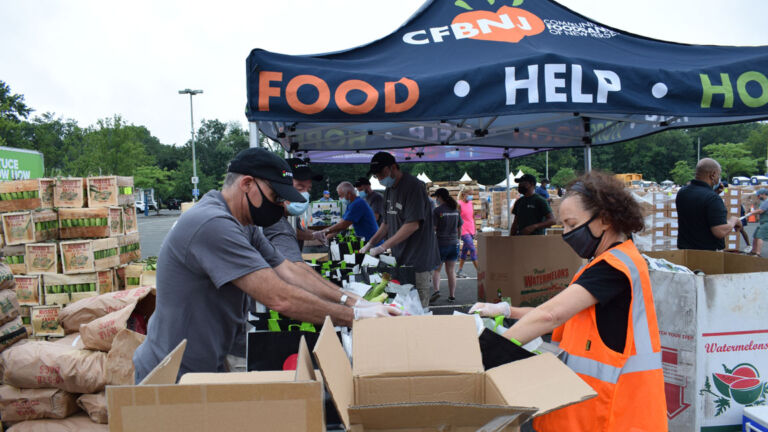
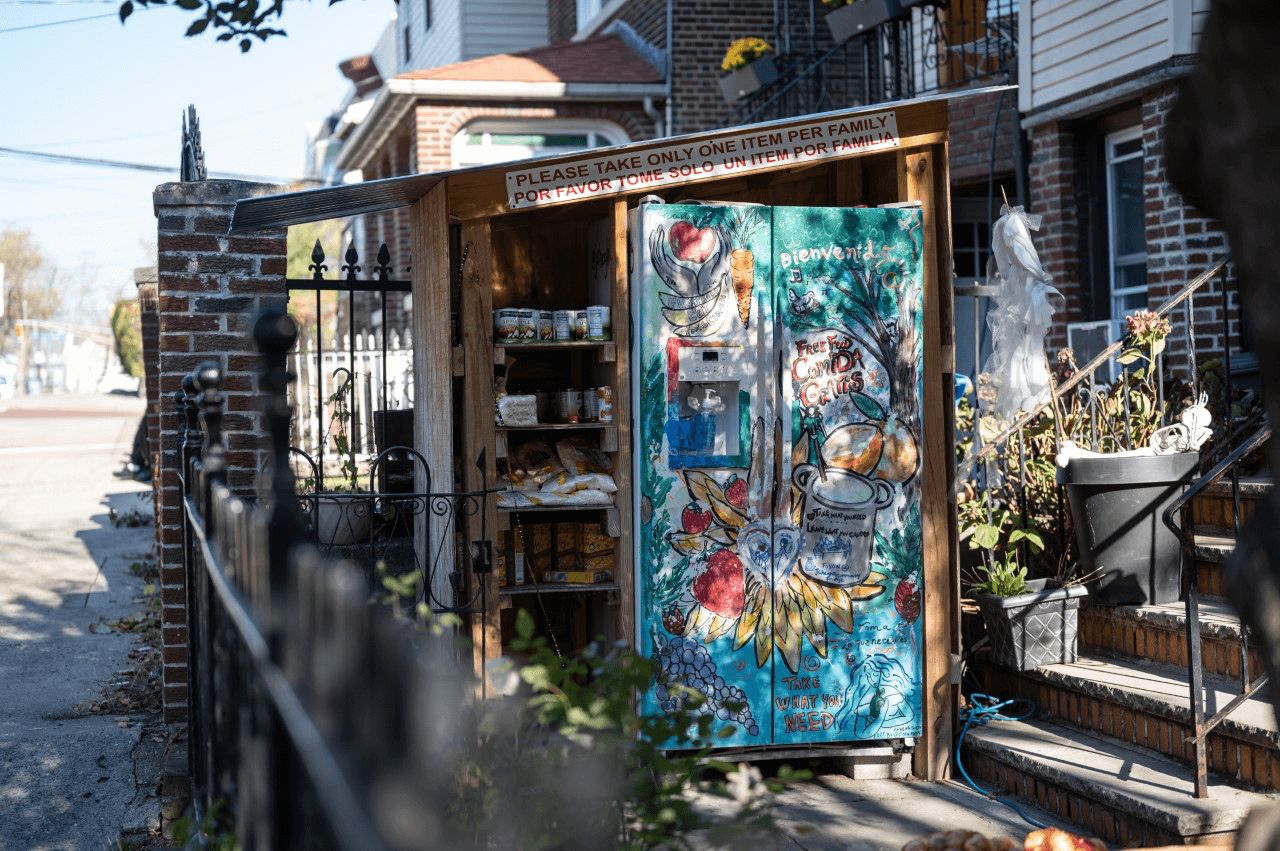
While politicians hand out free turkeys and nonprofits host annual food drives this holiday, community fridges aim to provide free produce and goods year round.
Community fridges offer convenient daily food options to those in need, according to Sarah Legler, the organizer of the Jersey City Heights Community Fridge.
“There are a few regular food banks or soup kitchens around Jersey City where people can come once a week and pick up a bag of groceries or get a meal,” said Legler. Community fridges “operate on a 24-hours-a-day, seven-days-a-week basis so that people can come by when they get off of work, or on their way to work, or after they drop their kids off to school in the morning and see what’s there that they can have access to,” she said.
Community fridges are just one way that people are helping one another get food this Thanksgiving. The pandemic and inflation have exacerbated food insecurity, with some families not having recovered from shuttered businesses or a lack of job security. It’s the reason why Legler opened her fridge two years ago right before Thanksgiving, and she said the food that volunteers put out will “go as fast as it comes.”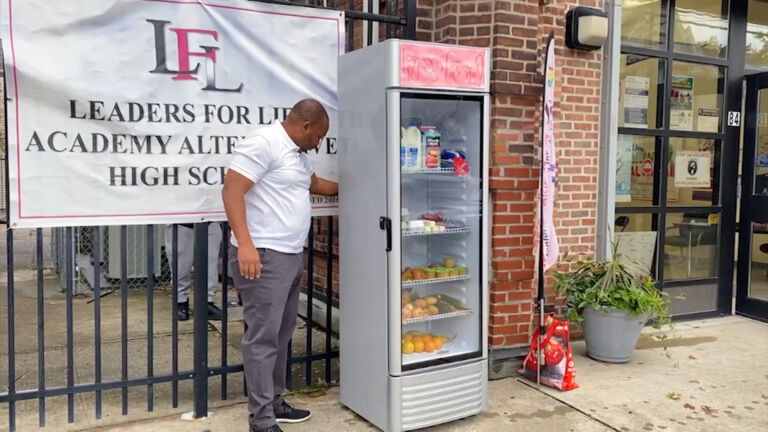
Several community fridges opened in Jersey City during the pandemic. They’re a form of mutual aid that has popped up in recent years, although the idea of mutual aid in America has existed since Colonial times. Mutual aid is different from charity in that the work is done by the community, for the community, to empower the community — with no paperwork, bureaucracies or hoops to jump through. Or as The New Yorker’s Jia Tollentino put it, mutual aid is “aimed at root causes — at the structures that created inequality in the first place.”
The American way of waste
“And ideas like those are ideas that deeply resonate with me. Seeing how vulnerable people were during the pandemic, and seeing how much food, tremendous amount of food — 40% of our food supply — just goes almost directly into the garbage,” said Legler. “And mutual aid is kind of the only way to operate outside of that system to slow the amount of waste and also redirect those resources to the people who need them in our communities.”
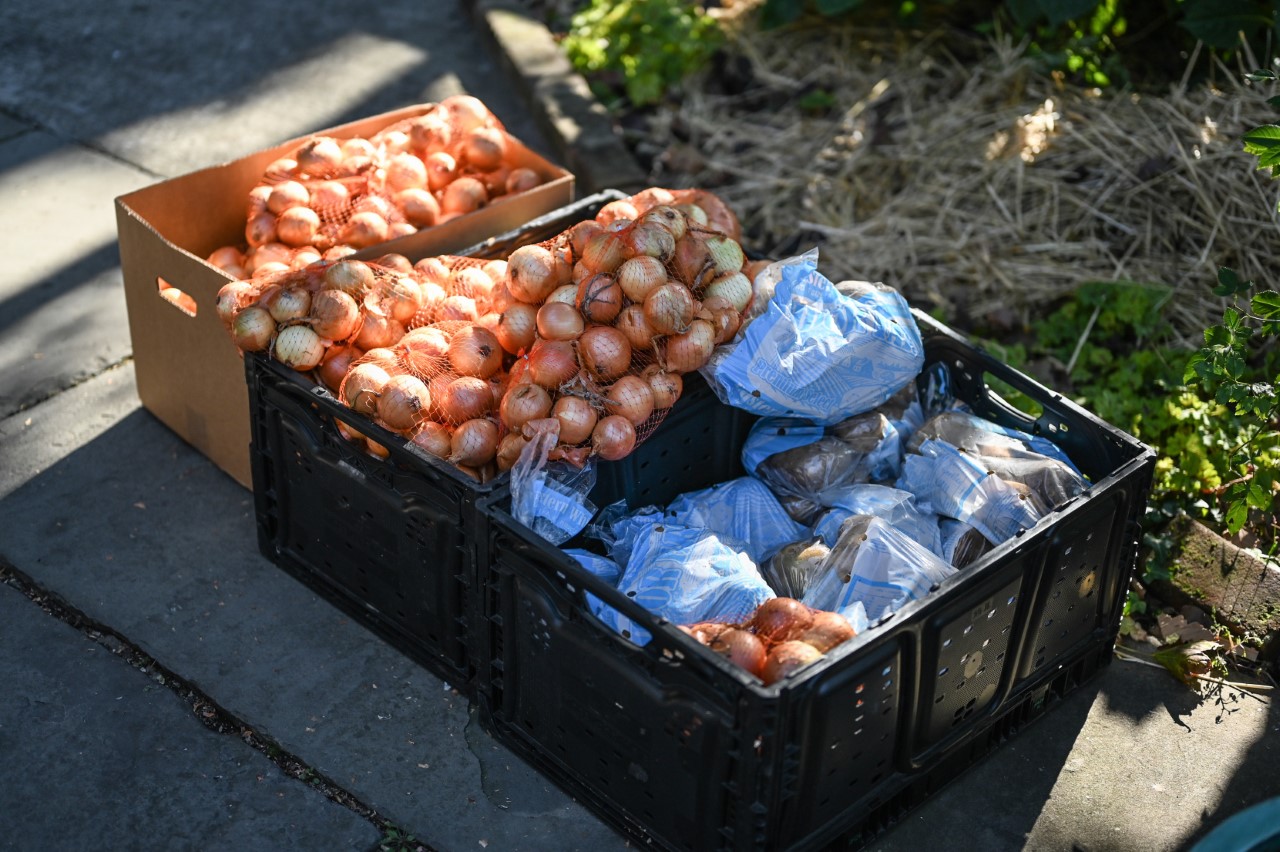
Legler and volunteers partner with the Hudson County Prosecutor’s Office, which Legler said has a connection with a major food distributor in the state. The prosecutor’s office provides shelf-stable items and other pantry staples that “people are always happy to get” like apples, oranges, potatoes or onions, Legler said.
 Credit: (Taylor Jung/NJ Spotlight News)
The Jersey City Community Fridge has also partnered with the SALT Foundation, which distributes unsold food from Wegmans and Trader Joe’s. Another partner, a bakery called Choc O Pain, provides croissants and fresh breads for the fridge as well — something Legler said costs more money and would be typically “out of reach” for some people.
A team of volunteers from Jersey City helps to do all the food pickups, clean out the fridge and more. While the fridge doesn’t have any Thanksgiving-specific plans, it’s focused on doing the work it’s always done: providing daily fresh food options for people in Jersey City.
Legler said the fridge is possible because of “dedicated” volunteers, especially since she is now back in the office for her full-time job. And that’s just another example of how community fridges bring people together to help one another.
“I would have had to have stopped a long time ago if it wasn’t for them,” said Legler.