The Supreme Court’s decision to overturn Roe v. Wade and end its federal protections has left reproductive-justice advocates and those wanting an abortion wondering how easy it is to actually get one here — even as Gov. Phil Murphy and legislators work to make New Jersey a safe haven for out-of-state abortion seekers.
Getting an abortion isn’t simple, even though the right to abortion has been codified in the state since January under the Freedom of Reproductive Choice Act. It depends on all the factors that make you, you: your race, sexuality, location, citizenship status, income, how far along the pregnancy is and more. So if you are not incarcerated, cisgender and white with a comfortable income, your chances of accessing an abortion are much more difficult.
“We did pass the legislation here in New Jersey, but guaranteeing that right to abortion does not guarantee access to abortion — again, like other aspects of health care,” said Brittany Holom-Trundy, senior policy analyst for think tank New Jersey Policy Perspective.
That’s because getting an abortion isn’t as simple as just going to your doctor — it’s not common for a medical provider to offer the abortion pill or procedure, and maybe you wouldn’t have health insurance to afford a visit anyway. Trying to find where to get an abortion in New Jersey could send you down a rabbit hole, even for the most technologically savvy.
“I think most people are under the assumption that you can just walk into an OB-GYN office and get an abortion because abortion is legal. And that’s just simply not the case. And I think that in itself is a big barrier,” said Anjali Mehrotra, president of National Organization for Women of New Jersey.
Path to legislation
The legislated right to abortion was first introduced by former state Sen. Loretta Weinberg (D-Bergen) and others in 2020 as the “Reproductive Freedom Act,” with explicit support from Murphy. However, it was largely stripped of its measures to ease access for those seeking abortion —provisions that would have reduced the cost of the procedure or made health insurance more available.
The measure that was eventually passed by the Legislature and signed by Murphy in January — the Freedom of Reproductive Choice Act — has come under fire by reproductive-justice advocates, who also say there are not enough providers.
Mehrotra said that, although there is work to be done to increase access to abortions in New Jersey, she was proud of the bill, especially after the pool of professionals authorized to perform some abortions was expanded to include registered nurses and advanced practice clinicians.
Data from the Guttmacher Institute, a pro-abortion rights research organization, shows that there were at least 76 providers offering abortions in New Jersey, with 41 of those being clinics. But the information is from 2017 and it’s unclear how the numbers have changed, if at all.
Where these abortion providers are located can impact how far you have to travel — assuming you have a car or access to easy public transit. Seven counties in the Garden State did not have abortion clinics, according to the same research by the Guttmacher Institute.
It’s not immediately clear via internet research which of New Jersey’s seven counties do not have providers, and if that number has decreased since 2017. Mehrotra noted that there are no abortion clinics in Hudson County, which has a large immigrant and people of color and population.
Few culturally competent providers
Accessing any kind of health care for these communities is already more challenging, said Amy Torres, executive director of the New Jersey Alliance for Immigrant Justice.
“Outside of the conversation about abortion, specifically, we have heard from members time and again, there aren’t enough culturally competent providers, whether those are health-care providers who speak the languages of their patients, or are able to deliver information in the language that their patients prefer,” Torres said.
And so those living in areas not near abortion clinics — and ones that provide services in their languages, at that — will have to travel to find one. The Guttmacher Institute’s findings also show that a person would have to travel at least five miles one way for an abortion before 12 weeks — but that number goes up to 13 miles one way for those who are between 20- and 24-weeks pregnant.
The abortion pill can only be used up during the first 10 weeks of a pregnancy. A surgical procedure is necessary after that and not all facilities are equipped to offer this service.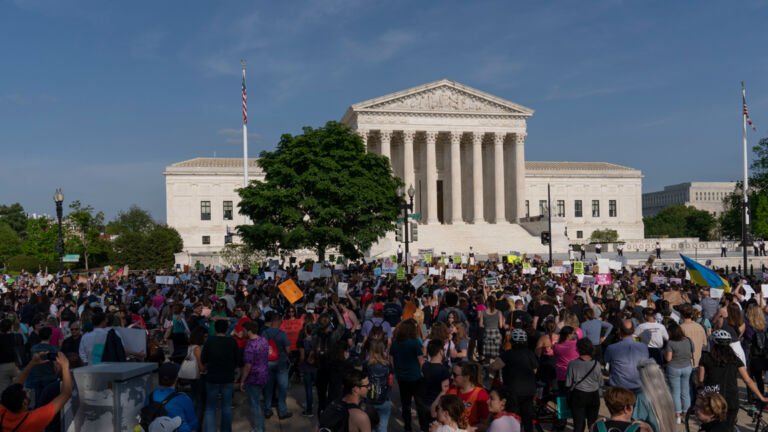
How to go about finding an abortion clinic is another hurdle. People with the means to visit their general practitioner or gynecologist most likely will be referred out to abortion clinics. Planned Parenthood is a logical next step for most, although they do provide other health care and check-ups for all genders.
However, Planned Parenthood has only 20 locations in the state, with its Bellmawr center not offering abortions or abortion referrals — and not all centers offer surgical abortions.
When asked where people can find abortion services, representatives from Planned Parenthood Action Fund of New Jersey and the New Jersey Family Planning League separately pointed to AbortionFinder.org, a website created in partnership with Planned Parenthood and abortion providers nationwide. A search for “New Jersey” offers only 31 results — and some of those providers are located in Philadelphia and New York City.
“And if you notice, that’s another thing in New Jersey, that even on (the AbortionFinder.org) map, so you see a number of providers in New Jersey, most of them are only providing (medical) abortion,” said Mehrotra, although she said the website was a “great” source.
AbortionFinder.org does ask if the person needs financial assistance for the abortion, and will direct them to the New Jersey Abortion Access Fund, a non-profit that offers partial funding. But its website states it only works with four centers in Cherry Hill, Englewood, Montclair and Hackensack.
‘Out of reach’
The cost of abortions averages several hundred dollars in the first trimester and get more expensive the longer one has to wait to access them, said Holom-Trundy. “And that just makes it out of reach for anyone who does not have that financial security to afford emergency costs,” she added.
Solutions Health and Pregnancy Center in Shrewsbury says the abortion pill can cost upwards of $800, although most information websites say the national average falls around $500. For a surgical abortion, the cost can range anywhere from $650 to $1,500 depending on how far along the patient is.
Health insurance can cover abortion, and in New Jersey, Medicaid will cover the pill or surgical procedure. But Hispanic and Latino New Jerseyans are most likely to be uninsured, while Black residents are more likely to have public insurance, according to 2021 research, Holom-Trundy said. The Affordable Care Act does not require plans to cover abortions, so suddenly having to pay for a pill or procedure that’s hundreds of dollars could be out of the question for some families, she added.
“And that’s something we’ve been talking about, you know, with families who are low income, they don’t have that cushion, to be able to afford to just go pay for something out of pocket at a moment’s notice,” Holom-Trundy said.
Reproductive justice advocates like Planned Parenthood Action Fund of New Jersey, Physicians for Reproductive Health, ACLU of New Jersey, and many several other organizations are pushing the Legislature to pass A-4350. The bill, which was introduced last week — its sponsors included nearly all legislators of color — would would help provide $20 million to make abortions more affordable. The new state budget, which Murphy signed into law Thursday, includes $45 million for “family planning” in response to the Supreme Court’s overturning Roe v. Wade — but it’s not immediately clear how and where that money will be spent.
New Jersey should be applauded for that $45 million budget appropriation, and the bill to make abortions more affordable, but much more work needs to be done, said Kaitlyn Wojtowicz, vice president of public affairs for the Planned Parenthood Action Fund of New Jersey.
“In response to the devastation of rights across the country, New Jersey is charting a different path. While abortion remains legal in New Jersey, we must continue to fight forward to ensure everyone can get the care they need without stigma or delay,” said Wojtowicz in a statement.