
 Credit: (Images Alight via Flickr)
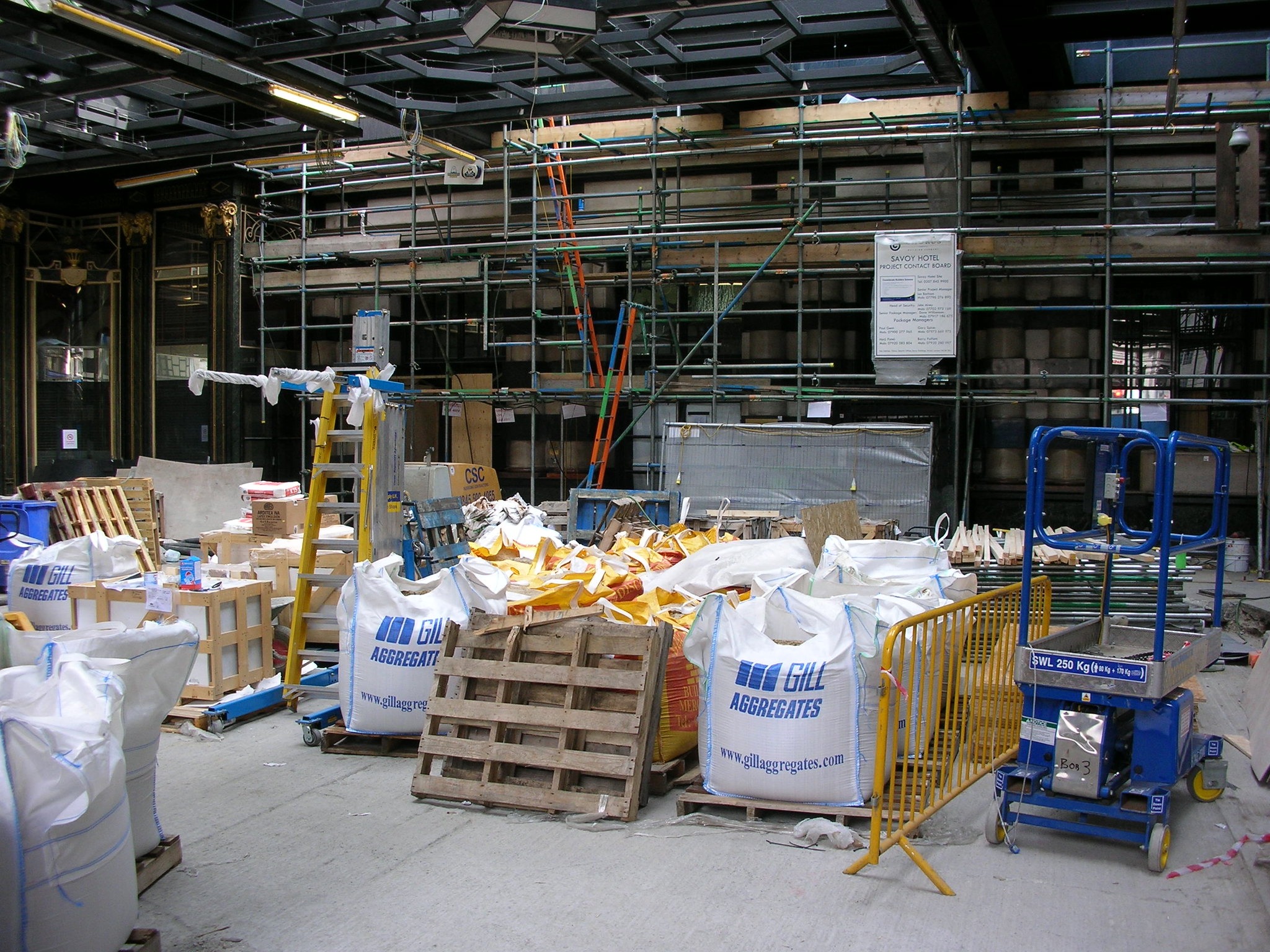
New Jersey is edging toward a policy for managing the warehouse boom, offering guidance to municipalities but declining to interfere with their authority over what gets built where and how.
After calls by some advocates to impose state or county control over the industry’s runaway growth, state officials are ready to offer advice and technical assistance to towns that are confronted with plans for massive warehouse developments, while avoiding any erosion of home rule.
The latest sign of a policy outline came Wednesday from Donna Rendeiro, executive director of the Office of Planning Advocacy at the State Planning Commission. She told a conference that the state’s approach is to nurture the economic opportunity presented by surging warehouse development while resisting projects that threaten the environment.
Garden State meets logistics state
“The most important thing that we at the state are looking at is how best to balance what could be considered conflicting priorities,” she told the planning and redevelopment conference held by the nonprofit New Jersey Future. “We are a logistics state. There is no doubt of the importance of warehousing and the logistics industry to New Jersey.
“At the same time, we have to make sure that all of the facilities that are supporting this industry are sited in the right place so that we don’t degrade the environmental gems that we have in this state,” she said.
Strong demand for warehouse space shows no sign of slowing, according to Newmark, a commercial real estate firm. It said the average asking rent for warehouses in north Jersey surged 23% in the first quarter, the strongest annual increase on record.
Opponents of warehouse construction say considerations about air quality or the industrialization of the state’s remaining rural corners are often ignored by towns lured by the prospect of tax revenues and the addition of local jobs from a new warehouse, even if that means a loss of open space or more traffic congestion.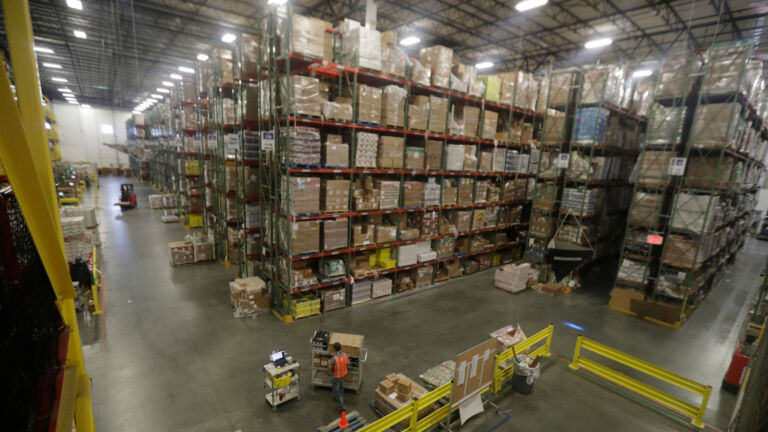
Critics note that warehouse projects, like any other kind of development, are now subject to the state’s environmental-justice law, which makes it easier for state officials to withhold permits if a plan would impose more pollution or traffic tie-ups on a community that is already classified as underserved or overburdened.
In her remarks, Rendeiro signaled that there are no plans to reduce home rule, a strongly defended tradition among New Jersey’s 564 municipalities.
“We are a home-rule state. Land-use decisions are in the hands of municipalities,” she said. “But we can offer guidance, and we can offer some suggestions and technical assistance to assist those municipalities and counties who are looking for that guidance.”
One way forward would be for the Office of Planning Advocacy to develop a model ordinance as a template for towns that are considering changing their zoning in anticipation of a warehouse project, said Tim Evans, director of research at New Jersey Future.
Putting it in writing
Last week, Rendeiro’s office released its first written guidance for towns on how they should manage warehouse projects and how they should zone their land to avoid unwanted developments.
On Wednesday, she warned towns that they likely won’t be able to deny applications on land that is already zoned for warehouse-compatible development.
“We want to look at zoning and master-planning proactively. We all know that once an application comes in, it’s too late to make substantial changes to what a municipality wants to see and where it’s located,” she said.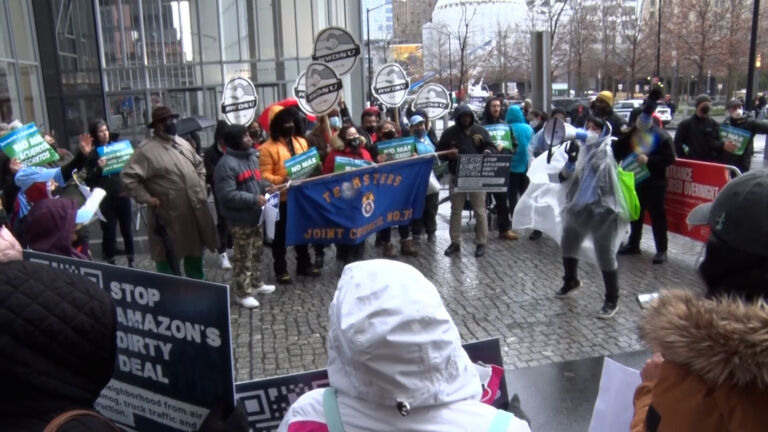
Proactive planning by a town should include nearby communities plus county and state officials who can all advise on how to anticipate problems such as traffic, she said.
Municipalities should seek the buy-in of neighboring towns that would be affected by a new warehouse, even though there is no requirement to do so, Rendeiro told a panel on warehouse development. That would amount to regional planning even if it only means groups of towns that would be affected by the project.
“I call it the ‘good neighbor’ approach,” she said. “If you want to incorporate development that’s going to affect your neighboring town negatively or positively, you should get their input. It’s all advisory; they can’t approve or deny a project that’s in your jurisdiction, but having that advisory committee makes so much more sense in terms of siting development where it should go.”
And she urged towns to consider what they can do to reduce a warehouse’s environmental impacts such as traffic or its effects on overburdened communities.
Not state policy … yet
Rendeiro denied the guidance document and her remarks currently represent state policy but said they might become that if accepted by the State Planning Commission after a public-comment period.
“At this point, the guidance will remain voluntary and we look forward to working with municipalities and counties who would like to consider these suggestions in their master planning, ordinances and other legal vehicles to mandate some or all of this guidance at the local level,” she wrote in an email.
Jim Gilbert, a former head of the State Planning Commission and a longtime advocate for a regional approach to land-use planning, said Rendeiro’s comments reflect her role in the administration of a governor who shows no sign of wanting a regional policy on warehouses.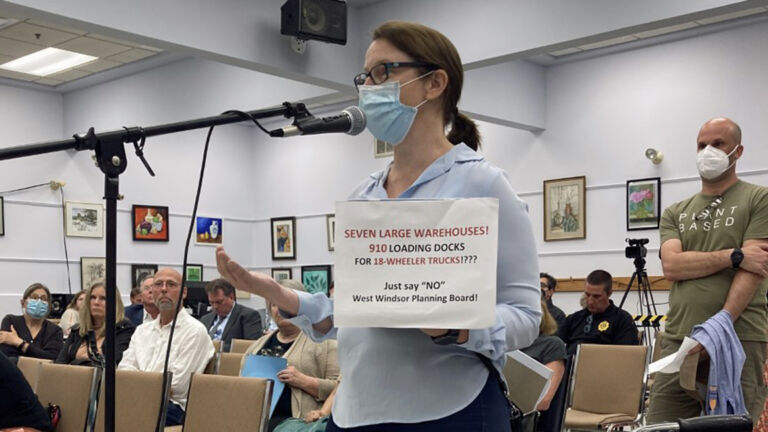
“Donna is facing the political reality of New Jersey’s growth-management death wish,“ said Gilbert, who chaired Wednesday’s panel. “Ordinary governors just have no interest in comprehensive growth-management fights, and our governor is no exception.”
Gilbert has said the only route to an effective regional approach is to amend the Municipal Land Use Law to require towns to cooperate with their neighbors if a warehouse project would have a major regional impact.
Micah Rasmussen, a Rider University professor and longtime foe of new warehouses, said the Murphy administration has opted to back the “status quo” on warehouses, which means the continued development of remaining greenfield sites.
“So our neighborhoods will continue to be industrialized, the air our kids breathe in our backyards will continue to be fouled, and because these are big developments, some towns will want to do the right thing and some towns will not,” he said. “What the planning commission is effectively saying is, that’s okay with them. This is as far as it is willing to go to tackle a statewide concern with statewide impacts.”
