Credit: (AP Photo/Brittany Peterson)
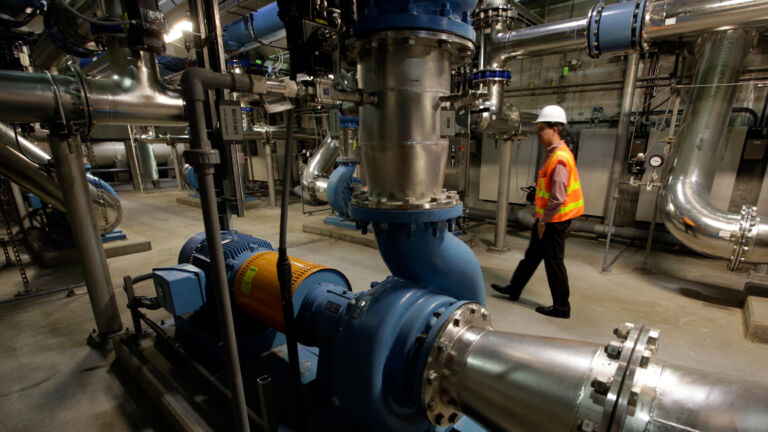
The demand on the state to pay for water infrastructure projects such as fixing leaky mains, replacing lead pipes, preparing for climate change and removing hazardous chemicals from drinking water is at an all-time high, according to the Department of Environmental Protection.
Officials released a ranked list of 679 projects that would cost a total of $6.79 billion if they were all funded. It was the largest number in the decades the DEP has been issuing its annual list of “Intended Use Plans” and shows the growing priority that public and private water suppliers are now placing on long-delayed upgrades, officials said.
“DEP received an overwhelming response during the development of this fiscal year’s Intended Use Plans given our communities’ deep needs for water infrastructure improvements,” said DEP Commissioner Shawn LaTourette.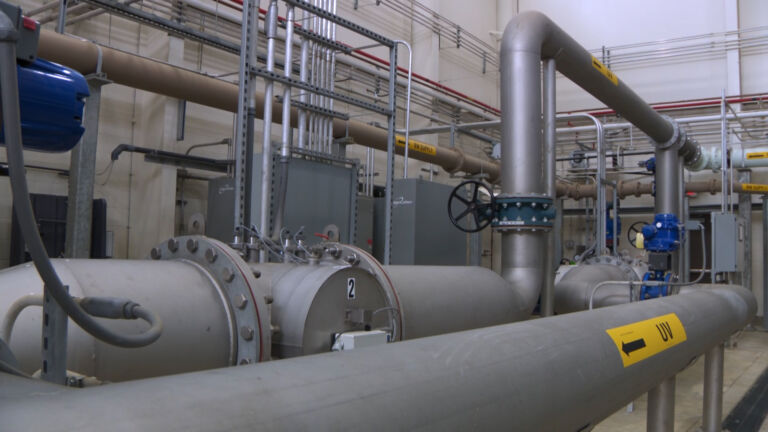
LaTourette said officials will work “wisely” with water suppliers to make the best use of state and federal funds for improving drinking water supplies, upgrading wastewater treatment systems, and protecting public health.
Not all projects will be funded. They are ranked according to the state’s list of priorities that include emergency projects that threaten public health, lead service lines, contaminants of emerging concern, and uncovered drinking water reservoirs that violate regulations.
Underserved communities are also a high priority, consistent with the environmental-justice goals of the Murphy administration, the DEP said.
At the top of the list
Top of the list of drinking-water priorities is construction of a cover for the Cedar Grove reservoir in Newark, a project that is estimated to cost $62.7 million. It appears at the top of a list of the 679 drinking water projects that are ranked according to the number of points they accrue.
Priorities two and three on that list are the construction of storage tanks for the Passaic Valley Water Commission at a combined cost of some $27 million. In a sign of the high priority given to removing toxic “forever chemicals,” or PFAS, from drinking water, a project to install filtration for one of those chemicals at a treatment plant in Orange, costing some $1.5 million, is ranked 12th.
The list of projects compares with 600 last year, a DEP spokesman said.
Andy Kricun, the former head of Camden County Municipal Utilities Authority, said the growth in applicants probably reflects in part the increased availability of federal funds from the Bipartisan Infrastructure Act, which is providing New Jersey with $1 billion over five years for water infrastructure renewal.
Sturm: ‘But we know that there will still be a huge gap between the demand and the supply.’
Demand will also have been swelled by state requirements to replace lead service lines within 10 years, and to fix combined sewer overflows — antiquated drains that dump raw sewage into rivers and even streets during storms — in 21 affected communities, said Kricun, who is now co-chair of Jersey Water Works, a collaborative that advocates for infrastructure upgrades.
Far more funding needed
He said the new demand for funding is “significantly greater” than what is available, underlining a long-held argument by water advocates that New Jersey’s need for water improvements is much bigger than it can afford, even with the recent increase in federal funding.
The estimated aggregate demand of $6.79 billion for the new list of projects contrasts with the $900 million a year DEP said in January that it has to spend on water infrastructure over the next five years — including federal infrastructure funds, Kricun said. “Quite a bit more funding will be needed,” he said.
Chris Sturm, managing director for water at the nonprofit New Jersey Future, estimated there remains a funding gap of about $6 billion over five years for upgrades to the water system, which has been neglected for decades.
“There will be a relatively short list of very lucky communities that access the grant components and a longer list of water systems that can access the low-interest financing,” she said. “But we know that there will still be a huge gap between the demand and the supply.”
Still, the influx of federal funds creates an unusual opportunity for water systems to get their projects done, said David Zimmer, executive director of the New Jersey Infrastructure Bank, which works with the DEP to provide low-interest loans and grants.
“With this unprecedented influx of federal funds into the DEP, combined with low interest rates, there has never been a better time for stakeholders to participate in the DEP/I-Bank Financing Program,” Zimmer said.