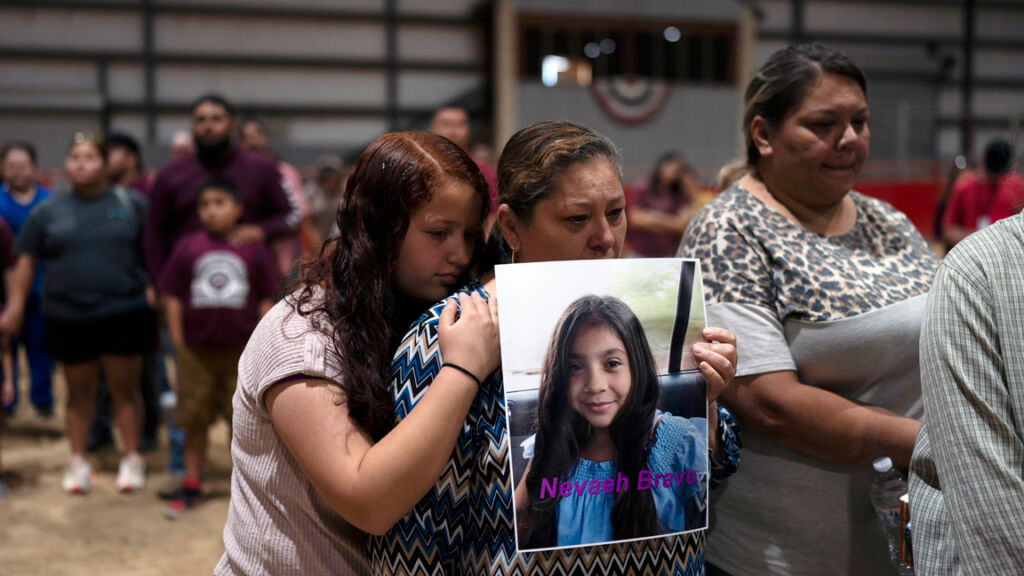
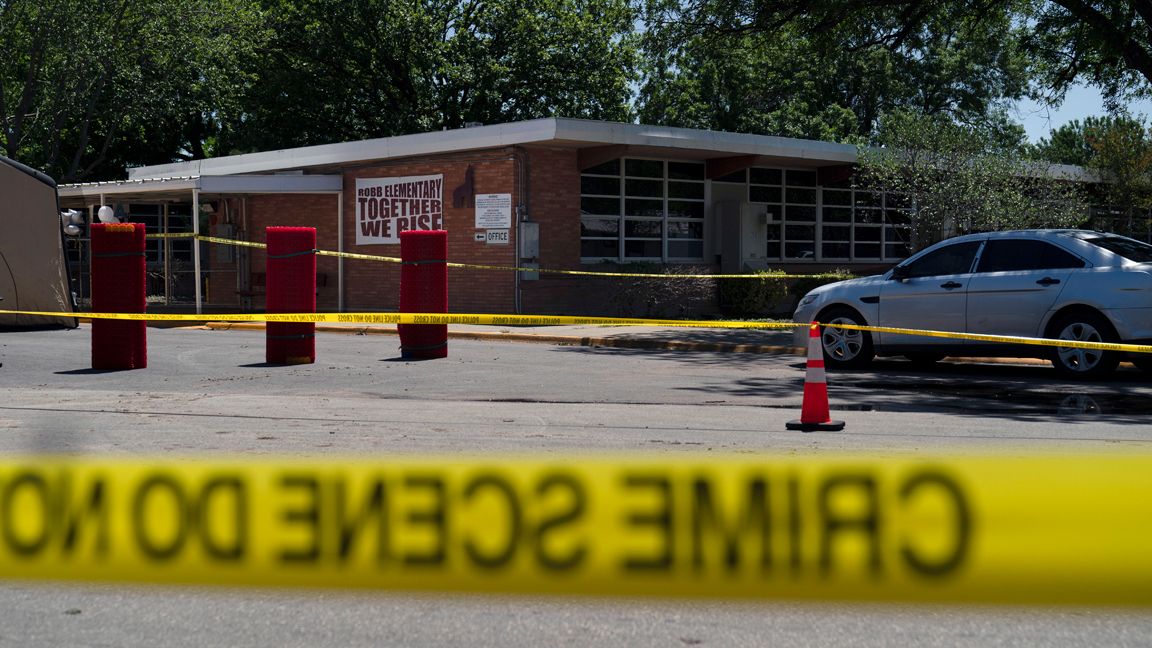
The sorrow is unfathomable: 19 children shot and killed at school in Uvalde, Texas.
And many others aren’t alive today because of shootings. In this year alone, there have been over 200 mass shootings, according to the Gun Violence Archive. There have been 27 school shootings this year, and it’s only May. That’s compared with 24 in 2021, 10 in 2020, and 24 each in 2018 and 2019.
Although the Uvalde shooting was many states away, hours after it happened New Jersey’s acting Attorney General Matt Platkin ordered an increased law enforcement presence at schools, with Gov. Phil Murphy’s explicit support. Their goal was to make children, families and teachers feel safe. Politicians at every level across the country are pointing to more law enforcement in schools as the go-to Band-Aid for public safety. Texas Gov. Greg Abott on Wednesday praised how police and border patrol handled the Uvalde shooting, saying it could have been worse.
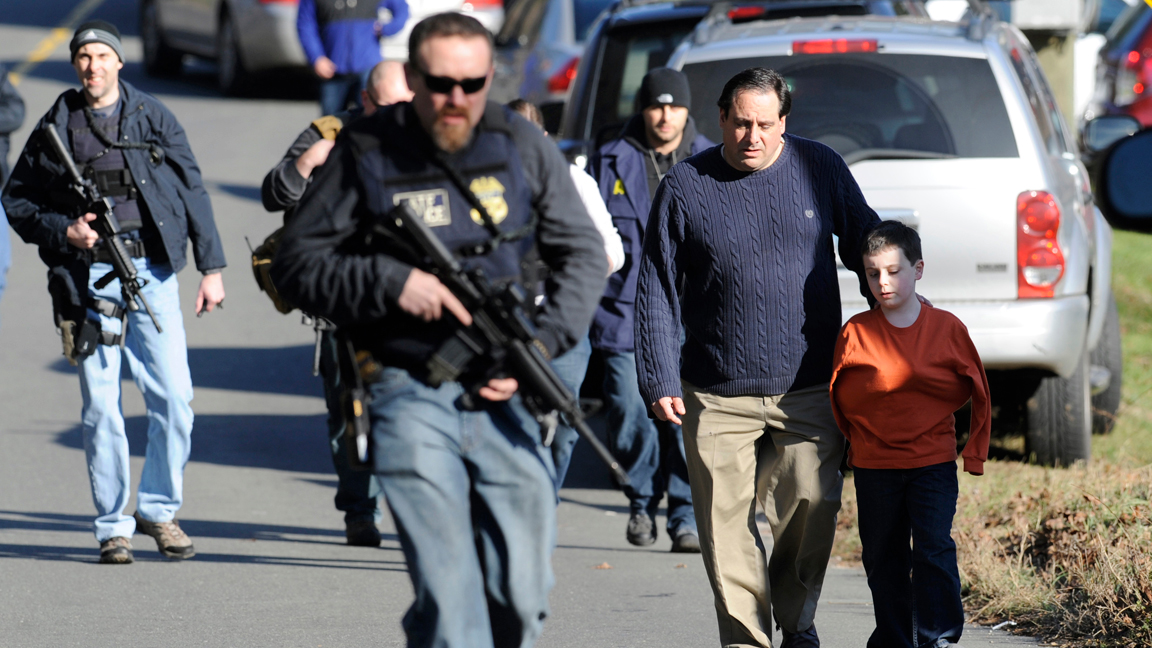
Calling for more police after a school shooting has been a common approach nationwide in the two decades since the killings in Columbine, Colorado. However, the Uvalde shooter interacted with police moments before killing children at an elementary school, and in other school shootings some form of armed guards or law enforcement were present. Studies over the years have shown that armed school officials do not reduce injuries or deaths.
 Credit: (AP Photo/Jessica Hill, File)
“And everywhere else that we talk about education, we talk about evidence-based this, case studies on that, and yet when it comes to school security, they’re willing to throw any evidence-based study out the window,” said Amy Torres, executive director of the New Jersey Alliance for Immigrant Justice. “I understand the need to provide families with a sense of safety and solution, but the solutions we are proposing now didn’t keep those kids safe this week.”
Prison pipeline
Black and brown students have been calling for less law enforcement at schools over the years, arguing that they are policed more than their white classmates. Make the Road New Jersey has a youth-led movement called #CounselorsNotCops, asking for more mental health or social workers to help nonwhite kids to end policing in schools and the school-to-prison pipeline.
New Jersey’s ACLU, along with the Education Law Center and several other New Jersey organizations, filed a petition in the state’s rule-making process two weeks ago asking the state to provide guidelines for schools on how to use state security aid they receive. Currently, some schools use this money to fund armed guards or to buy metal detectors to screen children and visitors coming into their buildings.
“When we talk to students, they do not feel more safe. They actually feel less safe because now they are worried about their actions,” said Joe Johnson, policy counsel for ACLU of New Jersey, adding that those students would then be introduced to the criminal justice system.
“Police in schools, it impacts two major groups the most. That’s students of color — with Black students being the most harmed — and students with disabilities. So these are the folks that are going to be harmed the most by bringing in police,” Johnson said.
Policing immigrants
Increased policing, like that Murphy and Platkin are now calling for, often comes with increased document checks for people entering schools.
And that safety is “usually at the expense of immigrant parents, Black parents, brown parents,” Torres said — parents “who face barriers to either possessing those documents or face additional scrutiny just because of systemic racism.”
Johnson noted that bringing law enforcement into schools more likely addresses school shootings after they become an issue, instead of preventing one from happening.
 Credit: (AP Photo/Jae C. Hong)
“But (schools) should be using (state security aid) on mental health professionals, implementing social and emotional learning, implementing restorative justice practices — ways to really support our students,” Johnson said.
And mental health supports that go beyond just helping the “troubled-kid-turned-school-shooter” trope are needed, advocates say. That support should also be in place for students grappling with issues in and beyond school who need extra emotional support. The petition notes that more law enforcement type at schools also increases the anxiety or depression of students, something that Marleina Ubel mentions in her New Jersey Policy Perspective report from 2021, taking a look at public safety beyond policing.
But in interviews with NJ Spotlight News, both Ubel and Johnson said that the school shooting issue extends beyond just addressing mental health, with Ubel noting that mental health is a separate conversation. Social-justice advocates warn that the media or politicians often humanize white school shooters by saying they have “mental health issues.”
Thurman Barnes, associate director of Rutgers’s New Jersey Gun Violence Research Center, said that racism or evil is not “a mental health problem,” saying, “I am willing to call evil what it is.”
“It’s a way of avoiding the conversation, a larger conversation, around America’s gun violence problem, which requires us to take an honest look at what’s going on, and move away from thought and prayers,” Barnes said.
Background checks some value
Barnes said that while funding for gun violence research has been sparse over the years, some research suggests that more comprehensive background checks when buying guns can help weed out those who will potentially harm themselves or others — although there may be pushback against mental health screenings for gun buyers. He also said that while the country will talk about banning assault rifles, there are other guns that don’t fall under that category that can be modified into deadly weapons.
He said that community-based approaches were key. Some people might find more police in or around schools comforting, while others might find it frightening.
“Gun violence is a complex issue. It’s just not as simple as just crime. It’s not. It’s complex, multifaceted. To really get at solutions, it’s going to take innovative, creative ideas,” said Barnes. “…It’s going to take community organizations, people listening to what they’re saying and seeing.”
Johnson said that there is “no silver bullet” to fixing school shootings.
“But we need something more than putting more police into schools because that’s been debunked so many times. You’ll get different answers depending on demographics and where you live,” said Johnson.
— Editor’s note: This story has been updated to correct the misattribution of the quote that “Gun violence is a complex issue…”