
 Credit: (AP Photo/Seth Wenig, File)
New Jersey’s acting Corrections Commissioner Victoria Kuhn spent several hours over two days last week painting lawmakers a picture of a prison system — especially the women’s facility — in better shape now than when she took over 11 months ago.
While most senators and Assembly members praised the improvements, they grilled Kuhn over a host of issues, including the shortage of corrections officers and the lack of savings expected after the incarcerated population has been cut by nearly half. They also wanted answers on the state’s policy regarding transgender inmates after two inmates at the Edna Mahan Women’s Correctional Facility became pregnant.
In testifying before the budget committees, Kuhn said the Department of Corrections is working on “meaningful reform rooted in the operation of safe and secure facilities while establishing an environment that addresses the treatment and needs of the population” to enable “successful reintegration into society.”
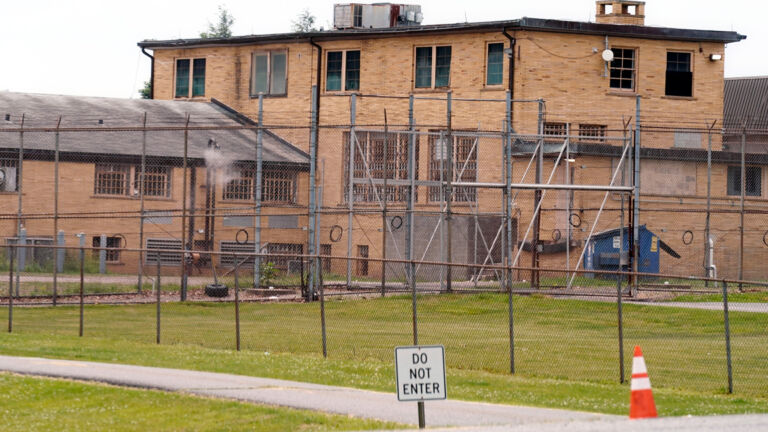
She cited what she said were a number of successes, most of them at the Edna Mahan Women’s Correctional Facility, which has been the focus of problems ranging from sexual abuse and harassment to physical assaults on inmates by officers. The commissioner Kuhn replaced resigned in June after pressure once those problems became widely public. The department’s ombudsman also resigned and is being replaced later this month. The state also settled a class-action lawsuit and a current consent decree with the U.S. Department of Justice under which Mahan is currently operating.
Cameras and monitoring
The department hired staff to monitor the prison and implemented policies and training to prevent and monitor sexual assaults. The long-delayed installation of 353 stationary cameras to provide views of 700 locations at Mahan was finally completed five months ago and all officers who have contact with the incarcerated women there have been fitted with body-worn cameras. Staff members are being trained on the Prison Rape Elimination Act, a federal law requiring actions to prevent sexual assaults in jails and gender responsiveness.
Several lawmakers pointed to continuing problems regarding improper sexual conduct; specifically, two women have become pregnant by a transgender inmate. Assemblyman Raj Mukherji (D-Hudson), who chairs the Assembly Judiciary Committee that has investigated Mahan in the past, asked what plans the state made to try to prevent pregnancies that might result from placing an inmate who has not had gender reassignment surgery in a facility with women.
“If a pre-operative transgender women still has an appendage reminiscent of sex assigned at birth and is incarcerated with cisgender women and has sex, the stork doesn’t have to go through your metal detectors and I imagine that this is something that we had to know could happen as the policy was being developed,” Mukherji said. “Was there a plan? How do we deal with this in the future?”
Transgender issues
Kuhn said the department has tried to balance the needs of the incarcerated cisgender and transgender women. Some inmates have complained to NJ Spotlight News about the transferring of transgender women into Mahan because some of those inmates are large, strong and appear to act in a more masculine way. But the corrections department agreed to settle a lawsuit and place transgender individuals in the facility that corresponds to their gender identity, rather than their sex assigned at birth. The state kept its policy for those transgender inmates in place for a year and the department plans to revisit it when that time is up, June 28. There are 40 transgender inmates now in state custody, 26 of whom are transgender women at Mahan, according to the corrections department. Overall, the prison has 408 inmates.
“We take it very seriously,” Kuhn said. “This is one that we have been reviewing. We’re working with legal counsel … We’re going to have some recommendations.”
Elsewhere in the system, Kuhn pointed to other successes, saying the department has launched a grant program to provide direct funding to nonprofits and municipalities to develop reentry programs throughout the state, increased its vocational and educational programming and created a veterans housing unit at East Jersey State Prison.
Kuhn said the department will have saved about $100 million through prison closures and consolidations over the last 2½ years, which have reduced the total number of beds and led to staff cuts of 1,000. The latest plan would close portions of two prisons — Southern State in Maurice River and Bayside in Leesburg — and move inmates into South Woods State Prison in Bridgeton. Since Gov. Phil Murphy took office in January 2018, the corrections population has declined by more than a third, or about 7,000.

Budget rises as do costs
However, the corrections department continues to have a budget of over $1 billion, despite a steep decline in the number of people incarcerated. And the budget is set to rise by 2.3% in the 2023 fiscal year to more than $1.2 billion.
Kuhn: ‘We fully acknowledge there is more work to be done.’
Kuhn told lawmakers that costs aren’t going down for several complicated reasons, including higher health care costs for an aging inmate population and increased overtime costs due to staff shortages.
Overtime in the current fiscal year is expected to exceed $77 million, 12% higher than the year before. About $10 million of that is related to the COVID-19 pandemic, budget documents show. Some overtime is contractually related, such as holiday work and shift overlaps, but that amounts to less than half the total. Corrections has roughly 500 vacant positions and expects only 113 academy graduates will replace corrections officers later this year. The department is spending $175,000 this year working with a consultant to help with staffing and overtime management.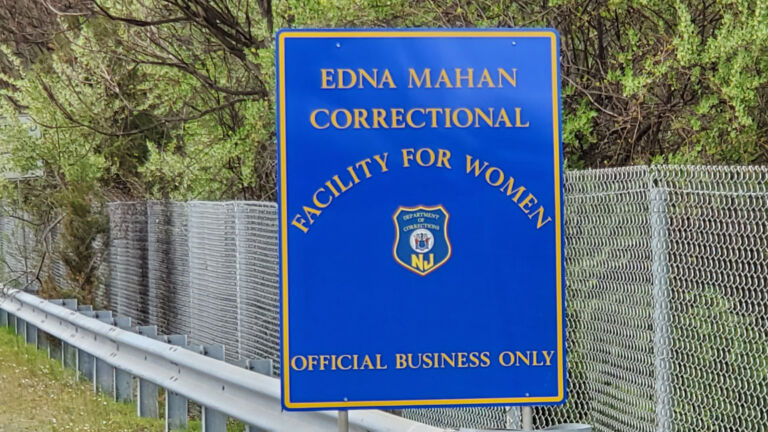
“We fully acknowledge there is more work to be done,” Kuhn said.
Finding good officers and then keeping them has been difficult, in part due to pay considerations. Kuhn said she hopes that a recent law providing for a minimum starting salary of $48,000 for corrections officers, which she described as “more competitive,” as well as a new full-time recruiting team, will help attract more candidates.
Vaccination complaints
Some Republican legislators complained that the mandate that corrections officers be fully vaccinated against COVID-19 or face termination will further strain the corrections department’s ability to staff the prisons. Kuhn said 72% of staff are now vaccinated, up from just 43% by the initial deadline at the end of February. Only two officers were let go so far for refusing to be vaccinated. Another 500 are out on leave for a variety of reasons and their vaccination status is unknown. Most staff were required to be fully boosted as of May 11. Assemblyman Hal Wirths (R-Sussex) suggested that if all the rest of the staff do not comply or get an exemption, the department would lose another 2,500 officers.
“How could you even run a Department of Corrections if you’re down a possible 3,000 when we’re short now?” he asked. “What’s the plan if we don’t have people to protect us and keep the bad prisoners where they belong?”
“I think we’re doing OK,” Kuhn answered. “We’re finding very legitimate medical and religious exemptions, and I think that we are sincerely hoping that there will not be a need to reject exemptions.”
