Credit: (NJ Spotlight News)
Fourteen residents at a troubled Sussex County nursing home died in February of COVID-19 after the facility failed to properly handle an outbreak that infected more than 100 staff members over two weeks around the new year, according to state officials. And two residents were hospitalized earlier this week for wounds they suffered fighting in the home’s atrium, the second time they scuffled since Friday.
New Jersey officials outlined these incidents and dozens of other concerns in a complaint filed in Superior Court Tuesday against the owners of Woodland Behavioral and Nursing Center, formerly known as Andover Subacute. The state wants a judge to appoint an expert to oversee daily operations and the orderly transfer of hundreds of frail elderly or otherwise incapacitated residents as the facility is closed down or sold, and to keep the current owners from running interference.
If the court does not act immediately, “Woodland’s residents will continue to be placed at serious risk of imminent and irreparable injury, including possible death, as a result of Defendants’ persistent negligence and non-compliance with professional standards and regulatory requirements, repeated neglect of residents, and failure to implement appropriate and reasonable safety measures to protect at-risk residents from COVID-19 and other health issues,” the state said in its brief, filed in Sussex County.
The state’s request to wrest control of the facility from its owners — a rare and extreme step — is the latest government effort to address the chronic and severe care issues it has documented at Woodland. The facility, which gained national notoriety in April 2020 when the bodies of 17 residents who had died of COVID-19 were found stored in an outdoor shed, is owned by a company run by Lakewood residents Chaim Scheinbaum and Louis Schwartz and operated by Menachem Spiegel, all of whom are named in the complaint. Representatives for the facility, now home to about 360 people, did not reply to a request for comment Wednesday.
 Credit: (AP Photo/Ted Shaffrey)
Urgent issues
News coverage following the discovery of the residents’ bodies at what was then Andover led to inspections and a $220,000 fine from the Centers for Medicare & Medicaid Services, which oversees the federal insurance programs. The state Department of Health, which licenses and inspects nursing homes, has investigated dozens of complaints since then and found at least 10 urgent issues that could prove life-threatening. Multiple examples of short staffing, resident abuse and substandard care — including lax infection-control protocols — are detailed in the legal complaint and the state has halted all admissions to the facility, including readmissions for residents who were hospitalized. In March, the federal insurance regulators threatened to stop reimbursing Woodland for services by late summer if problems were not fixed, although they could also suspend payments sooner.
The health department declined to comment on the timing of its legal action, but the filing indicates the warnings from the federal regulators were a prime concern. “In light of Woodland’s continuing failure to correct state and federal violations, there is substantial risk that CMS will terminate Woodland’s Provider Agreement on or before August 15, 2022. The loss of CMS payments upon the termination of the Provider Agreement, which comprise approximately 92% of Woodland’s total revenues, will render continued operation of the facility impossible,” state lawyers said.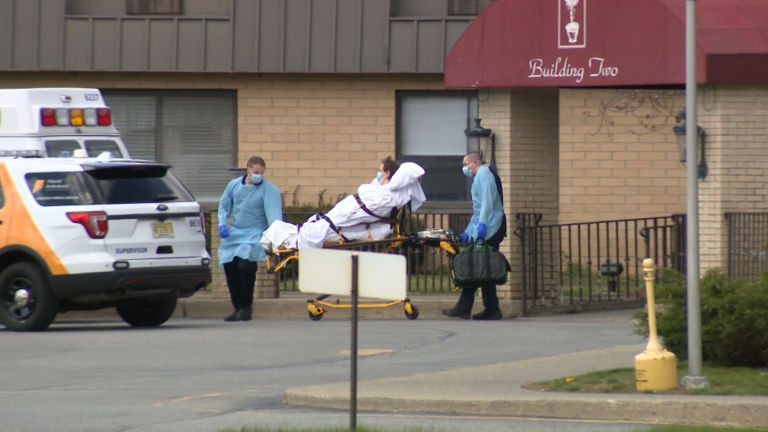
Woodland’s finances are already at risk, according to the state’s filings. By the end of January, the balance sheet showed nearly $20 million in total liabilities, but less than $16 million in total assets. It lost $1.3 million in 2021 and appeared to have not made any payments on a $5.7 million debt in at least two years, the attorneys said. In February, the Office of the State Comptroller included Woodland in a report of the 15 worst-rated nursing homes in the state that, together, receive more than $100 million annually in public funding.
Atlantic Health System — tapped by the state in March to monitor Woodland for several months — also identified an additional $15 million in critical capital needs at the massive, 543-bed facility. Atlantic Health referred questions to state officials Wednesday; the health department said only that Atlantic Health’s work at Woodland was “ongoing.”
Elder advocates have also been closely watching Woodland. Evelyn Liebman, director of advocacy for AARP New Jersey, said that many of the state’s 370 nursing homes have struggled with staffing and infection-control issues for years, but these problems were exposed publicly during the pandemic. Nursing homes here and across the nation struggled to protect their vulnerable residents from COVID-19 and state officials have reported more than 9,300 related deaths, including of about 500 employees, at these facilities since March 2020.
“Nursing Home residents have a right to live in a safe environment,” Liebman said. “While we applaud the Administration’s recent action to better ensure the health, safety and dignity of Woodland’s residents, it is imperative we pick up the pace of change and take measures to ensure the health and safety of all residents who need long-term care. All of New Jersey’s most vulnerable residents who live in nursing homes and other long-term care facilities deserve better than subpar conditions and they deserve it now.”
Industrywide staffing shortages
The state hired consultants to review nursing homes’ pandemic response and to recommend changes, many of which have since been put into place. But staffing shortages continue to plague the industry nationwide and the coronavirus is still spreading, with 331 New Jersey nursing homes reporting active COVID-19 outbreaks, according to a weekly state report. COVID-19 was diagnosed in more than 3,700 residents and 3,300 staff as a result of these outbreaks.
Health department inspectors reported that Woodland has continued to struggle with basic COVID-19 protocols, according to the court filings, as staffers did not wear protective gear properly and failed to keep infected residents masked or separate from healthy people. The facility is no longer testing staff or residents regularly for COVID-19, the inspectors found, and long ago halted any contact tracing to identify other people at the facility, or who have come in contact with an infected person, who may have been exposed.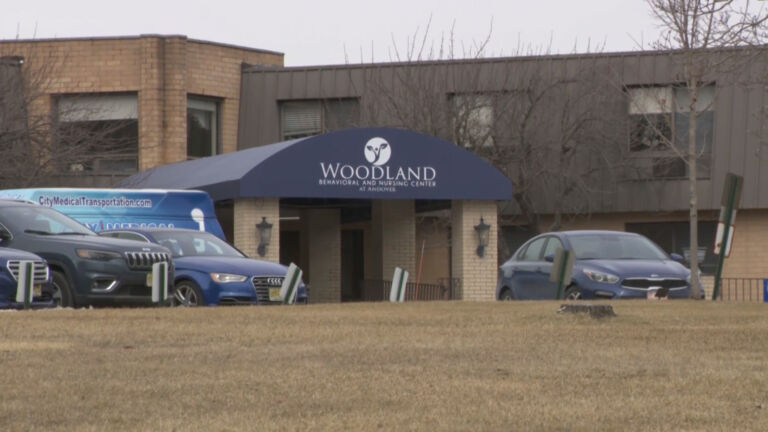
Even cases that were diagnosed at the nursing home were sometimes mishandled, state officials found. Two residents who contracted COVID-19 last fall and were hospitalized died within weeks of being infected, despite having been prescribed outpatient treatments — infusions of monoclonal antibodies — that could have saved their lives and kept them out of acute care. In one case, the medications were even delivered to Woodland, court filings note, but staff never administered them.
The problems at Woodland are not limited to COVID-19 protocols, the state found. Last fall a resident with a feeding tube was hospitalized three separate times for severe constipation and an impacted bowel, requiring significant inpatient treatment, but Woodland never discussed possible changes to the person’s care or diet, the complaint notes. Another resident faced a similar situation, suggesting to health department inspectors that Woodland lacked basic protocol for tube feedings.
The state wants a judge to appoint a receiver to oversee Woodland’s daily operations and finances and to address the “pattern and practice of habitual violations,” with the current owners footing the bill. This person could bring in consultants, hire and fire staff, and would be responsible for improving care in preparation for a potential sale or “orderly closure” by the state. A big part of the job would be to help residents to transfer to other facilities.
Watching closely
Michael Brower, the legal director for Disability Rights New Jersey, said his team will be following this transfer process closely. The nonprofit organization, legally designated as an advocate for New Jerseyans with disabilities, has been monitoring activity at Woodland for several years and launched a formal investigation this winter. The disability rights organization is particularly concerned about the nearly 200 residents of a locked third-floor unit who have mental health issues, traumatic brain injuries or other disabilities, Brower said, and who have specific needs that few programs can meet. He is also watching to make sure residents who don’t want to move aren’t forced out prematurely.
“One of the problems is there aren’t a lot of options for people who need intense support and services,” Brower said. Some of these residents may not require nursing-home level care, he said, but have been warehoused at Woodland for lack of better options, like group homes or independent, but supported, life in an apartment. “I don’t know if there’s a great amount of community capacity out there,” he said. “That’s going to be very difficult for the transfers.”