
 The first campaign finance reports of the year from New Jersey’s congressional candidates show Democrats with six times the cash of Republicans, which will enable them to head into what are expected to be some tight general election contests with at least a financial advantage.
Whether that advantage will be enough to help the incumbents in four swing districts win re-election in a midterm when inflation is at 40-year highs and President Joe Biden’s approval ratings are in negative territory remains to be seen.
Micah Rasmussen, director of the Rebovich Institute for New Jersey Politics at Rider University, said that while New Jersey Republicans may have raised significantly less so far than Democrats, the GOP candidates will be well-financed in November.
Money likely to balance out
“The early money advantage for Democrats will likely not hold up through the fall, he said. “I expect both parties to be well financed, given that control of Congress is at stake. What it could do is provide a head start for campaigning, but given that Republicans smell blood, their donors will make sure they have plenty of money once the primary is over.”
Having more money than one’s opponent may not be as important as it was in the past anyway, with fewer people watching traditional television and more getting information from social media and other sources.
“We are starting to see some high-profile races in which the candidate with far less cash has won fairly easily,” Rasmussen said, citing 2020 Senate races in South Carolina and Kentucky. “You need to be adequately financed to get your message out, but you may not need to go toe to toe or dollar for dollar. That’s a function of both our polarization — campaigns aren’t so much in the business of persuading voters as much as mobilizing their supporters — and the ability to do just that via social media, email and other forms of highly targeted communications. Campaigns are paying for data, and they’re paying for lists, but they don’t need to be up on cost-prohibitive network television when voters are getting their information from other media.”
Challenge No. 1
First, the candidates have to get through the June 7 primary.
Challenges to filing petitions knocked seven hopefuls off the ballot, but six Democratic and nine Republican nominations remain technically contested. In most cases, though, the results are not expected to be close, with incumbents or the candidates getting the party line likely to win and advance to the general election.
In total, 20 Democratic candidates have raised $24.7 million through the end of March, according to filings with the Federal Election Commission. The nine incumbents seeking re-election took in $9 of every $10. Because money not spent in a prior campaign carries over, the incumbents have even more cash on hand — a little over $36 million. And because none of them is facing a significant challenge, they should not need to spend much to get past the June election.
Rep. Josh Gottheimer, who first won his seat six years ago in formerly staunchly Republican Northwest Jersey’s 5th District, remains the state’s best fundraiser and currently the 16th best in the nation, according to the FEC. He had $13 million in the bank as of March 31, and he might need every dollar to keep that seat in November.
A peek into GOP war chest
The 36 Republican candidates, in comparison, had raised only $9.6 million and had less than $6 million on hand at the end of the first quarter of 2022. Because there are only two GOP incumbents, most of that money is in the hands of challengers.
Republicans have more contested races and so likely will be spending more of their money before June. Rep. Chris Smith, one of the longest-serving congressmen in the nation, had his 4th District shifted. But Smith is still considered the front runner due to his name recognition, constituent services and getting the party line in both Monmouth and Ocean counties, which the district straddles. He has raised more than $1 million and had some $825,000 in the bank, 10 times more than the second wealthiest candidate, Steve Gray. Mike Crispi, a conservative podcaster working with former Donald Trump advisor Roger Stone, had raised almost $100,000 — slightly more than Gray — but had only $36,000 on hand. The fourth candidate, Mike Blasi, had raised about $79,000 with $12,000 in the bank.
The largest GOP fundraiser was Rep. Jeff Van Drew, whose 2nd District became even more Republican following last year’s redistricting. He had brought in more than $2.1 million, with two rivals not filing reports with the FEC as of the deadline earlier this month.
Kean’s cash
But former state Sen. Tom Kean Jr. was the Republican candidate with the most cash on hand — more than $1.5 million. Kean is hoping for a second try at unseating Rep. Tom Malinowski in the sprawling 7th District in central Jersey that the Democrat flipped during 2018’s midterm blue wave, when they won four swing districts.
That is the state’s most contested primary, with seven Republicans vying for the nomination. Phil Rizzo, an unsuccessful gubernatorial primary candidate last year is a distant second to Kean in the money race, having raised $211,000, but with just 1/10 of the money Kean had in the bank.
Assemblyman Erik Peterson, who currently represents part of the district, ranked fourth in fundraising, having brought in $29,000, and had $23,000 left in his coffers. John Henry Isemann of Long Valley had raised $109,000 and Kevin Dorlon, also of Long Valley, took in $19,000. Neither John Flora nor Sterling Schwab filed reports.
In the 3rd District in South Jersey, Bob Healey was the clear money leader, having raised more than $1 million, while Ian Smith and Nicholas Ferrara had taken in less than $100,000 each. Healey is the party choice for the nomination, while Smith made a name for himself by defying the state’s COVID-19 business shutdowns.
Split party endorsements
Money could play a role in the 5th and 11th District primaries in North Jersey, where candidates have split county party endorsements.
In the 5th, Nick DeGregorio had outraised three opponents and had the most cash on hand, $454,000. He also won the line in Bergen County, which is the lion’s share of the district. But Frank Pallotta, the 2020 nominee, has some name recognition and party support in Passaic and Sussex counties, as well as $83,000. Fred Schneiderman had $147,000 on hand.
In the 7th, Morris County Commissioner Tayfun Selen got the county line from both the Morris and Essex GOP and had $195,000 in the bank. Paul DeGroot, who got the party nod in Passaic, outraised Selen by a few thousand dollars but also spent more, so had about $184,000 in his war chest. Toby Anderson had $33,000, while two other candidates did not file reports.
Looks to be a close one
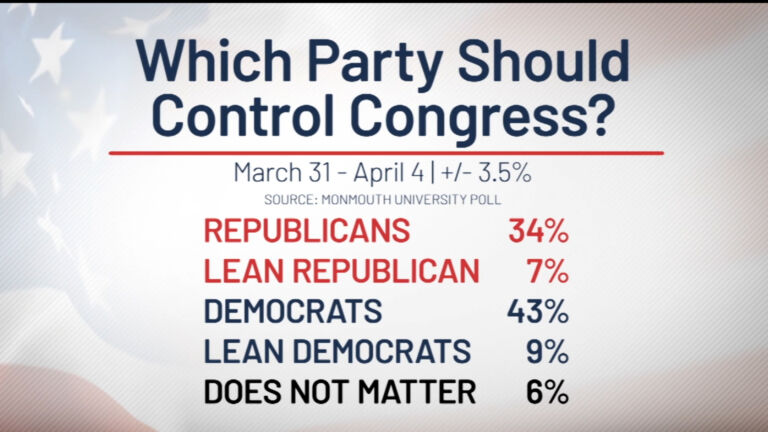
Once the fields are set, the general election is likely to be a close one. A recent Monmouth Poll said New Jerseyans generally favor keeping Congress in Democratic hands, 52%, over Republicans, 41%.
“These results suggest that we could see a similar turnout pattern to two years ago,” said Patrick Murray, director of the Monmouth University Polling Institute. “That means there should be some close House races, depending on how the president is doing in the fall and the impact of redistricting.”
