
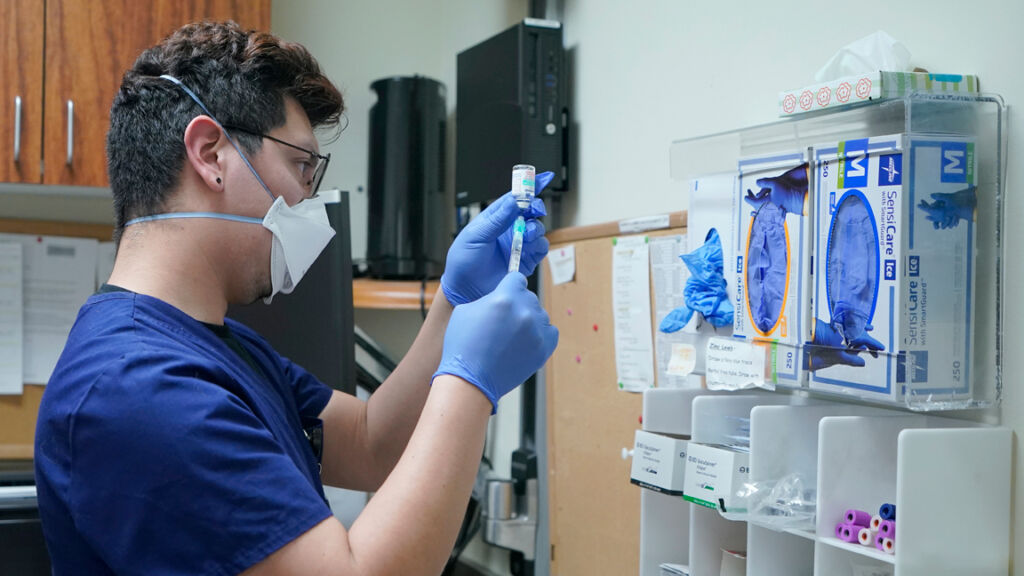
 Editor’s Note: NJ Spotlight News is marking the second anniversary of the arrival of COVID-19 in New Jersey by focusing on how the disease changed our lives and what life looks like now. Here, we review treatment options — which have increased — and the sometimes limited access to them. You’ll find all our pandemic-related stories here.
In March 2020 doctors in New Jersey were frightened. A new, quick-spreading and deadly coronavirus had emerged in the United States and they had no cure, no known treatments and limited options to keep patients who developed COVID-19 comfortable — either at home or in the hospital.
Two years later the picture is far brighter. Corner drugstores sell test kits and offer highly effective vaccines for free. Hospitals have better techniques and several therapeutic options for patients who are admitted. And starting in late 2021, oral medications were approved for outpatient use against COVID-19.
Studies show one drug, Pfizer’s Paxlovid, is nearly 90% effective at keeping mildly or moderately infected patients out of the hospital. Doctors believe this medication — taken over five days at home, similar to TamiFlu, a prescription treatment for influenza — could be transformative for patients. But it isn’t appropriate for everyone, and the supply has been limited to date.
“In early 2020, we had nothing to offer,” recalled Dr. Joshua Bershad, an executive vice president with RWJBarnabas Health, one of New Jersey’s largest hospital systems. “Now it feels like we’re back to some clinical normalcy,” with diagnostic and treatment tools more readily available, he said, “and it feels good.”
To help boost supply of new COVID-19 therapies, President Biden outlined plans in his State of the Union speech to nearly double the Paxlovid supply this spring, building on the 4 million doses now available nationwide. He also pledged to start this month to establish “one-stop” sites at pharmacies, community health clinics, nursing homes and other facilities where individuals can get tested and treated for COVID-19 in the same outpatient visit.
Oral medication is a ‘game changer’
Accessing COVID-19 medication is “not as crazy as it was (months ago). The government is releasing more doses and our demand is less,” said Dr. Indu Lew, executive vice president and chief pharmacy officer with RWJBarnabas Health, “and I think that will be a game changer for those patients in which Paxlovid is appropriate.”
Treatments are only one tool physicians now have, Lew and others stressed. Doctors are better at understanding who is at risk, how to control the spread and what to do for patients who are sick with COVID-19, both at home and in the hospital. And with nearly 8 in 10 New Jerseyans fully vaccinated, and more than half boosted, fewer people will get extremely sick, they note.
‘I think right now we’re in a good spot for how many patients that we’re seeing and the therapies that are available.’
“Public health agencies have saved lives,” recalled Dr. Shereef Elnahal, president and CEO of Newark’s University Hospital and a former state health commissioner. “Lots of great work has been done,” Elnahal said. He was also encouraged by the new treatment options, which he said will make it easier for clinicians to help those who do get infected avoid hospitalization, severe disease, and death.
New Jersey reported its first COVID-19 diagnosis on March 4, 2020, and has now logged nearly 2.2 million cases — an undercount that doesn’t include most home-tested cases — and more than 33,000 related deaths. But daily case numbers have dropped dramatically since the omicron surge peaked early this year and hospitalizations are roughly 10% of what they were then. New Jersey lifted its school mask mandate last week, with Gov. Phil Murphy explaining that we are now in an endemic, or stable, phase of the coronavirus, and federal officials have said most Americans can gather indoors without face coverings.
“I think right now we’re in a good spot for how many patients that we’re seeing and the therapies that are available,” Lew said. “I don’t feel like we’re in a scarce resource allocation (situation), at least right now, in New Jersey.”
Assessing risk
RWJBarnabas continues to conduct careful “risk stratification” to ensure Paxlovid, in particular, is going to the right patients, Bershad explained. Doctors must identify patients who are at the greatest risk for bad outcomes from COVID-19, often because of chronic health conditions, and weed out those who could suffer dangerous side effects from the treatment, he said. The process requires tight coordination between the pharmacy and doctors to ensure the medication is put to the best use, he said.
“The decision around whether to treat or not and what to use sort of ends up around who would have better outcomes,” Bershad said. RWJBarnabas also holds webinars, circulates emails and holds regular briefings to keep physicians up to date on the treatment options, he said.
‘Exactly some of the groups of people that are most in need of protection, the vaccine may not work as well for them.’
While COVID-19 case numbers are falling, experts said the therapeutic treatments will continue to be essential. This is especially true for those who can’t be vaccinated for health reasons, or whose bodies don’t build immunity after getting a shot, and are now more at risk as we lift public health restrictions, doctors note.
“Exactly some of the groups of people that are most in need of protection, the vaccine may not work as well for them,” Dr. Stanly Weiss, an epidemiologist at Rutgers School of Public Health and professor at Rutgers New Jersey Medical School. “A therapeutic to them is very important.”
For oral COVID-19 therapies like Paxlovid, timing is critical. The medications must be taken within five days of the first symptoms, doctors note, making it critically important that patients know these options exists, physicians know to prescribe them and the medication is actually available at a pharmacy nearby.
Prompt diagnosis is key
“There is a public health implication,” Weiss said. “It means there is a reason to try and diagnose people promptly so they can reduce the risk that once infected they develop severe disease or die” by taking medication, he explained. “But for that to work, the drug has to be available locally and rapidly.”
In New Jersey, the Department of Health said it is working to expand access to therapeutics and collaborating with providers to encourage them to talk to patients about their options and prescribe oral treatments when appropriate. That process will ramp up over the coming month, according to health department spokesperson Nancy Kearney, to “help narrow the gap between diagnosis and treatment.”
Information about COVID-19 treatment options is available on the state’s pandemic dashboard. And people can search for locations that stock these medications on a federal therapeutics locator website. Users can search the federal site by type of therapy, state and ZIP code.
‘The mandate wasn’t to prevent infection, it was to prevent severe morbidity and mortality.’
Public health experts stress that vaccines should be considered the first line of defense against COVID-19. Weiss said the federal government’s charge to vaccine makers was to decrease the chance of people getting very sick, hospitalized or dying. As a result, people who are vaccinated individuals and who do get infected tend to have better outcomes than those who aren’t immunized.
“The mandate wasn’t to prevent infection, it was to prevent severe morbidity and mortality,” Weiss said. “And that has indeed happened. And that’s really important.”
Before vaccines
Before vaccines were available in late 2020, doctors had few options to help those who got infected and sick. At the start of the pandemic, they urged those who tested positive to stay home and take over-the-counter medication. Hospitals tried plasma therapy, using white blood cells from previously infected patients, and attached thousands of patients to ventilators to help them breathe.
Within six months, clinicians had learned ventilators were far from optimal and employed other techniques to help patients stay oxygenated. Plasma therapy and other experimental techniques were now being shunned. But the antiviral remdesivir and the steroid dexamethasone were available to counter COVID-19’s progression in hospital patients, two medications that remain in use today.
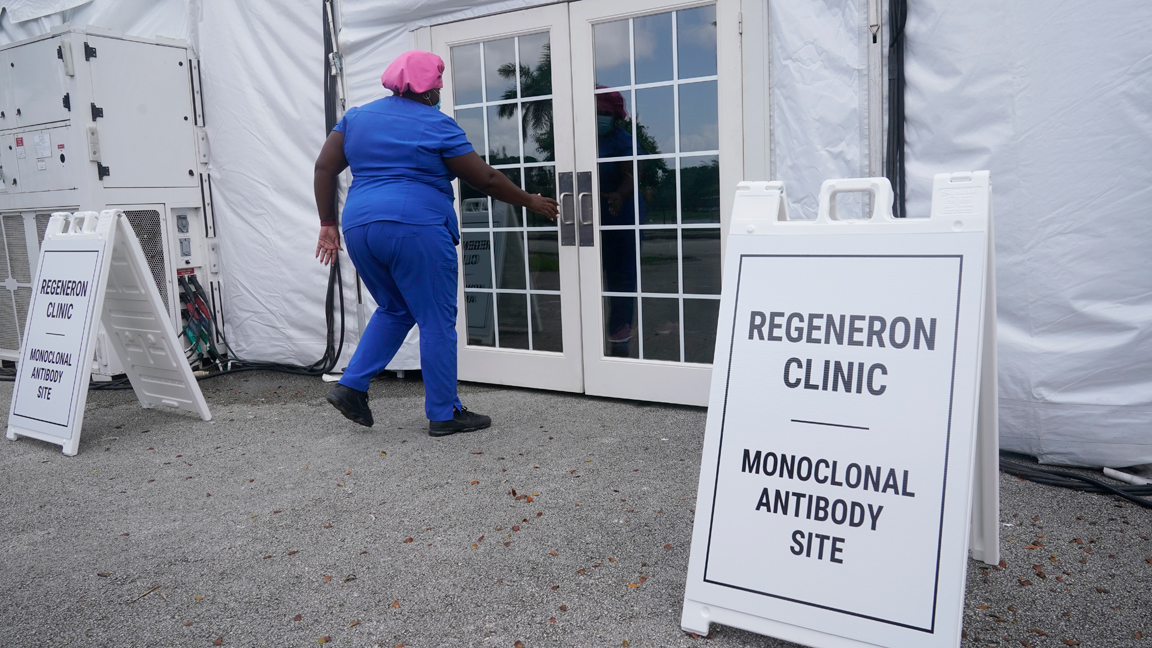
By the spring of 2021, doctors across New Jersey were embracing monoclonal antibodies — administered at a hospital or cancer center through an IV drip — for both inpatient and outpatient use. The drugs, which can slow viral reproduction, helped hospitalized people get better and kept those with mild or moderate symptoms from requiring acute care. But when the omicron variant surged late last year doctors learned that some monoclonal antibody options were ineffective against the new variant.
 Credit: (AP Photo/Marta Lavandier)
Now doctors are hopeful that Paxlovid and other oral medications — including a Merck drug that is much less effective, but better tolerated in some patients — will continue to protect against new variants. Data from the omicron surge, which emerged just as Paxlovid was approved, is limited, but patients have been successfully treated during that wave, they said.
Oral therapeutics are now more widely available then they were two months ago, Lew and others said. But while doctors are encouraged by Biden’s proposal, they said more must be done to ease public access to these medications, like ensuring they are regularly stocked at pharmacies, so patients don’t need to conduct extensive online searches to find treatment.
“It should be just like getting an antibiotic, or like you’re now getting a (COVID-19) vaccine,” Lew said, in which a doctor prescribes a medication, and you pick it up on the way home. “That’s where we need to be,” she said, “and we’re not there yet.”
