
 Credit: Rudy and Peter Skitterians from Pixabay
Amid high inflation and steadily rising gas prices, some state lawmakers are proposing ways to provide New Jersey residents with immediate relief.
Among the ideas floated by lawmakers in recent days are proposals that call for temporarily slashing the state’s gas tax, which currently costs motorists roughly 42 cents for every gallon of gas purchased at the pump.
Legislation seeking to establish a one-time “gas price and inflation” income-tax credit worth up $500 has also been introduced.
But with every proposal to provide some immediate relief comes policy trade-offs that could have other consequences for New Jersey residents. Experts warn those consequences could include fewer resources, at least in the short term, to pay for ongoing roadwork or other key spending priorities.
Pump your own and save
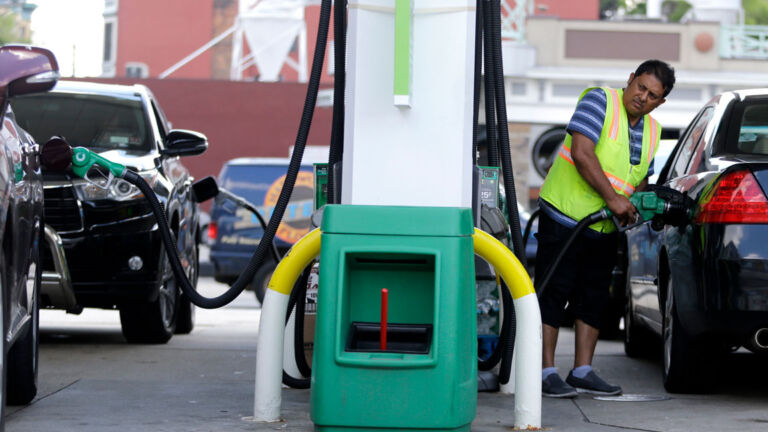
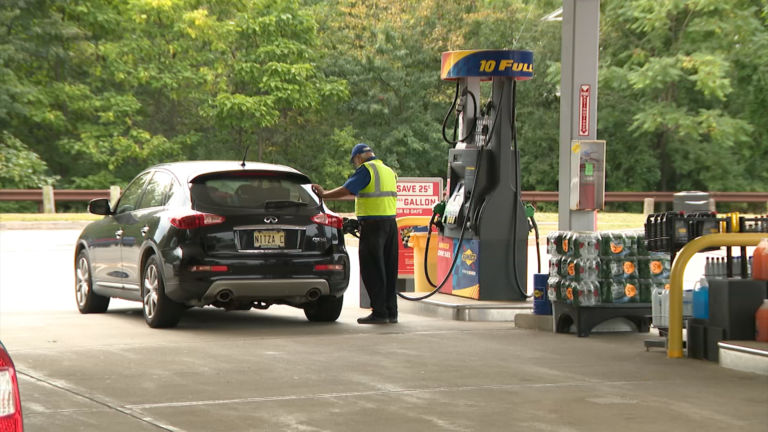
Meanwhile, as prices soar, the state’s gasoline retailers have thrown their support behind a controversial measure that calls for lifting New Jersey’s longstanding ban on self-serve gas. And they argue such a policy change could end up reducing gas prices in New Jersey — at least for those who would be willing to pump it themselves.
Price increases wipe out benefit of recent reduction of NJ’s gas-tax rate
According to data tracked by AAA, the average price of a gallon of gasoline in New Jersey was about $4.25 at the end of last week. That amounts to a more than 60-cent increase since just the end of February.
Rising gas prices have also contributed to overall price inflation measured by the federal government, which was up nearly 8% year-over-year through the end of February, according to the Bureau of Labor Statistic’s consumer price index.
Last week, Sen. Shirley Turner (D-Mercer) announced her plans to introduce legislation that would provide New Jersey residents with some relief by temporarily restoring a 14.5-cent per-gallon gas-tax rate that had been in effect in New Jersey for more than two decades before an increase was approved in 2016 by then-Gov. Chris Christie.
Turner said in a statement that her proposal would help minimum-wage workers, seniors and other low-income residents who are being forced to absorb the higher prices in their own household budgets.
“If we do not provide relief to consumers now, it will drag down our economy and create more challenges for our state when we are just coming out of the economic impact of the pandemic,” she said.
Changes to gas policy in context
But left unaddressed so far is what effect even a temporary gas-tax policy change could have on the state’s Transportation Trust Fund, or TTF, which is an account separate from the state budget that funds transportation-infrastructure projects throughout the state.
Under current law, the gas tax is a primary and dedicated source of revenue for the transportation fund and tax hikes must occur automatically whenever revenues fall below what’s needed to keep TTF spending in balance. At the same time, gas-tax revenue is also used to pay off the state’s significant transportation debt.
According to Treasury officials, New Jersey’s current per-gallon gas-tax rate of 42.4 cents brings in between $130 million and $165 million each month. Suspending the tax through the end of the year could result in up to $1.5 billion in lost revenue, the officials said. And the state would also have to come up with another way to finance current and future TTF debt.
Under another gas-tax holiday proposal, one floated by Assemblyman Paul Moriarty (D-Gloucester), the sales tax would be used temporarily as a backup source of revenue for the trust fund. But that would only shift the burden of funding the TTF and its debt onto to the budget’s general fund.
Meanwhile, policy experts note there’s no guarantee that a state-level gas-tax holiday will lead to a sizable reduction in the prices that motorists pay at the pump even as it cuts into the revenue stream.
In a recent critique of a gas-tax holiday proposal put up for consideration in Florida, the Tax Foundation, a Washington, D.C.-based organization that closely tracks state and federal tax policies, suggested such a tax policy may make for “good politics,” but is “unlikely to achieve its aims.”
“If a state suspends its gas tax, some of that reduction may find its way to consumers in the form of lower prices at the pump, but even in a highly competitive market, the equilibrium price may well be higher than the tax-free price,” wrote Jared Walczak, the Tax Foundation’s vice president of state projects.
Meanwhile, the federal government also levies a gas tax that currently costs motorists roughly 18 cents for every gallon of gas. And some members of Congress have been calling in recent weeks for that tax to be eased as well.
Short-term savings, long-term losses
An analysis published by the University of Pennsylvania’s “Penn Wharton Budget Model” determined a federal gas-tax holiday lasting through the end of the year would save individual U.S. motorists between $16 and $47, depending on where they live. But the trade-off, according to the analysis, would be a $20 billion reduction in tax collections that serve as a key source of revenue for the federal Highway Trust Fund.
Instead of rolling back the taxes that pay for infrastructure investments, some policy experts have suggested it makes more sense to provide residents with one-time tax rebates or tax credits to help offset inflation and the rising cost of gas.
That’s exactly what New Jersey Sen. Edward Durr (R-Gloucester) and other GOP lawmakers are proposing under a measure introduced last week.
The legislation calls for a $500 income-tax credit to be provided immediately to married couples earning up to $250,000 annually in New Jersey. A tax credit worth $250 would also be provided to individuals earning up to $125,000 annually under the proposal.
Here’s why NJ lawmakers say yes
“Gas prices and inflation are both soaring, which is making it harder for New Jerseyans to fill their tanks and feed their families,” Durr said earlier this month when he unveiled the proposal.
The GOP lawmakers estimate it could cost as much as $1.5 billion to fund the tax credits they are proposing, which would apply to qualified residents’ 2021 calendar year tax liability.
And while New Jersey is currently enjoying a major surge in tax collections, it remains to be seen how funding the proposed tax credits would impact the overall budget going forward.
Gov. Phil Murphy has already called for using some of the state’s significant budget resources to address other key fiscal priorities, such as paying down bonded debt and padding long-neglected budget reserves.
Murphy, a second-term Democrat, pointed to the state’s current transportation-finance and gas-tax laws when he was asked during a recent interview on CNBC if there’s anything he can do to ease oil and gas prices.
“Not a lot, unfortunately,” Murphy said during the interview.
But he also suggested there may be ways state policymakers can do something “indirectly” to provide some relief.
“We’ll do everything we can,” Murphy said during the interview.
