

Editor’s Note: Pet Projects, Public Cash from NJ Spotlight News details how New Jersey lawmakers direct millions to projects, often with little public scrutiny over how that money is spent. Today’s stories focus on the few rules that detail what lawmakers can ask to spend — and that many don’t follow.
Eight days before last year’s June 30 budget deadline, lawmakers added $1.6 billion in spending with little time for public examination and comment. That prompted several groups to criticize how New Jersey decides to spend its money and clamor for reform.
“This budget received votes by lawmakers who stated, in committee, that they did not have enough time to read it or understand it,” wrote nine Black leaders from around the state, members of the United Black Agenda. In their statement, they argued that the budget process allows for racial disparities to continue to thrive in the state. “Indeed, the bill language for the budget was made available for public review for less than 11 minutes. There is no legitimate reason for New Jersey’s legislative process to operate in the manner it does.”
Democratic lawmakers and legislative staff defend the process that the state has used for more than a decade. Opponents say New Jersey’s practice of lawmakers’ adding money for such pet projects as a garden in Teaneck or a handicap accessibility study at Drew University, in particular, lacks transparency because it happens so late in the process, long after the final public budget hearing.
Critics don’t disagree with the use of resolutions by individual lawmakers but say these funding requests — often referred to in the State House as “Christmas tree” items — need to be made public much sooner, allowing for public input.
Last year’s budget timeline was typical of most years. Gov. Phil Murphy proposed a spending plan at the end of February, with full details not available until early March. The budget committees in the Senate and Assembly scheduled hearings to get comment from the public in March. In April and May, the committees held hearings on each state department’s specific budget, some agencies and the Office of Legislative Service’s budget officials.
No time for public scrutiny
Then legislative leaders and staff negotiated with Murphy’s office behind the scenes. Legislative leaders gave broad details of some of the larger increases on June 21, though staffers said previous public discussion of their priorities meant people knew what to expect much earlier. Both houses held committee hearings and approved the 281-page budget on June 22.
That meant the public had just minutes to see all the details and some lawmakers said they hadn’t had time to read it all, especially the more than 200 added lines — roughly half of which were “Christmas tree” budget resolutions, spending for a specific municipality, county, area or organization. Two days later, the Senate and Assembly passed the budget largely along party lines. Murphy signed it June 29.
“A state budget of nearly $50 billion warrants feedback from the public whose tax dollars fund that budget, and for whose benefit it has ostensibly been drafted,” said Leslie Bockol, co-executive director of NJ 11th for Change, in a statement issued the day Murphy signed the budget. “When the details of that budget are made available for public review not weeks, not days, not hours, but MINUTES before it is to be voted on by the Legislature, it sends a clear message that legislators do not care about the needs, priorities, and concerns of the constituents they are (again, ostensibly) elected to serve.”
The ability to obtain state funding by way of budget resolution is popular with the groups that get money.
For instance, the New Jersey Shelter Providers Consortium cheered the $9 million Sen. Shirley Turner (D-Mercer) added to the budget to provide pay increases to shelter workers. In a press release the consortium issued, Turner said, “I wanted to make sure the shelter workers increase was included because I wasn’t going to support the budget without it.”
“Homelessness agencies have been doing significantly more during the pandemic, while our operating costs have been rising,” said Connie Mercer, the founder and CEO of the Lawrence-based homelessness agency HomeFront, who convened the consortium. “Some shelters could no longer manage it and had to close their doors.”
‘We need a more transparent process, fewer Christmas tree items and a more comprehensive, multi-year budget strategy process.’
Legislators like to brag about the successful resolutions, too. About a month after Murphy signed the budget, the Senate Democrats’ press office put out a release about Sen. Patrick Diegnan’s tour of the Jewish Community Center of Middlesex County. Diegnan (D-Middlesex) had put a resolution in the budget giving the center $250,000. The same press release included quotes from JCC of Middlesex officials thanking Diegnan, Murphy and legislative leaders for helping fund the center’s upcoming expansion.
Dorothy Rubenstein, CEO of the JCC of Middlesex, said the center was “honored” to have Diegnan visit and called him “a tireless advocate on behalf of work we do to meet the various needs of our very diverse community, from infants through our oldest senior adults.”
Crying foul
But a number of progressive activists cried foul after last year’s rushed process and said the use of these add-ons is no way to draft a responsible budget.
“This a structural and systemic breakdown in democracy in our state that privileges insiders and party bosses over average residents, voters, and community groups,” said Eric Benson, New Jersey campaigns director with Clean Water Action.
“We need a more transparent process, fewer Christmas tree items and a more comprehensive, multi-year budget strategy process,” added Sue Altman, director of the New Jersey Working Families Alliance.
 Credit: (NJ Spotlight News)
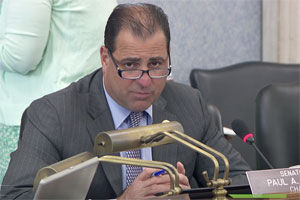
Chairman of the Senate’s budget committee, Sen. Paul Sarlo (D-Bergen), disagreed, saying all the items funded by these additions to the budget were done properly and are worthy.
“I don’t think there is any wasteful spending, because there is a line item and there is an associated need for that,” Sarlo said. “Whether we agree the state budget should be paying for that, that’s a different argument. We all could agree to disagree.”
Richard Keevey, former state budget director and comptroller who is now executive in residence at Rutgers University’s Edward J. Bloustein School of Planning and Public Policy, said the use of budget resolutions is not bad. (Keevey is a regular columnist for NJ Spotlight News.)
Legitimate exercise?
“A Budget Resolution is the formal process which the Legislature uses to make changes to the Budget the Governor had submitted back in February,” Keevey wrote in an emailed response to questions. “The budget process involves both the governor and the Legislature. So, they legitimately have a role to play. For example, there might be items in the budget that the Legislature does not agree with — either for policy reasons or a level of funding reason. So, they use the resolution process to eliminate/alter or increase/decrease funding. Conversely, also as a matter of policy, they might wish to add spending for programs they feel the governor has not properly addressed or completely ignored.”
These legislative additions include changes to the Homestead Benefit property-tax relief program, college tuition assistance and Medicaid spending, for example. The resolution process is also how the governor’s office changes its own budget plan when it realizes after proposal that it underestimated or overestimated some spending needs or seeks to change its priorities in some areas.
NJ Spotlight News’ analysis of the budget resolutions found that “Christmas tree” spending totaled about $747 million in the 2022 fiscal year’s budget of $46 billion; that included $450 million in federal coronavirus relief funds given to just three hospitals. Over the past five years, such spending totaled more than $1.18 billion, comprising about a third of all the budget add-ons approved during that time.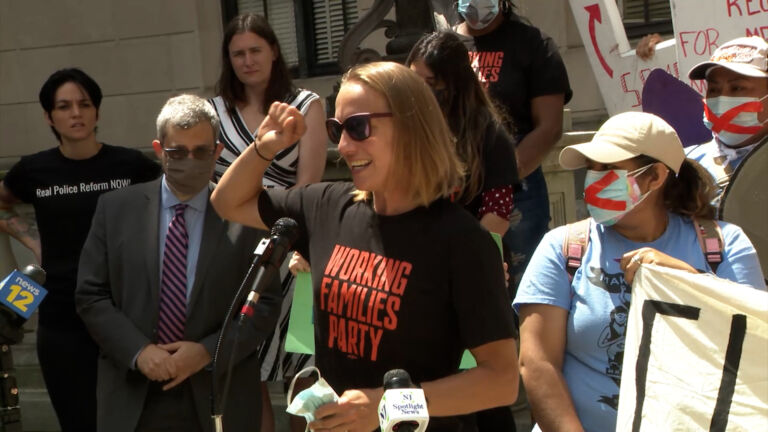
“Granted some resolutions (earmarks) are silly and very self-serving and in the normal part of business should not be considered,” Keevey said. “In general, however, I think they are on the margin.”
He said some of those items are “parochial but usually not wasteful” and “in the grand scheme of things not a lot of money.”
But the use of earmarks at the federal level and resolutions at the state level are bad public policy, said Linda Stamato, senior policy fellow at Rutgers University’s Bloustein School of Planning and Public Policy.
‘No evaluations, no accountability’
“The fact that some worthy projects get needed funds is almost beside the point,” she said. “If so worthy, why not part of the regular budget process? … By the way, there are no follow-throughs, no evaluations, no accountability for how funds were actually spent.”
The lack of transparency is a major complaint of critics. The Legislature’s rules require that the resolutions be submitted to the budget committee chairs two weeks before the final votes, but only made public at some point. In only the first year in which they were used, more than a decade ago, were they posted on the OLS website before the budget was signed.
 Credit: (NJ Spotlight News)
The use of budget resolutions came about as a reform in the mid-2000s, when an opaque budget process helped foster public-corruption scandals that led to the convictions of two sitting senators.
The scandals led legislative leaders in 2007 to require lawmakers to put their names on requests — literally signing them, although that appears to be no longer the case — and indicate any potential conflict of interest. The first year Sen. Richard Codey, (D-Essex) then the president of the Senate, put this system in place, the resolutions had to submitted at least 21 days before the Legislature’s votes on the budget and they were made public 14 days before final passage.
It’s ‘still pork’
Stamato said that “avoiding transparent processes” and deciding appropriations behind doors is “still pork, favoritism to the well-positioned and powerful.”
Legislators also use this process to provide not just for one-time funding, but for annual appropriations, which would typically be budget line items. For instance, each year, lawmakers add money for anti-violence out-of-school youth summer programs in Newark, Trenton, Paterson and, in the current budget Atlantic City. The total in the current budget was $2 million. Annual or recurring budget additions also go to several providers of corrections-related services, including Volunteers of America and New Jersey Reentry Corp; such universities as Rowan, Stockton and Thomas Edison; tourist sites, including the Liberty Science Center and Battleship New Jersey; and other hospitals, nonprofit organizations and municipalities.
‘No matter what you think about all the elements of good budgeting, remember it is still a political process in part.’
Keevey said these annual additions are not necessarily improper and continuing to fund programs through resolutions provides greater flexibility to a governor who, using his line-item veto power, could choose to eliminate funding to an organization or school that previously was funded.
“No matter what you think about all the elements of good budgeting, remember it is still a political process in part,” Keevey added.
Progressive activists want to give the public greater opportunity to be involved in the process and at least have time to lobby lawmakers and the governor to change some of the last-minute additions to the budget. This includes changing timelines to allow for more public input.
“We support the policy of mandating 72 hours as a minimum review time for any legislation before it is voted on, much like is currently done in the U.S. House of Representatives,” said Liz Glynn of New Jersey Citizen Action. “We can and should do better for the sake of our democracy, and for the sake of ensuring voices across the state have a chance to be recognized.”
— John Reitmeyer contributed to this story.
