
 Credit: (AP Photo/Eduardo Munoz Alvarez)
New Jersey’s program to buy out flood-prone houses is being redesigned to include properties that are expected to flood in response to climate change as well as those that are already eligible for state purchase because of repeated flooding in the past.
A new version of the Blue Acres program will add a proactive element to its existing policy which reacts to events like Tropical Storm Ida by buying and demolishing flood-prone properties whose owners have voluntarily offered them for sale to the state.
Department of Environmental Protection Commissioner Shawn LaTourette called the updated program “Blue Acres 3.0” because it’s a progression from the first version that began in the 1990s and the second one that sharply expanded the program after Superstorm Sandy in 2012.
Given forecasts for bigger storms, more rainfall, higher temperatures, and rising seas because of climate change, it’s time to anticipate those events with the program, and to integrate it with the state’s resilience strategy, LaTourette said.
“The program needs to be reimagined,” he said in an interview with NJ Spotlight News last week. “We transition from a disaster-response function to a climate-resilience and preparedness function. We make it part of our climate-planning exercise and technical support to all of New Jersey’s local governments.”
Stuck in a ‘vicious cycle’
LaTourette said the current program is stuck in a “vicious cycle of damage-recovery-rebuilding-repeat” that needs to be broken. Under the planned redesign, the state will still buy out properties that have seen historical flooding, LaTourette said, but it will add the more proactive approach that combines anticipatory buyouts with resilience measures like porous pavement or municipal stormwater utilities — which would make developers pay according to the amount of impervious surface they create, and use the revenue to build green infrastructure like rain gardens.
Solutions could also include the construction of “hard infrastructure” such as seawalls and levees in coastal areas; buyouts to create flood buffers on newly vacant land, and “a pushback against over-development that is not being as sensible to the environment as it could be,” LaTourette said.
Potentially eligible properties for buyouts in the new phase of the program will include those “we know will be flooded” by storms or rising seas in future, he explained.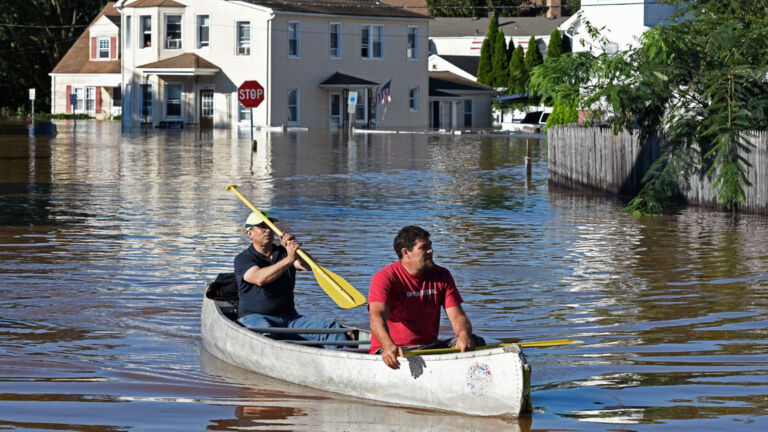
LaTourette said he expects to roll out a pilot program for the new component in coming months, and that he wants to focus first on areas that were shown by Ida to be especially vulnerable to “fluvial” flooding along river valleys. The pilot will use some of the money from the corporation business tax, which already funds Blue Acres, and has allocated $4.3 million overall in fiscal year 2022, which ends in June next year.
Doug O’Malley, director of the nonprofit Environment New Jersey, said the Blue Acres redesign is an appropriate response to the growing climate crisis.
Dealing with a ‘wetter, more flooded future’
“New Jersey is going to have a wetter, more flooded future and making Blue Acres pro-active is reflecting that reality,” he said. “The question will be how many properties can the state buy, how much it will ultimately cost, and how many willing sellers there will be. Hurricane Ida and the storms we experienced this summer are a peek into our extreme weather future.”
Advocates for tougher resilience measures have long accused Blue Acres of being much too small to adequately address the massive impact of climate change. Whether the program rises to the challenge in future will depend on whether other parts of the resilience program mean some properties can be protected from flooding, LaTourette said.
“The policy question is how you build that network together; how you encourage folks to invest in stormwater management to the degree that they don’t now; how you encourage developers to take a longer view,” he said.
Since 2013, the program has demolished 705 properties; closed purchases on 770, and had 830 families accept buyout offers, according to DEP data in mid-September.
Since Ida hit on Sept. 1, public interest in state buyouts has been “very strong,” LaTourette said, and has been concentrated in the areas such as the Rahway River valley that were so hard hit by flooding. “People want out, they are tired of their lives and their property and the people they love being washed away,” he said.
The new demand for buyouts indicates that more people understand the nature of the climate challenge and are becoming more supportive of the state’s response, LaTourette said. “The fact that folks have raised their hands in interest in the Blue Acres program — that, I think, is a sign we’re going to break the cycle. It’s demonstrative of the greater recognition of our climate realities.”
No immediate results
But even with the redesigned program, he warned that people seeking buyouts should not expect immediate results because federal aid will depend on an ongoing assessment of Ida’s damage by the Federal Emergency Management Agency, and because state money — which will pay for the new proactive part of Blue Acres — is still limited by the funding authorized by lawmakers.
“We have to be careful about sowing an impression among the public that has been hit hard by Ida that a buyout of their damaged property is in some way immediate because the process takes time,” LaTourette said.
“It’s necessarily going to be many months before we see a buyout occur in response to Ida. That’s not because people are slow. It’s because there are several steps that must be lined up between the federal declaration and the assessment, and a funding bill through Congress that appropriates the federal money that state money can serve as a match for. Then we have to negotiate with communities about buyouts, then demolition, then management of the land that’s left vacant.”
When a Blue Acres purchase closes, houses are demolished and the land on which they stand is converted to open space that becomes a buffer for future flooding.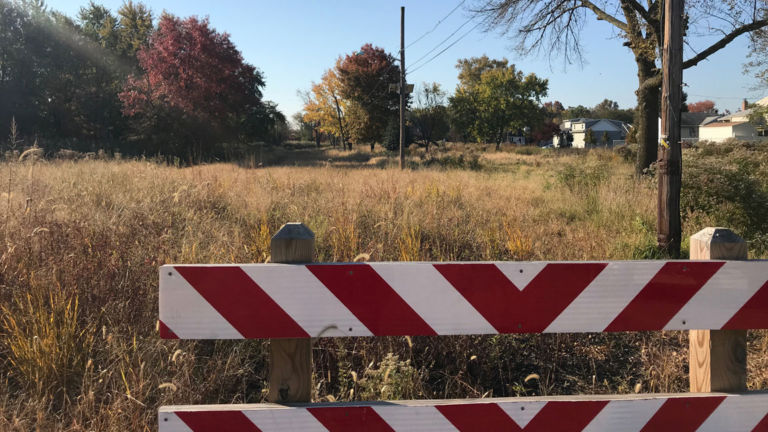
When the federal disaster-relief funds arrive, they will unlock state matching funds, and the two sources together will pay for Ida-related buyouts or repairs, LaTourette said. Any future expansion of the new proactive part of Blue Acres would have to be decided by the Legislature, he said.
“If we want Blue Acres to have the money it needs to be deeply impactful, it needs more state money, but we can still make impacts with what we have,” he said. “If the Legislature wants to see it expand even further, we will need more funding.”
Voluntary or mandatory?
LaTourette has previously denied that the state is contemplating an eventual need for mandatory buyouts but some environmentalists argue that the state may one day require purchases in the most vulnerable communities.
“Blue Acres is a voluntary program now, but to be truly effective in the future, mandatory purchases may be required,” said O’Malley of Environment New Jersey. “We ultimately will need a much more robustly funded Blue Acres program, stringent restrictions on new development in flood plains and a huge push on climate mitigation policies.”
Whether the redesigned program succeeds will depend in part on the cooperation of New Jersey’s 565 municipalities, which have been warned by the DEP that they will have to take much of the responsibility for climate preparedness. Towns are now required by state law to include a climate-vulnerability assessment when they update their master plans every 10 years.
But LaTourette said he was unaware that any town has yet conducted a climate-vulnerability assessment. Similarly, none has yet created a stormwater utility following passage of a law in 2019 enabling them to do so or adopted a new DEP “toolkit” to help them integrate climate change into land-use policy.
He warned that towns are leaving themselves more vulnerable to the next monster storm than they would be if they took advantage of the help that’s available.
“If the expectation is that the Army Corps is going to step in, or the DEP is going to step in, folks will continue to be surprised by the Idas,” he said. “We have to promote coordinated governance, and that’s part of our climate-resilience strategy.”
