
The results of the latest survey of New Jersey Business & Industry Association members, released yesterday around the same time as Assembly Speaker Craig Coughlin (D-Middlesex) unveiled a new minimum-wage bill, indicate companies have a mixed assessment of the state’s economy heading into the new year.
Companies generally reported they plan to pay employees more in 2019, and other responses suggest concerns about a looming recession have not taken hold among the state’s business leaders. But a majority of the survey respondents said a mandatory $15 minimum wage would impact their companies in some way. They also have growing concerns about the overall cost of doing business in New Jersey following a year that saw a top-end corporate income-tax hike and a series of regulatory changes enacted by Gov. Phil Murphy, a first-term Democrat.
“There’s absolutely a concern today about the cost of doing business in the state of New Jersey, more than ever,” said Michele Siekerka, NJBIA’s president and chief executive.
Staff reductions, price increases?
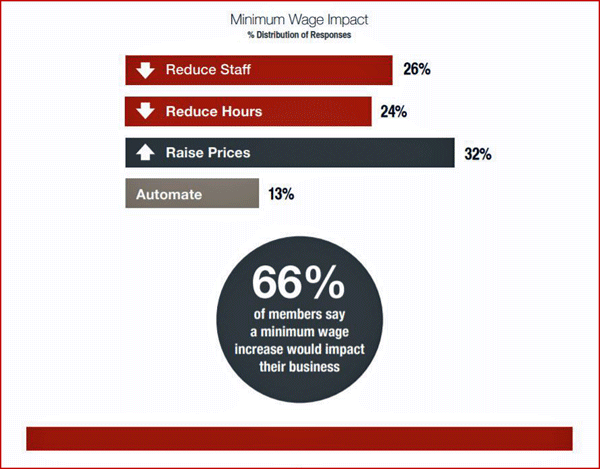
“These are things consistently that our companies have told us over the past few years (as) there’s been a discussion around increasing minimum wage,” Siekerka said. “This is how they are preparing for that.”
New Jersey’s minimum hourly wage is currently $8.60, but it will go up to $8.85 on January 1, thanks to the latest constitutional inflationary adjustment. But anti-poverty advocates in New Jersey have long sought a $15 minimum wage as a way to help low-income workers survive in a state that is becoming increasingly unaffordable and to combat overall income inequality.
Wage bill has carveouts to suit business
 Credit: whyy.org
Many labor advocates voiced their displeasure with Coughlin’s bill, which is due to come up in committee for the first time on Monday. In some cases, some workers wouldn’t receive the $15 base rate until 2029 at the earliest. They include seasonal workers, farmworkers, teenagers and employees of businesses that have less than 10 workers.
‘Utter disappointment’ to labor leaders
Analilia Mejia, executive director of New Jersey Working Families, called the bill’s language “an utter disappointment” and Brandon McKoy, director of government and public affairs for New Jersey Policy Perspective, a progressive, Trenton-based think tank, labeled Coughlin’s proposal “an affront to the hundreds of thousands of workers who will be left behind from earning the full minimum wage and a chance to better support themselves and their families.”
It remains to be seen if the bill will change in the coming weeks in response to criticism from progressives. A final version would ultimately have to be something that the governor would be willing to sign into law; Murphy has advocated for a $15 minimum wage and is more closely aligned with the liberal wing of the Democratic Party.
Murphy’s office did not comment on Coughlin’s bill yesterday.
‘Slow and steady’
Siekerka who said the NJBIA was still analyzing the bill, stressed the need for any increase to be “slow and steady.”
Tom Bracken, president and chief executive of the New Jersey Chamber of Commerce, said his organization would prefer blanket exemptions for certain worker groups instead of the slower ramp-up schedule that’s included in Coughlin’s bill.
The state unemployment rate has steadily declined over the last year, landing on a 17-year low of 4.1 percent in October. But the unemployment rate still remains higher in New Jersey than the national jobless average of 3.7 percent. Wage growth has also been sluggish compared to many other places and New Jersey remains one of the states with the widest gap between the very rich and the poor.
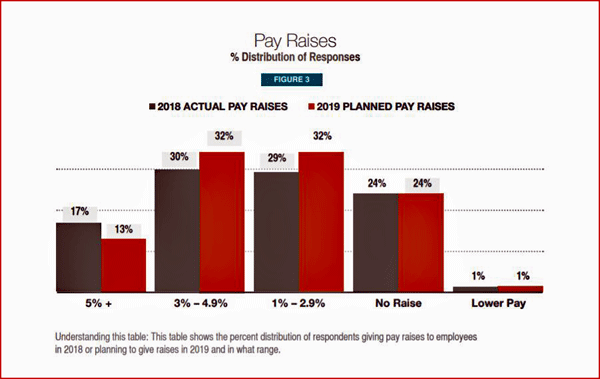
And while the minimum-wage issue is expected to generate a lot of attention in the coming weeks, Siekerka said the top concerns for survey respondents heading into 2019 are property taxes, the overall cost of doing business in New Jersey, and the cost of providing healthcare for their employees. The survey results were based on responses provided by 898 NJBIA-member companies.
“New Jersey businesses are very strong and they’re very, very confident in their own ability to perform and perform well and reinvest in their companies and grow,” Siekerka said. “However, they’re very, very cautious about where New Jersey’s economy is today.”
