

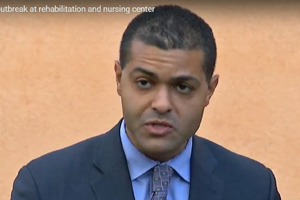
The campaign will focus on “staff and administrators at (the three) similar facilities who take care of these medically fragile children to ensure infection control protocols are followed,” Department of Health Commissioner Dr. Shereef Elnahal told NJ Spotlight. DOH officials will announce details of its plans next week.
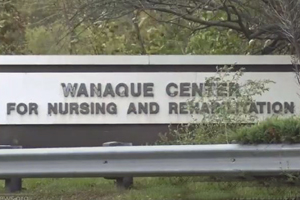
A new case of the adenovirus infection in a patient at the Wanaque Center for Nursing and Rehabilitation — the same strain that killed three people and infected dozens more last year at a drug-treatment facility in South Jersey — was confirmed yesterday, state officials said, but contracted sometime before this past Sunday. This means that the resident became ill sometime over the past weeks, they said, not that the viral outbreak is spreading inside the facility, which cares for dozens of medically complex youngsters who are highly susceptible to infectious diseases.
 Credit: NJTV News
Schepisi: families should be notified within 24 hours
State Assemblywoman Holly Schepisi, who represents the area, pledged yesterday to introduce legislation to require hospitals like Wanaque to notify family members within 24 hours of an outbreak or health emergency involving a relative who is a patient. New Jersey currently lacks a mechanism to regulate and enforce any timeline around these notifications, she said.
One parent of a Wanaque patient raised questions about the notification process during a press conference at the facility Wednesday evening. And news accounts published yesterday recounted how the mother of a teenage girl who died only learned of her illness three weeks after her daughter was hospitalized — and the day before the 16-year-old passed away.
“There has been an obvious and troubling lack of communication,” said Schepisi (R-Passaic).
 Credit: NJTV News
While some of the details remain vague, Elnahal and Gov. Phil Murphy said during a press conference Wednesday that Wanaque administrators first reported symptoms of the adenovirus to state regulators in late September and confirmed a patient had been infected by October 9. Parents began to learn of the outbreak ten days later, according to reports, and the state announced Tuesday that six children had died; a seventh succumbed to the virus later that day.
Governor: No public health threat
Adenovirus is not a public health threat, Murphy and Elnahal stressed, and would likely only cause pink eye, mild chest congestion or other cold-like symptoms in most healthy patients. But in medically fragile individuals — like the young people who lived at Wanaque, many of whom were on specialized ventilator systems to allow them to breathe — this strain of the virus, type 7, is particularly dangerous.
The virus is most common among individuals who live in proximity, like military quarters or college dorms. A report from the federal Centers for Disease Control and Prevention, based on data reported by the state, details an outbreak of the same strain at a residential drug-treatment facility in Cumberland County between January and March 2017.
According to the CDC, a total of 79 probable cases of adenovirus type 7 were identified at the Cumberland County facility, including in 59 patients and 20 staff members; four were hospitalized and three died as a result of the infection. The disease brought on respiratory failure that proved fatal, given the patients’ health history of alcoholism, cirrhosis and diabetes, the agency found.
The Wanaque center is licensed to care for 92 pediatric patients — more than half of whom are on ventilators — and more than 100 adults in the nursing home program. It is run by a for-profit company, Continuum Healthcare LLC., that operates facilities in New Jersey and Pennsylvania.
Elnahal: Low-level violations at Wanaque
While Wanaque has been cited for operational deficiencies in the recent years, including problems that could have contributed to the spread of infection, Elnahal described these as low-level violations; Wanaque administrators have declined to comment on the outbreak.
Wanaque is one of four Garden State facilities designed to accept medically challenged children, many of whom require wheelchairs and complex medical equipment, and some of whom are also classified with severe developmental or intellectual disabilities. (Children’s Specialized Hospital maintains operations in Mountainside and Toms River, and Voorhees Pediatric Facility serves the greater Camden area.)
The scarcity of care options for the vulnerable patients involved in the outbreak at the Wanaque center underscores the challenges for state officials in reacting to the outbreak, Elnahal noted Wednesday. When asked by reporters if the state could “shut down” the Wanaque center, he said that technically the department could revoke its license — although that action might not provide the most benefit for the youngsters now residing there.
“You have to have a plan,” the commissioner said, especially when it comes to transferring care for such medically fragile patients. “And the sad reality is, there aren’t many facilities that are able to care for them.”
