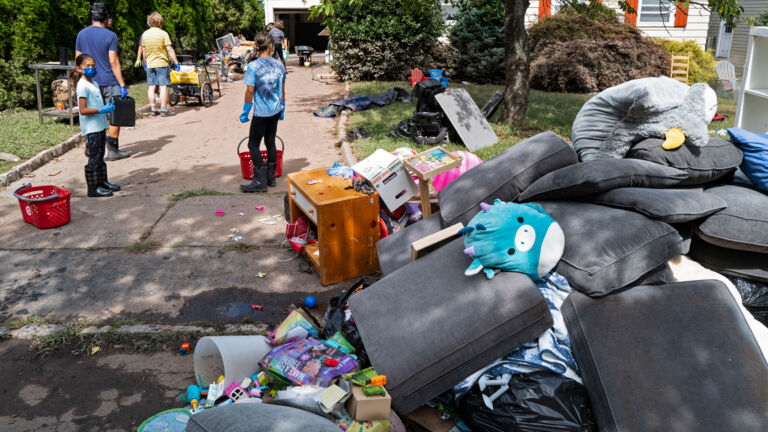
Charlene Dionio is still struggling to pay the $20,000 it took to clean up after Hurricane Ida flooded her basement in Dumont, leaving behind black mold on her carpets and walls. Ida swamped New Jersey, killing 29 people and causing $2 billion in damage. Thousands of homes sat festering in the heat, with mold spreading.
Dionio says she spent frantic months trying to hire a contractor. Meanwhile, her dad — who lives with her — found himself fighting for breath. Her dad ended up hospitalized. That helped convince her contractor to finally rip out the reeking carpets and walls. Another family in Bridgewater tells a similar tale of flooding, and mold test kits showing fungus growing in their home.
Mike Van Dyke, an industrial hygienist at the Colorado School of Public Health who is an expert in mold, considers it a growing problem that impacts living spaces and jeopardizes health, especially as the world gets hotter and storms, more intense.
The New Jersey Department of Environmental Protection’s 2020 “Scientific Report on Climate Change” warns of “an increase in potential water/moisture damage to buildings and a higher potential for dampness and condensation indoors, creating more ideal environments for mold and bacteria growth.”
Rutgers University researcher Joan Bennett sampled molds that grew in people’s homes down the Shore after Superstorm Sandy. She also predicts a looming health crisis, and notes that while not everyone reacts badly to mold, it can cause severe illness.
Van Dyke recommends families with scant resources pick one room for vulnerable family members and make it as safe as possible — especially with good ventilation.