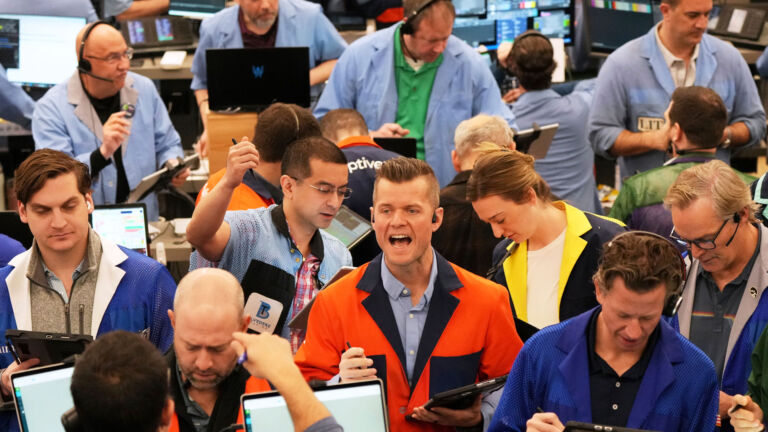
Stocks tumbled on Thursday, giving back most of the gains from Wednesday’s historic rally following President Trump’s announcement of a 90-day pause on some of his reciprocal tariffs.
“We’ve taken a step back from what looked like an absolute calamitous trade policy,” Tom Prusa, professor of economics at Rutgers University, said in an interview with NJ Spotlight News. “It still may in fact happen because technically it’s paused, but we need to keep in mind that the 10% across-the-board tariffs are still in place and that will still have a significant effect on the American economy — a negative for the American economy.”
Trump’s 145% tariffs on Chinese goods raises fears of a trade war that poses big threats to the U.S. economy.
“During the first Trump administration it varied a little bit, but we had approximately 20% tariffs imposed on about two-thirds of the goods we were importing from China at that time,” said Prusa. “Trade on those goods has fallen significantly. So, once we get to the levels that we’re talking about …100% or 150% — once you get above a certain level, it doesn’t matter. We’re just not going to import from China. So that appears to be now the main target, although there’s a lot of uncertainty about what President Trump still has in mind.”
An across-the-board tariff is economically far more desirable than vastly different tariffs on different countries, Prusa said. “By itself the 47% on Vietnam but 10% on England, that alone is extremely bad for the economy.”
“Tariffs of this magnitude somewhat will be absorbed by the exporter and somewhat on the U.S. side by the importer or the retailer, but there still will be higher prices.”