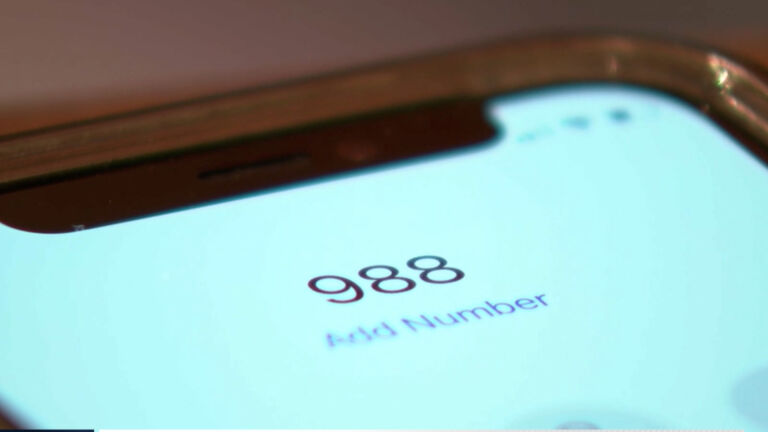
The end of a crucial support system for LGBTQ+ youth has mental health advocates sounding the alarm and stepping up. The Trump administration last month officially ended the specialized “Press 3” option on the 988 Suicide and Crisis Lifeline. This removes access to counselors trained to support LGBTQ young people at a time when mental health issues are on the rise. According to a national survey by The Trevor Project, nearly 40% of LGBTQ youth seriously considered attempting suicide last year.
Now, nonprofits around the state are racing to fill the void. NJ Spotlight News’ mental health writer Bobby Brier shares more on what that response looks like and the impact of the rollback. This interview has been excerpted and lightly edited.
Briana Vannozzi, anchor: So let me just start with how these nonprofits are reacting and more importantly, how are they filling this gap in care?
Bobby Brier: Right now, when we look at the 988 data coming out of the federal government, about 1.5 million LGBTQ callers were calling that hotline between September of 2022 until May of this year. And so when you have a number in a specialized service taken away like that, you’re going to really need immediate mental health care to fill that void.
When you look at what nonprofits are doing right now, they’ve been doing specific skills workshops, essentially that would be able to teach LGBTQ young people coping techniques so they could deal with stress and anxiety on their own. There’s different breathing and grounding techniques.
One is called the 5-4-3-2-1 method. Essentially, it allows for a young person to … use their senses to essentially ground them in the present moment. As we know, stress and anxiety often have somebody looking forward into the future or back towards the past. It allows a young person to essentially [make] a quick mental reset so that they can come back to the present moment. That’s just one example of what we’re seeing.
BV: What did these nonprofits, these groups that really support this community, tell you about what the effect has been of cutting this hotline off for this particular group?
BB: They’ve essentially said that this is unfortunately the latest in a round of what they’ve called attacks on the LGBTQ community since the Trump administration has taken office. They’ve said that they were prepared for this cut. Of course, SAMHSA (the Substance Abuse and Mental Health Services Administration) announced on June 17 that a month later that they would be coming. So they were adding programing. They’re adding mental health clinicians to essentially address this issue.
But they said even with all of this, it’s been an extremely difficult time for young people. We’ve seen from The Trevor Project that rise in anxiety, stress, suicidal ideation in many cases. And so they’re trying their best to address this issue. And one thing they’ve stressed to me again and again is the importance of community, to get out of isolation if a young person is feeling that way. And they’ve really tried to respond that way, especially in the summer months with some of those communities.
BV: Why are they seeing such a rise, especially in these last couple of years, at least from what the data shows us?
BB: The data and a lot of the rhetoric that we’ve seen politically around many times anti-transgender policies, as well as what people have called direct attacks on LGBTQ populations, have essentially led to this rise in anxiety and stress. It’s one that has been around, of course, since the Trump administration, but is one that has kind of gotten worse since we’ve seen a string of executive orders, as well as some policy that would directly impact that population in those communities.
BV: What was the federal government’s reasoning for cutting this [specialize service] off? I mean, SAMHSA, as you reported, says that anyone who calls the number is still going to get access to skilled counselors who are culturally competent and can deal with a number of mental health crises. Why then, is it needed and why did they decide to roll it back?
BB: They’ve said that they wanted to focus. They took this option away so that they could focus on all callers. You know, they’ve said that … anybody who calls, including LGBTQ young people, can get the services that they need. On the surface, advocates have said that sounds fine. … When you take a closer look at it, though, when you take an option like this away, essentially it allows for, you know, people with lived experience, people who have gone through similar life experiences, similar needs, not being able to connect with an LGBTQ young person who may need that support. So while this is now universal support, [that] anybody could get help when they call the line, advocates have really said this is important, that individualized attention and that level of care is there, and we’re just not seeing that anymore with this number.