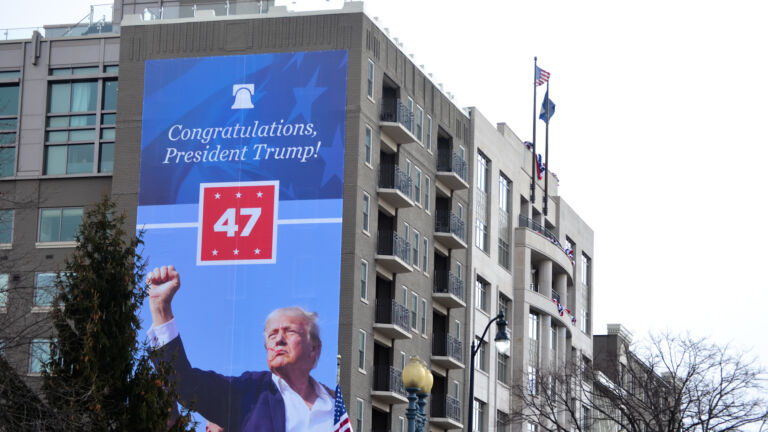
President Donald Trump’s first full day of his second term in office included firings, appointments, a major infrastructure announcement, and a blitz of executive orders — among the fastest and most powerful tools at a president’s disposal.
NJ Spotlight News spoke with Micah Rasmussen, director of the Rebovich Institute of New Jersey Politics, to discuss the executive order’s increasing use and what it could mean for Washington decision-making.
“This is a unilateral action by the president, by the executive branch, that doesn’t have legislation behind it,” Rasmussen said. “And so, increasingly, I think it’s harder to get Congress to agree to something. And so we are relying more and more on executive orders because that’s something that can be done more easily.”
The directives are legally binding documents that enable the president to wield power without approval from Congress. Political experts say it is standard practice for an incoming president to sign a number of executive orders on Day One in office, but there are limits on what the orders can and can’t achieve.
“Some of them, the president has clear, unquestioned authority,” Rasmussen said. “He can do it with immediate effect. Like, for example, the pardons of January 6th offenders. There’s not going to be any second guessing that.”
“He also has the power to impose tariffs,” he added. “That’s an ability that the president has; it’s not something that can be revoked. The enforcement of federal immigration laws that are already on the books, deportations. If he wants to produce a drone report, for example, he can do that.
“But there are some that will be questioned that will require congressional authority. Any that require budget resources, for example, that’s going to have to be approved by Congress.”