As this U.S. Supreme Court session nears its end, the justices have been delivering several long-awaited decisions. On Friday, in a 6 – 3 vote, the court reduced the power of federal agencies and regulators after overturning a decades-long precedent known as the Chevron doctrine, which permits agencies to enact protection rules; for example, the Environmental Protection Agency enacting environmental protections.
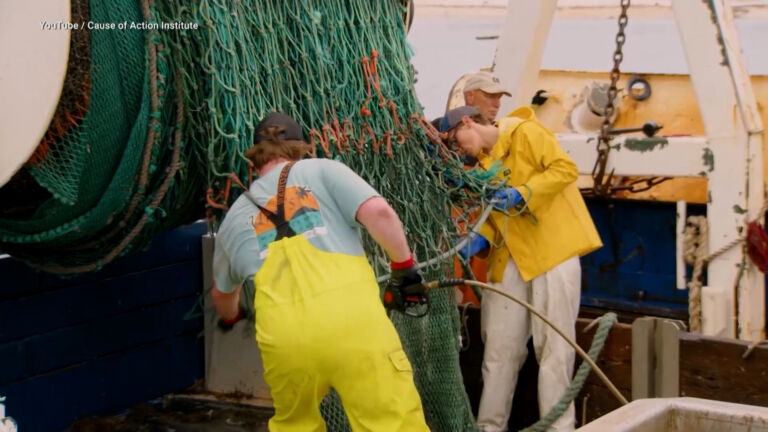
The challenge to the Chevron doctrine started in New Jersey after commercial fishermen in Cape May argued that a federal rule forcing them to pay for monitors on their boats was unlawful. Friday’s ruling goes far beyond fishermen; it shifts power away from federal agencies with experts in their fields and instead gives it to courts to decide on a case-by-case basis.
“This is a case that is about every federal regulatory agency,” David Knoll, a professor of Law at Rutgers University, said. “So the ruling here is going to apply to cases brought by pharmaceutical companies, by big oil companies. And, really, the fisheries case was engineered as a vehicle to overturn the Chevron precedent.”
Said Knoll, “So it’s a very small dispute about who pays for these observers on fishing boats, but it ends up resulting in this sweeping ruling which reallocates power from administrative agencies to the courts.”
In another 6 – 3 vote, the conservative majority on the court ruled that a law prohibiting public camping in the town of Grants Pass, Oregon does not violate the Eighth Amendment.
Justice Sonia Sotomayor, dissenting, called the decision “unconscionable and unconstitutional.” Grants Pass, Oregon had made it illegal for homeless people to sleep in public, with fines for a first offense and jail time for repeatedly sleeping in public.