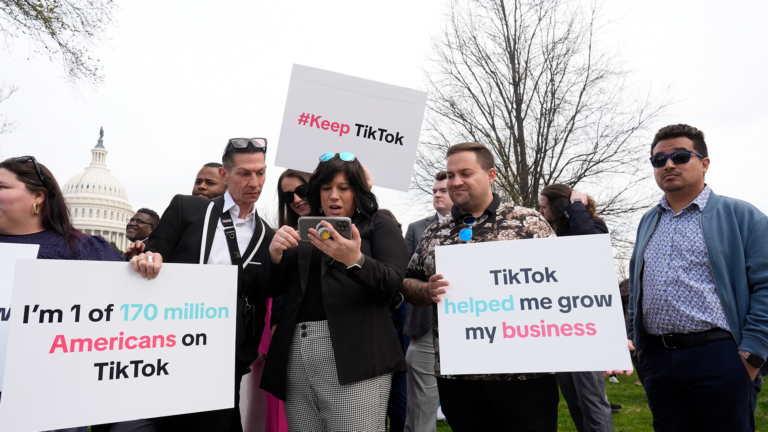
For most people, TikTok offers entertainment — like cat videos and dance contests. But for about 7 million users, it’s a business platform.
TikTok is where Skip Chapman of Manasquan kicked off his deodorant company a year ago.
“I made one video, I put it up and then overnight it went to a million views,” Chapman said. “It’s turned into a full-time business where we have employees that do fulfillment here in New Jersey. I do all the manufacturing myself in New Jersey. And this is all because of TikTok.” He views a TikTok sale or ban with deep alarm.
Almost every member of New Jersey’s congressional delegation last week voted to ban TikTok unless its parent company, ByteDance, sells the app. Rep. Frank Pallone (D-6th) said, “National security experts are sounding the alarm, warning our foreign adversaries are using every tool at their disposal — including apps like TikTok — to amass troves of sensitive data on all Americans.”
Rep. Andy Kim (D-3rd) voted against the ban. “For the U.S. Congress to get into the business of banning individual companies — that needs to be a last-case scenario, and there’s more we can do to address these issues,” he said.
Critics of TikTok point to its connections with China, and the app’s algorithmic suppression of certain stories in an alleged bid to skew U.S. public opinion.
New Jersey activist Kareem Willis calls TikTok a vital connection. He cites influencers like Medical Mythbuster, who provides crucial health information, and communities that offer platforms for political advocacy and emotional support — especially for people of color and who are LGBTQ. He said banning TikTok could cause a crisis “especially for marginalized individuals … Tiktok is way more than just a social media platform. It is a lifeline for folks. It is how I connect with the communities that I try to impact with my work…”
Willis acknowledges TikTok’s dark side. For example, a blackout asphyxiation challenge recently sent a South Orange middle schooler to the hospital. But Willis said, all social media apps need better oversight, not just TikTok.
“What does it mean to take away people’s platform for their advocacy and for information,” Willis asked, “especially … in an election year where Gen Z voters especially, 85% of them go to TikTok for news as opposed to the more traditional news outlets like the cable or newspapers?”
ByteDance has been given a year to sell TikTok, which it says it won’t do. The controversy is likely headed to court.