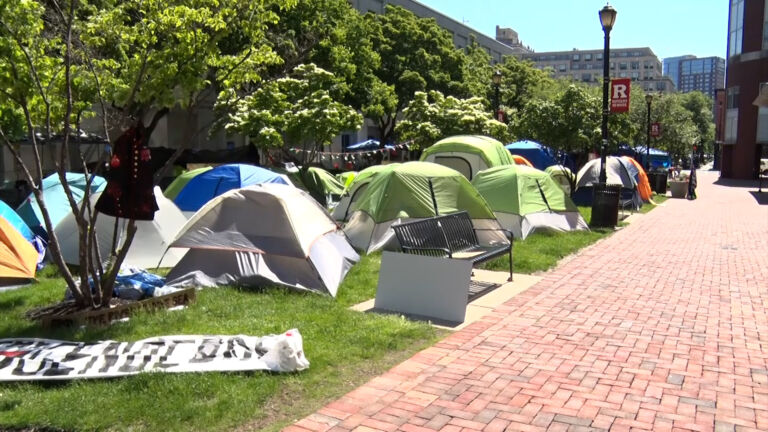
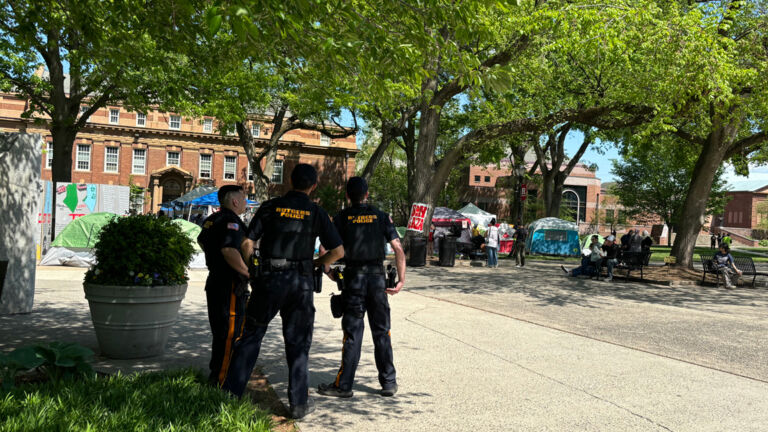
Rutgers University President Jonathan Holloway shared a congressional hot seat with two other current university presidents, as House Republicans again criticized how colleges across the U.S. handled the pro-Palestinian student encampments. Rutgers ultimately negotiated with protesters, who agreed to leave as final exams got underway.
“Dr. Holloway, you accepted eight of the encampment demands, including an egregious amnesty deal to Rutgers students and faculty involved in the encampment,” asked Rep. Virginia Foxx (R-NC), the chair of the House Committee on Education and the Workforce who has led the hearings. “I’d like to know what sort of message you think that sends to your Jewish students.”
Holloway responded, “I can report we suspended four people and then 19 others have experienced other levels of disciplinary consequences.”
And Holloway said of the protesters, “They were not, as some have characterized them, terrorists. They were our students.”
Rutgers’ agreement ended the confrontation peacefully. But under questioning from New Jersey Rep. Donald Norcross (D-1st), Holloway said he did come close to calling in police on the New Brunswick encampment’s final day. He said the university is investigating whether other protesters violated rules of conduct.
Over three hours of testimony, Democrats noted universities must find a balance between free speech and a welcoming campus. Republicans on the committee — which has held multiple meetings on pro-Palestinian campus protests — claimed it’s created a lingering fear among current and prospective students.
Through it all, the Rutgers community watched. The university professors’ union AAUP-AFT called the hearing a witch hunt. “They are manufacturing lies and weaponizing rifts in our community as part of an assault on higher education,” said Todd Wolfson, the union’s president.
Others welcomed Holloway’s stated commitment to work with the Anti-Defamation League and other Jewish groups on campus this summer to address security concerns.
“And I think it was a catalyst for perhaps the work that really needs to be done here, to combat bias and antisemitism,” said Lisa Harris Glass, Rutgers Hillel president. She said it’s going to take a long time to rebuild trust.