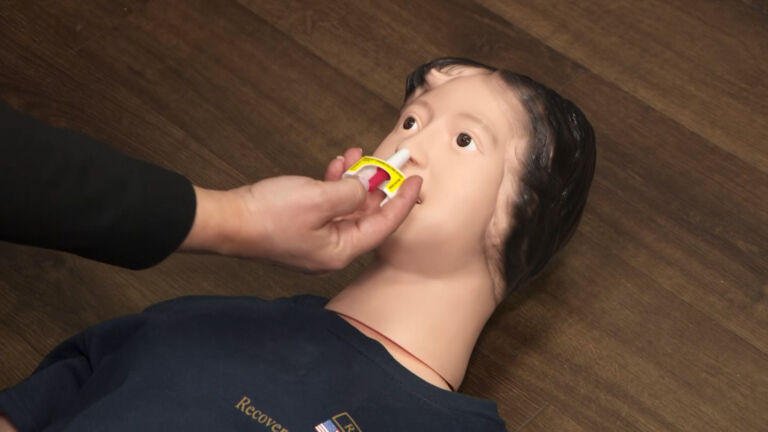
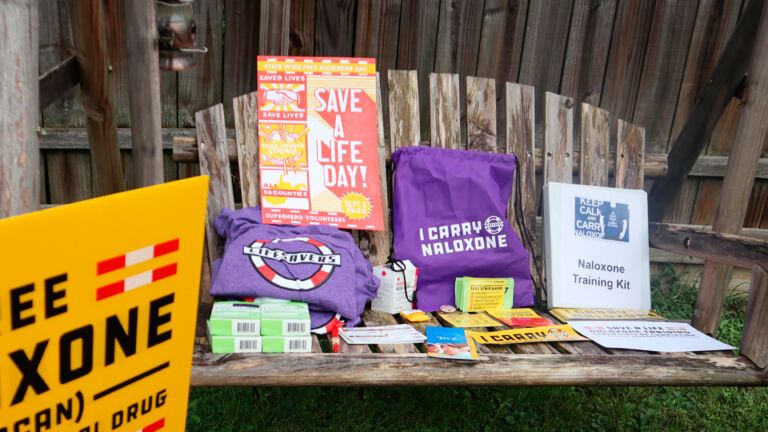
Students, faculty and community members attended a Montclair State University training this week, where they learned how to administer the opioid overdose reversal drug naloxone, also known as Narcan. They were taught to look for telltale signs of an overdose being caused by opioids.
“We see what we call pinpoint pupils, so teeny tiny little pupils that remain fixed at that pinpoint size regardless of the amount of light that’s present or taken away,” said Michelle Knight, director of emergency medical services at Montclair State University.
There’s a renewed focus on harm reduction efforts across the state, according to Montclair State University Professor Svetlana Shpiegel. “Clients come in, they engage in services and after a little bit, they drop out because they’re not able to sustain sobriety,” said Shpiegel. “So if abstinence is required to engage in services, they’re going to drop out. Harm reduction allows them to say you are welcome here, we are welcoming you as you are, we want you to be honest with us about your use and we will help you to the extent that we can.”
Some attendees voiced concerns about the legal implications of calling for help. “If someone were to call the police for an overdose, would there be repercussions for someone else using?” asked one student.
“Our number one priority would be to assist that person and save that person’s life,” answered Commander Robert Scott, deputy coordinator at the Passaic County Sheriff’s Office. “We would do our best to save that person as if they are my family member, is my relative.”
“Here on campus we have a medical amnesty policy,” said Knight. “Which states that you’re not going to be put through the university conduct system if you call for medical assistance if you call for yourself or someone else who needs it, after taking drugs or alcohol.”