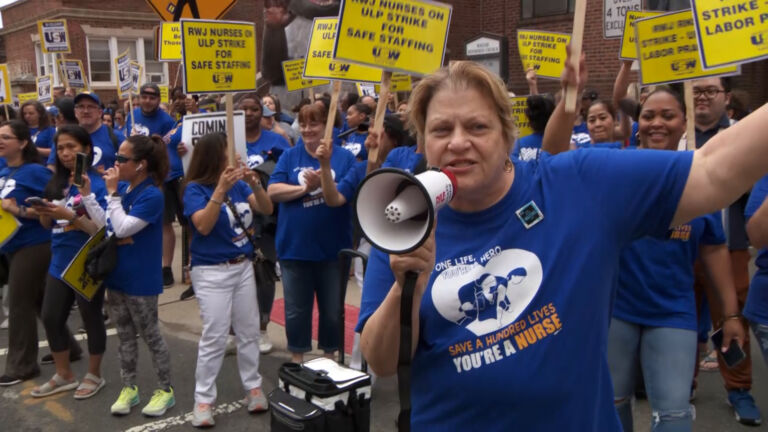
As the fourth week approaches of the strike by nurses at Robert Wood Johnson University Hospital in New Brunswick, nurses say they have become more pessimistic. Around 1,700 nurses went on strike on Aug. 4 for demands that include a cap on health care costs, better pay and higher staffing levels.
“The pandemic pushed us to a breaking point where we were forced to take care of more patients than we should have been,” said registered nurse Jennifer Kwock. “And since then, they never backed off on our responsibilities and we’re not machines. So the problem is we’re doing the jobs of more than one person. It’s not fair to the patients to not get the time and the care that they deserve because we’re spread across too many patients.”
The nurses say that the staffing levels for their temporary replacements are close to what they are looking for. Sen. Bernie Sanders (I-VT) sent a letter Monday to Mark Manigan, the president and CEO of RWJ Barnabas Health, in which he said, “Let’s be clear: if RWJBH can afford to hire these replacement nurses and pay their executives millions each year, they can afford a contract that keeps nurses safe and provides living wages and good benefits.”
Debbie White, who leads HPAE, New Jersey’s largest nurse union but not the one that represents the nurses at Robert Wood Johnson University Hospital, said her union is pushing state leaders to adopt a bill that would enforce safe staffing levels.
— Editor’s note: RWJBarnabas Health is an underwriter of NJ Spotlight News.