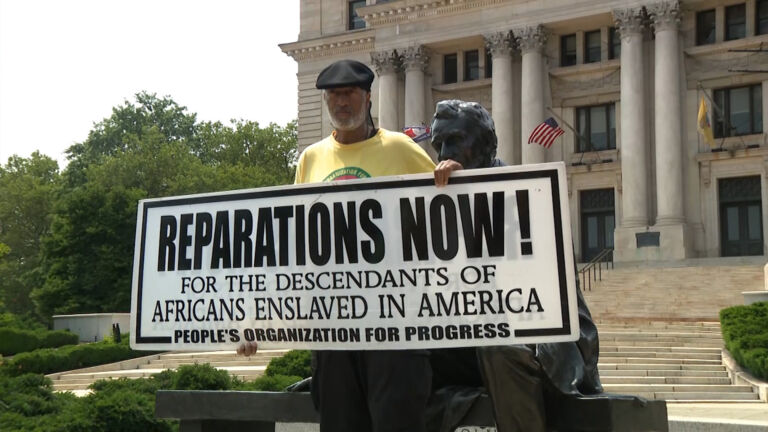
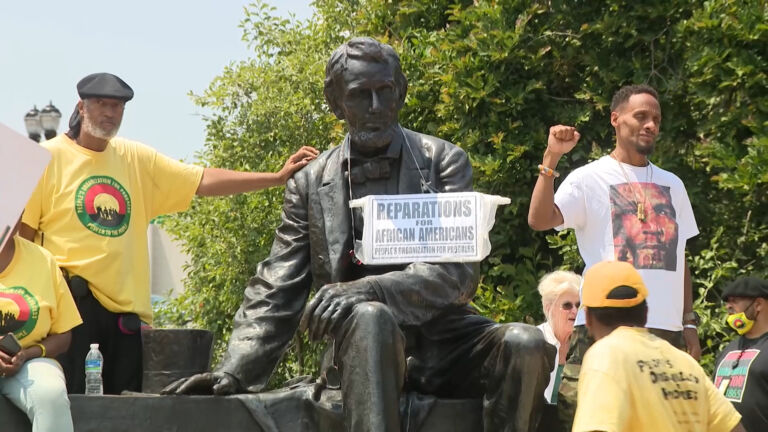
The New Jersey Institute for Social Justice kicked off the second public meeting of the New Jersey Reparations Council on Monday night, continuing its two-year project to study the history of slavery in New Jersey and its effects on the state’s current racial landscape.
“The question that we often confront is why convene the New Jersey Reparations Council,” said Ryan Haygood, president and CEO of the New Jersey Institute for Social Justice. “And the answer is although slavery shaped every aspect of New Jersey, too many people in our state believe that it never happened here and that racial inequality is not a New Jersey issue.”
“But as you’ll hear tonight, New Jersey’s original sin of slavery and its lasting stain tell a very different story,” added Haygood.
Housing inequity is one of the main issues the council’s members said is evidence of slavery’s lasting impact. Maisha Simmons of the Robert Wood Johnson Foundation spoke about how a person’s home is inextricably to linked to increasing gaps in health care.
“The Centers for Disease Control and Prevention declared racism of public health issue,” said Simmons. “Affecting the health and well-being of millions of people directly. As the nation’s largest philanthropy dedicated to health, we deeply believe in dismantling structural racism and the barriers millions everyday people simply because of their race or their intersectionality with other groups that experience suppression.”
The reparations council plans to hold several additional public sessions before publishing its final report on Juneteenth, 2025.
Editor’s note: Robert Wood Johnson Foundation is a financial contributor to NJ Spotlight News.