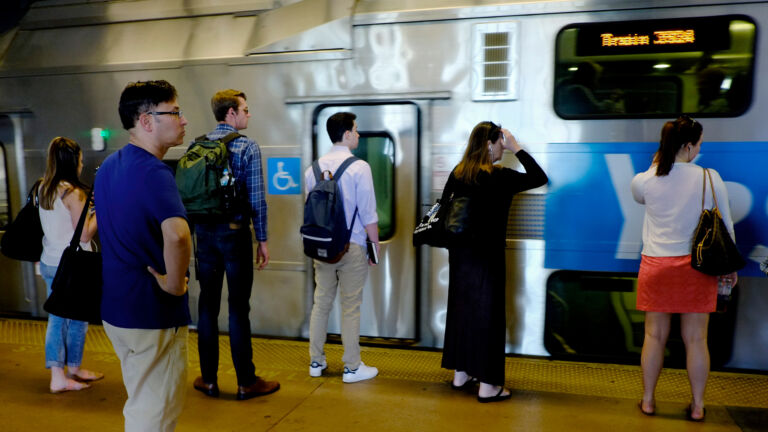
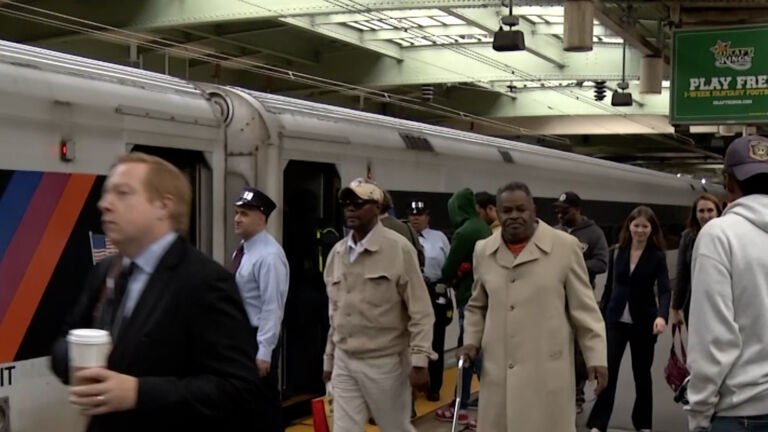
New Jersey Transit customers were left fuming this month, as triple-digit temperatures caused mechanical breakdowns, cancellations and misery even as the agency reminded that a 3% fare hike is coming on July 1.
“I’m on a train with no AC in 102-degree weather,” vented one customer on X.
NJ Transit’s customer advocate posted an apology for heat-related disruptions and admitted they could happen again. NJ Transit must rely on Amtrak to fix overhead power lines, while it plays catch-up after years of underfunding.
“And that’s the classic problem that transit properties have, right? There’s not enough money to do the things that the customers feel,” said Rachel Weinberger, transportation chair of the Regional Plan Association. “I would say it’s a great loss to the state to let it struggle, because it does add so much.”
How much? Weinberger pointed to a new report from the RPA.
NJ Transit delivers up to $13.8 billion in annual economic and social benefits statewide, according to the report, while it also reduces traffic congestion and air pollution. The report breaks it down even further for five different municipalities: Atlantic City, Bloomfield, Newark, Union City and Hackensack, and estimates how much living expenses would rise without NJ Transit.
Alex Ambrose, a policy analyst with New Jersey Policy Perspective says the report shows in hard numbers that NJ Transit functions not as a business, but as a public service that multiplies benefits in all directions.
“People who use transit then have access to jobs, they have access to doctors, they have access to schools; they have access to shopping centers that without transit they wouldn’t have access to. And those places also wouldn’t have access to those customers,” Ambrose said. “So that multiplying factor of New Jersey Transit is essential for both our economy and for New Jerseyans’ own budgets.”
“The report should really be mandatory reading for the Legislature and the two gubernatorial candidates,” said Len Resto, past president of the New Jersey Association of Railroad Passengers. NJ Transit could operate more efficiently, said Resto, noting his train ticket often goes uncollected — and that means lost revenue. He applauds measures like the renewed Corporate Transit Fee that will boost funding for the agency, but that fee expires in five years. And fares are an issue, he warns.
“When you have a system that is so unreliable, you just can’t keep adding three percent each year to the burden, when inflation is so high and the service is just horrible,” Resto said.
Transit advocates acknowledge the agency is buying new cars and engines, replacing ancient infrastructure and just settled an engineers’ strike. But they say that state lawmakers Trenton must figure out a solid, dedicated funding plan for NJ Transit.