
The rollout of new COVID-19 vaccinations has hit a roadblock with many New Jersey pharmacists who want clarification over legal liability and insurance coverage. While appointments for the updated shots are currently available at CVS, other pharmacies — including Walgreen’s — are hesitating.
“So right now I think where we stand with it is, we do have products, we just don’t currently have the authorization to administer it,” said Brian Pinto, president of the New Jersey Pharmacists Association. Many members want the Centers for Disease Control and Prevention— specifically, its Advisory Committee on Immunization Practices — to sign off on the new vaccines, Pinto said. But the committee is not scheduled to meet until Sept. 18.
“We are leaning on our colleagues down in Trenton, especially with the commissioner at the Department of Health, to try to clarify what pharmacists, technicians are able to administer when it comes to the COVID vaccine. Because right now, there’s still a gray area,” Pinto said. “You have an approved product, but you don’t have approved recommendations, and that’s sort of putting pharmacists … in the firing line.”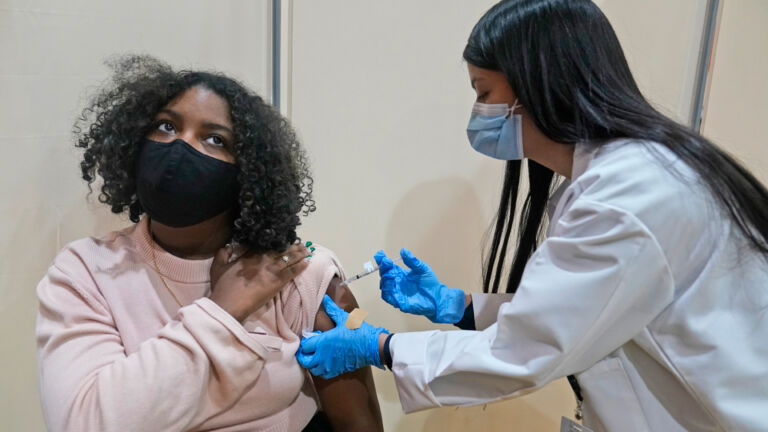
Pinto, who owns Tiffany Natural Pharmacy in Westfield, says he wants to administer the updated COVID-19 vaccines designed to target the latest COVID strain. But under a recent U.S. Food and Drug Administration decision, new rules governing COVID-19 vaccine eligibility have gotten far more restrictive. They’re no longer generally available to anyone six months of age or older, and they reflect the Trump administration’s antagonistic approach to vaccines.
To get updated COVID-19 shots, the FDA will now require eligible people to be 65 or older, or have at least one underlying health risk from an approved CDC list that includes ailments like asthma and diabetes. This limits who can get vaccinated. But for Pinto, it also raises liability issues over the vaccine.
“If one of my pharmacists administers it and there is a reaction … potentially that could put some of my staff in a position that they may not feel comfortable with,” he said. “And I feel that that’s a similar situation with a lot of my colleagues throughout the state, until there is some clear guidance. And I think it may have to come out of Trenton, more than Washington D.C. or Atlanta, at this point.”
Concerns about liability
The question of liability was raised by U.S. Health and Human Services Secretary Robert F. Kennedy Jr., a prominent vaccine opponent. He slammed groups like the American Academy of Pediatrics, for recommending that children get the new COVID-19 shot. And Kennedy warned in a social media post that “recommendations that diverge from the CDC’s official list are not shielded from liability under the 1986 Vaccine Injury Act.”
The warning by Kennedy is causing a lot of concern, and epidemiologist Stephanie Silvera of Montclair State University said she worries that it creates public health hurdles.
“Available and accessible are two very different things,” said Silvera. “And I think that — we’ve known this for a very long time — the message matters, right? And so, by saying that it’s available, but really emphasizing for people who are over 65 and only certain people under 65 and not really being clear on what that means, it creates a lot of confusion. And when people are confused, they tend to not even try to get the vaccine.”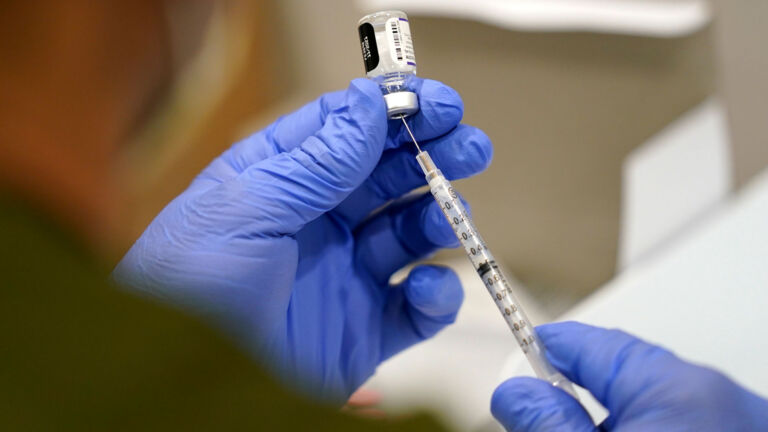
COVID-19 cases have been rising in New Jersey — from 463 reported at the end of June, to 1,205 on Aug. 23.
A CVS spokeswoman told NJ Spotlight News the pharmacy chain will abide by the FDA’s new rules by using a patient questionnaire, saying: “Patients are asked to attest to their eligibility during the appointment scheduling process … or at the pharmacy or MinuteClinic when the patient is completing the health screening form.”
CVS will charge uninsured customers $225 for a COVID-19 vaccination, the spokeswoman said, but added, “Our understanding is that the COVID-19 vaccine is covered by most insurance plans at no cost for eligible patients. Patients should check with their insurer…”
And concerns about the cost for some
But for Silvera, questions about cost just raise more hurdles.
“The minute you take away coverage, people are less likely to access it, especially in the economic times that we are living in when people are making difficult choices on where to spend their money,” she said.
The New Jersey Department of Health said it is aware of pharmacists’ concerns, and told NJ Spotlight News “the Administration is working diligently to ensure equitable access to COVID-19 and other vaccines for those who live, work, or are educated in New Jersey, especially as we approach respiratory virus season. We will continue to closely monitor federal recommendations and adjust local guidance as needed to protect the health of our communities.”
Vaccine eligibility often depends on what’s permitted by state laws. That’s why CVS says it will make the new COVID-19 vaccines available with just a patient sign-off in 33 states including New Jersey. But CVS will require patients in 13 other states, including New York and Pennsylvania, and Washington, D.C. to present a prescription to get the shot.
People can ask their doctors for the vaccine. But studies show, 90% of people received most COVID-19 vaccinations at pharmacies.
The CDC’s Advisory Committee on Immunization Practices meeting set for Sept. 18 could be delayed by political headwinds. It’s an all-new panel appointed by Kennedy, who fired the committee’s 17 former members.
Meanwhile, the American Academy of Pediatrics isn’t the only medical group that’s recommending the vaccine. The American College of Obstetricians and Gynecologists is also urging the vaccine for those who are pregnant. In an open letter, it wrote: “Research has shown that pregnant women who have COVID-19 are more likely to need care in an intensive care unit or with a ventilator, or to die from the illness.”
