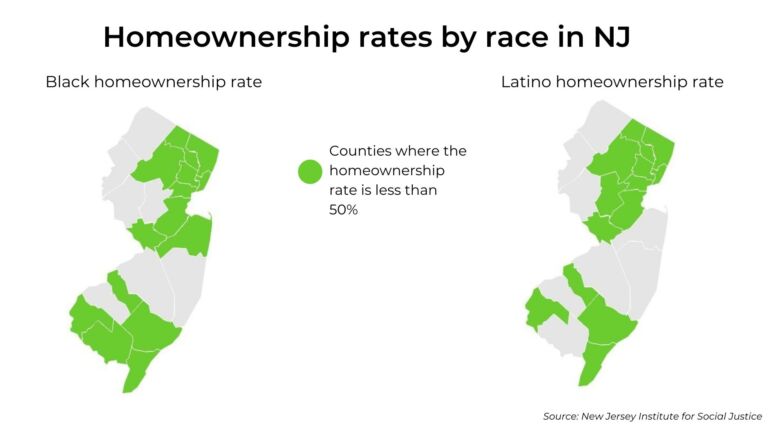
To cap off Black History Month, the Murphy administration on Friday released a long-awaited report looking into wealth disparity in the state; outlining the root causes of economic gaps affecting Black and Latino residents along with recommended strategies to address them.
NJ Spotlight News spoke with Cid Wilson, a member of the Wealth Disparity Task Force that wrote the report and president and CEO of the Hispanic Association on Corporate Responsibility.
“We know that if you’re a white family, the average net worth is about $350,000,” he said. “For Black and Latinos, it’s only about $6,000 to $7,000. It’s a massive disparity, and there were so many reasons for this, which is why we took a very detailed approach, not only to identify those disparities, but some recommendations that the New Jersey legislature and the governor can do to address them.”
The task force’s report — titled “New Jersey- Building a State of Opportunity: A Report of the Wealth Disparity Task Force to Close Opportunity Gaps and Repair Structural Disparities” — comes roughly five years after Gov. Phil Murphy called for creating the panel to examine the issue. At the time, a number of groups in New Jersey were stepping up calls for reparations or other steps by the state in the aftermath of the George Floyd murder.
The report pointed to the factors in New Jersey that have led to generational wealth gaps can be traced back to rules and laws during slavery.
Among the roughly 30 recommendations made in the report were the following: adopting a baby bond model, reforming Medicaid estate recovery, investing in so-called community schools, boosting food security, supporting more career pipelines for middle and high school students, closing the digital divide, and continuing to focus on social justice initiatives.
“When we look at one of the major — one of the biggest — investments that everyone makes, which is buying a home, [there] were practices that were in place that were suppressing the ability for Blacks and Latinos to buy a home,” said Wilson. “I really thank Governor Murphy for supporting the initiative for first time home-buyers, for down payment assistance.”
“There were other practices ranging from disclosing your down payment before someone even accepts an offer from you,” said Wilson. “And also the challenges of having credit scores that have equity, which is why we talk about the importance of making sure rent is factored in to help strengthen credit scores.”