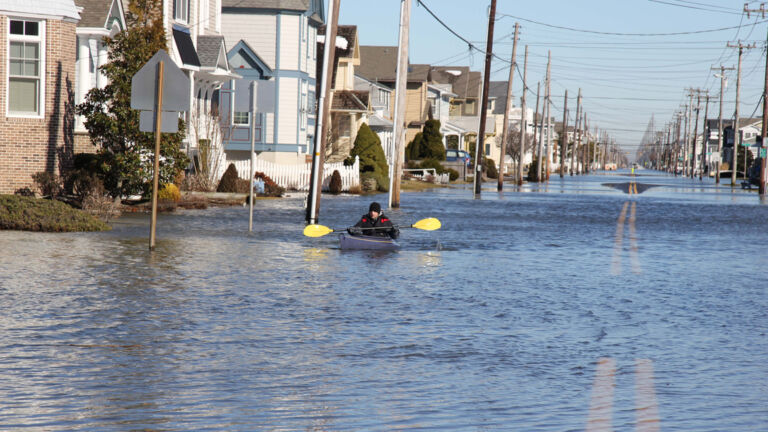
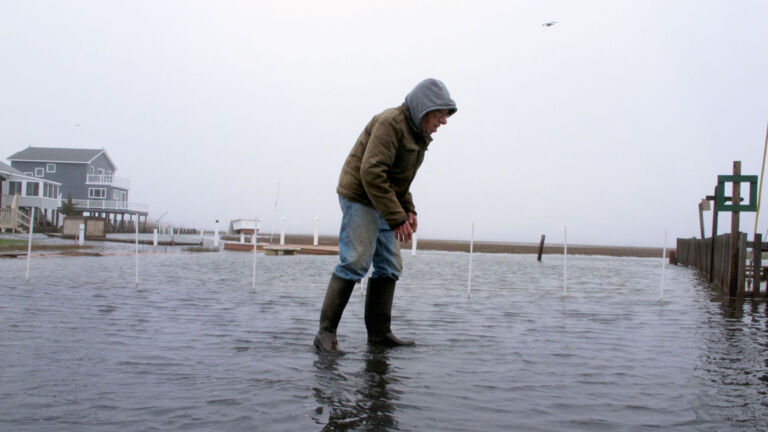
By mid-century, places like Atlantic City and Cape May are projected to have up to 100 days or more of high-tide flooding compared to the roughly 10 flood days recorded in 2021. The National Oceanic and Atmospheric Administration Tuesday released its annual high-tide flooding outlook, which finds the East and Gulf coasts are seeing twice as many days of high-tide flooding compared as in the year 2000.
“Sunny day,” or so-called “nuisance flooding,” is projected to become increasingly common, due to years of sea level rise. It happens when tides reach roughly 2 feet above the daily average and spill onto streets or bubble up from storm drains, flooding shorelines, basements and damaging infrastructure.
NOAA predicts next year will look similar to this one, with about three to seven days of sunny-day flooding mostly due to La Niña conditions. But by 2050, damaging floods that used to happen only as a result of severe storms will become a more regular occurrence, hitting the country 45 to 70 days a year on average.