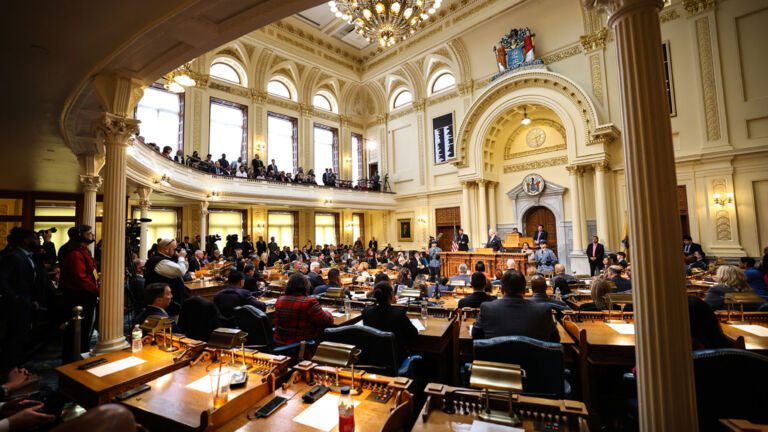
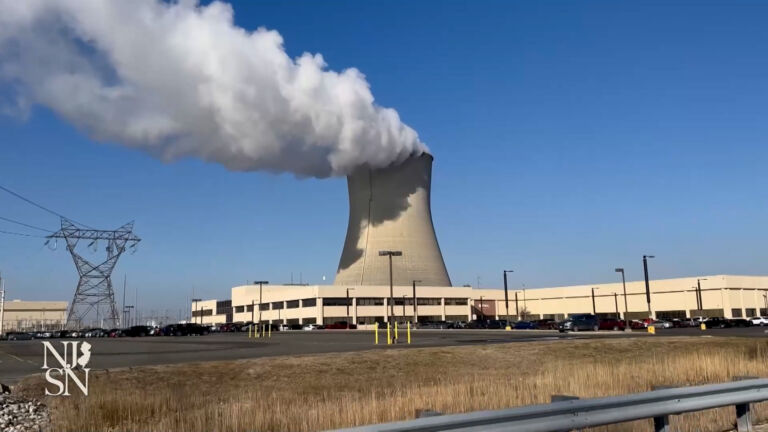
In just about a week, New Jersey residents will feel the pain of energy prices spiking by about 20%. On Thursday, lawmakers in Trenton moved forward several bills aimed at addressing the increases.
Several of the bills will require the state Board of Public Utilities to help spur more energy business and energy storage in the state, especially for solar where approvals and permitting can be slow.
“While large-scale solar projects are important, they’re often facing multi-year delays,” said Elowyn Corby, mid-Atlantic regional director for Vote Solar Action Fund. “By establishing automatic solar permitting, this bill offers a practical, efficient and proven approach to streamlining energy deployment. It would significantly lower the soft costs associated with going solar, making it affordable for all NJ families, regardless of income.”
Data centers and their massive energy demands have come into focus in the debates around costs as well. Several bills aim to address the impact the centers are having on the state’s energy needs, as well as the amount of water that’s required to cool the systems that run artificial intelligence. Those measures got some push-back from business and industry leaders.
“We can’t entice data centers to locate in New Jersey if we’re going to continually be putting roadblocks in the way or making it more expensive or problematic to develop here in New Jersey,” said Ray Cantor, deputy chief government affairs officer for the New Jersey Business and Industry Association. “We recognize that data centers are large energy users, but they’re not the only large energy users.”
Others said a key to bringing costs down is also modernizing the energy grid that moves energy from its source into homes and businesses. The BPU has approved new rules that it said will help achieve those grid improvements.
“Modernization … is mostly about cost and using technologies that help us to make better use of the grid, so we don’t have to build as many poles and wires,” said Veronique Oomen, director of the Division of Clean Energy at the BPU. “Poles and wires are expensive, but we have more and more technologies available to us that allow us to keep the grid reliable at lower cost.”
While legislators debate how and where to develop new energy sources for New Jersey, some are also asking the BPU to investigate PJM Interconecction, the regional transmission organization, and how it runs its wholesale energy auctions that ultimately impact market rates for electricity.
“We are going to have great pain here, not because of anything New Jersey did,” said state Sen. John Burzichelli (D-Burlington). “And some people are saying these rate increases that are happening are all because of New Jersey’s policy on clean energy. That’s just a veil, that’s a red herring in this discussion.
“There’s obviously plenty of electricity to be had, if you’re willing to pay 10 times what you paid last year,” he said. “So we look at that bid process as not being an honest one.”
This report is made possible in part by the Corporation for Public Broadcasting, a private corporation funded by the American people.