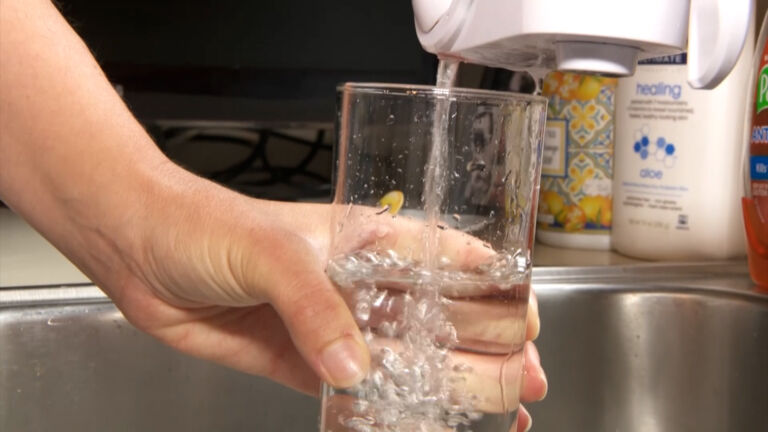
Drinking water utilities across the United States will have to create new protections from six toxic “forever chemicals,” under landmark regulations finalized by the Environmental Protection Agency on Wednesday.
The new rules set drinking water standards for six common per- and polyfluoroalkyl substances (PFAS): a class of thousands of chemicals that are found in a variety of products because they have a number of useful properties, including effective water repellant and a strong resistance to fire and corrosion. But the chemistry that makes PFAS so useful also makes them nearly indestructible in nature, and the chemicals have become a widespread environmental contaminant. PFAS exposure is known to be harmful to human health. The chemicals have been linked to cancers, birth defects and other maladies. The EPA’s new rules focus on six chemicals in the PFAS family:
- Perfluorooctanoic acid (PFOA)
- Perfluorooctyl Sulfonate (PFOS)
- Perfluorononanoic Acid (PFNA)
- Perfluorohexanesulfonic acid (PFHxS)
- Perfluorobutane sulfonate (PFBS)
- Hexafluoropropylene Oxide Dimer Acid (GenX Chemicals)
New Jersey has been in the forefront of addressing PFAS contamination, and the state has in recent years adopted drinking water standards for PFOA, PFOS and PFNA. The new federal standards are stricter than the existing state standards.
Regulators estimate that up to 10% of all drinking water systems around the nation will have to make expensive infrastructure upgrades to meet the new standards. The Biden administration announced $1 billion in funding for such work on Wednesday. Lawsuits have been filed in state and federal courts over the pollution, with drinking water providers seeking to hold chemical companies and other users of PFAS accountable. Just last week, the chemical giant 3M announced a $10.8 billion settlement that will pay for drinking water infrastructure improvements nationwide over the next 13 years.